
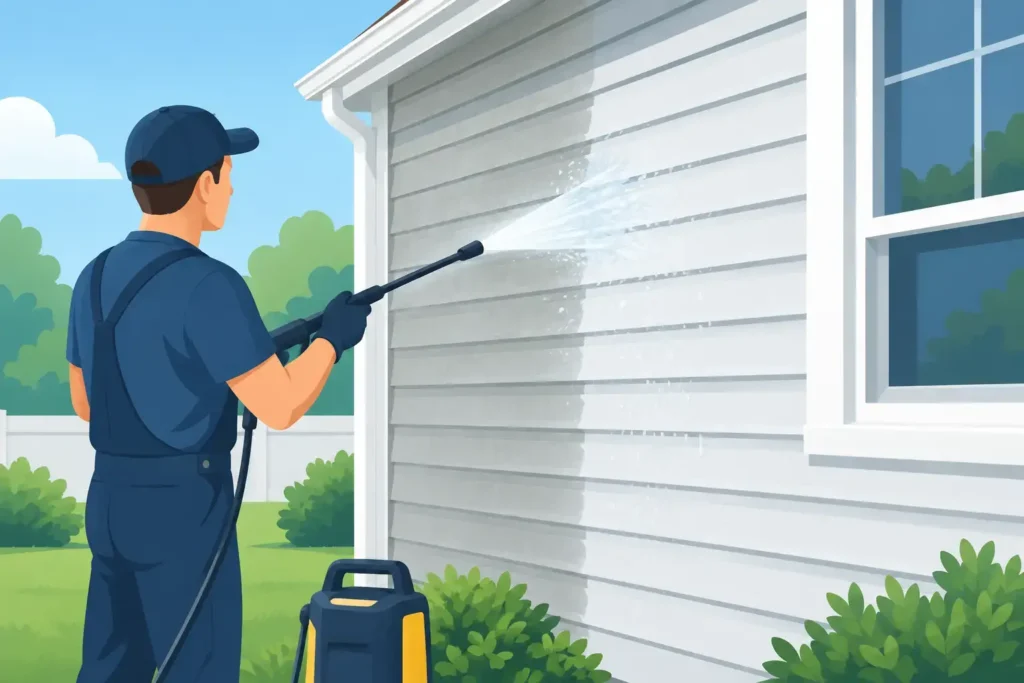
Vinyl siding can make a home look tired long before the siding itself is worn out. Green algae, dark mildew streaks, pollen, road dust, spider webs, and salt air residue can all build up across Long Island exteriors. Washing vinyl siding the right way brings back a brighter, cleaner appearance without putting the panels, trim, landscaping, or nearby windows at risk.
For many Nassau and Suffolk County property owners, the challenge is not deciding whether the siding needs cleaning. It is knowing how to get visible results without blasting water where it does not belong. Vinyl is durable, but it is not a surface that benefits from aggressive pressure.
Why Vinyl Siding Gets Dirty
Vinyl siding is designed to handle rain, sun, and seasonal temperature changes, but it is constantly exposed to outdoor buildup. North-facing walls and shaded areas often develop algae or mildew because they stay damp longer. Siding near trees may collect pollen, leaves, sap, and organic stains. Homes closer to busy roads can pick up a dull layer of dirt and exhaust residue.
On Long Island, spring pollen, humid summer weather, fall debris, and coastal air can create a cycle of buildup that becomes more noticeable each year. White and light-colored siding tends to show every streak, while darker siding can lose its clean, even color under a film of grime.
A proper cleaning does more than improve curb appeal. It lets you see the true condition of the exterior. Once the buildup is gone, it is easier to spot loose trim, cracked caulk, damaged screens, or areas that may need repair.
Washing Vinyl Siding Requires the Right Pressure
The biggest mistake in siding cleaning is treating vinyl like concrete. A high-pressure stream aimed too closely at the wall can force water behind the panels, loosen siding, damage trim, or leave visible marks. It can also push water into window frames, vents, and gaps around doors.
Professional exterior cleaning is about matching the method to the surface. For vinyl siding, that usually means using a controlled, lower-pressure rinse along with a siding-safe cleaning solution that loosens organic growth and surface grime. The solution does the cleaning work. Water is used to rinse the surface clean, not to overpower it.
The direction of the rinse matters, too. Water should generally be directed downward so it does not get driven up behind the siding laps. A careful technician also watches the condition of the panels, the age of the home, nearby electrical fixtures, and the landscaping below.
This is why a quick assessment is worth the time. One wall may only need a light wash, while another may have heavier mildew staining, oxidation, or stubborn buildup around gutters. The right approach depends on what is actually on the surface.
What a Professional Siding Cleaning Should Address
A complete siding wash is more than spraying the broad, easy-to-reach sections of a house. The details make a major difference in the finished appearance. Areas around shutters, window trim, gutters, soffits, entryways, and lower siding panels often hold the most visible dirt.
Before cleaning begins, the work area should be checked for sensitive plants, outdoor furniture, electrical outlets, and open windows. Landscaping may need to be pre-rinsed and protected, and delicate areas should receive extra care. This preparation helps keep the job focused on improving the exterior, not creating cleanup afterward.
A thorough service typically focuses on removing:
- Green algae, mildew, and organic staining
- Pollen, dust, cobwebs, and insect residue
- Dirt streaks beneath gutters and rooflines
- Mud splash and grass stains along the lower panels
- Surface grime around trim, doors, and windows
Not every mark will come off with routine washing. Rust stains from fixtures, paint overspray, oxidation, permanent discoloration, and certain tree-sap stains may need a different treatment or may not fully disappear. A trustworthy cleaning company should set that expectation before the work starts instead of promising results the surface cannot deliver.
Can You Wash Vinyl Siding Yourself?
A homeowner can handle light maintenance in some situations. A garden hose, a soft brush, and a manufacturer-approved cleaner may be enough for a small section of low-level siding with mild dirt. This can be a practical option when the area is easy to reach and there is no heavy organic growth.
The trade-off is time, safety, and consistency. Cleaning a full home by hand is labor-intensive, especially when upper stories, roofline staining, and shaded sides of the property are involved. Ladders add risk, and using the wrong cleaner or too much pressure can turn a simple maintenance project into a repair issue.
Rental pressure washers deserve extra caution. Their settings can be stronger than many homeowners expect, and a narrow spray pattern can damage siding quickly. If you are unsure about the pressure, cleaning solution, or condition of the exterior, professional service is usually the safer choice.
When Should You Schedule Siding Cleaning?
Most homes benefit from washing vinyl siding about once a year, although the right frequency depends on shade, tree coverage, moisture, and how quickly algae returns. A heavily shaded home may need attention more often than a sunny property with good airflow.
Spring is a popular time to clean away winter residue and prepare the home for outdoor season. Early fall also works well, especially after summer humidity has encouraged algae growth. There is no need to wait until the siding looks severely stained. Cleaning before buildup becomes heavy can make maintenance easier and keep the home looking cared for throughout the year.
For landlords and property managers, a siding wash can be especially useful before listing a property, welcoming new tenants, hosting an inspection, or completing seasonal exterior maintenance. For commercial properties, clean siding helps the building look professional before customers and visitors reach the front door.
Signs It Is Time to Call a Professional
If the siding has widespread green or black staining, visible streaks under the gutters, or grime that does not rinse away with a hose, it is time for a more thorough cleaning. The same is true when the affected areas are high, difficult to access, or close to windows, decks, landscaping, and electrical fixtures.
A professional is also helpful when you want the whole property to look consistent. Cleaning only one wall can make the contrast with the rest of the home more obvious. A properly scoped project accounts for the siding, trim, soffits, gutters, walkways, and other exterior surfaces that may need attention at the same time.
Father & Son Power Washing keeps the process straightforward for Long Island property owners. The job starts with an in-person assessment of the surfaces and buildup, followed by a clear, no-obligation quote and a realistic timeline. That means you know what will be cleaned, what results to expect, and what the project will cost before work begins.
Keep the Clean Look Going Longer
After the siding is cleaned, a few small maintenance habits can slow down future buildup. Trim back branches that keep walls shaded or drop debris against the home. Keep gutters flowing so water does not run down the siding in dirty streaks. Move sprinklers away from exterior walls, especially if they repeatedly soak the same areas.
You do not need to chase every speck of dust. The goal is to prevent moisture and organic growth from settling in long enough to create stubborn stains. A quick look around the exterior each season can help you catch trouble spots before they spread.
A clean exterior changes the way a property feels when you pull into the driveway or welcome a visitor at the door. When the siding starts looking dull, streaked, or green, a careful wash can make the home look refreshed without making the process complicated.