
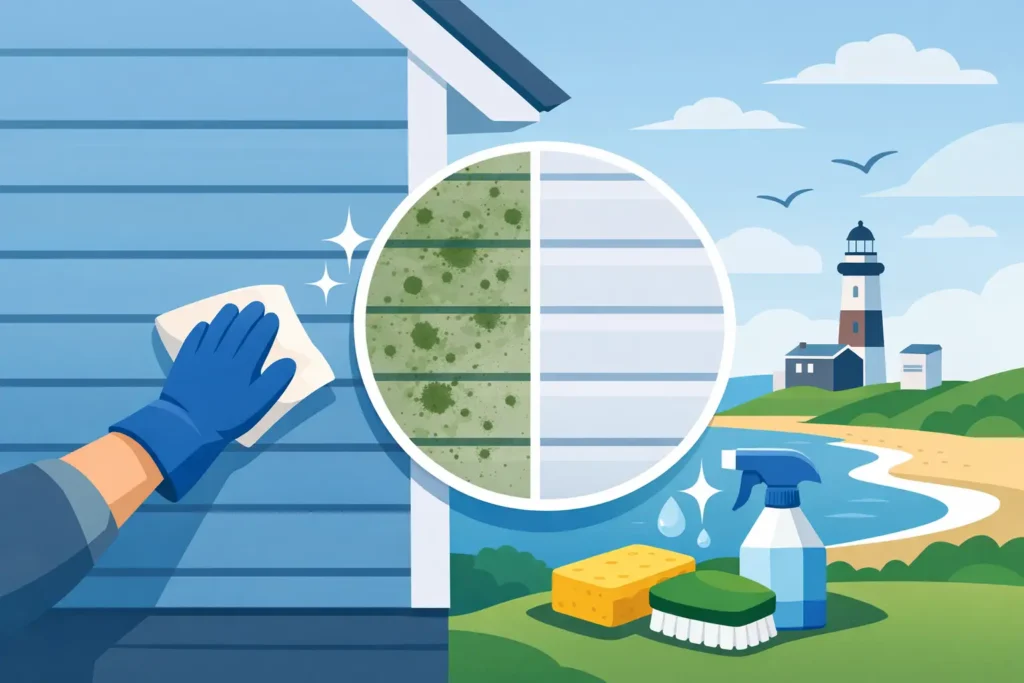
A clean siding surface can look tired surprisingly fast on Long Island. One humid stretch, a shaded side yard, or a clogged gutter can leave green, black, or gray mildew stains creeping across vinyl, composite, painted wood, or aluminum siding. The good news is that you can prevent siding mildew buildup with a few practical maintenance habits and timely professional cleaning when stains start to return.
Mildew is not just a curb appeal issue. Left alone, it can make a well-kept home or commercial property look neglected, hide other exterior concerns, and create more difficult cleaning work later. Keeping it under control is usually easier and more affordable than waiting for heavy staining to spread.
Why siding mildew shows up on Long Island properties
Mildew thrives where moisture lingers. Nassau and Suffolk County properties are especially familiar with the conditions that encourage it: humid summers, rainy weather, coastal air, mature trees, and shaded areas that do not dry quickly after a storm.
The north-facing side of a building is often the first trouble spot because it receives less direct sun. Areas behind shrubs, beneath roof overhangs, near fences, and beside neighboring homes can also stay damp longer than the rest of the property. If you see staining mainly in one area, that does not necessarily mean the siding itself is failing. It usually means that part of the exterior needs better airflow, drainage, or a more regular cleaning schedule.
Mildew is also commonly fed by organic debris. Wet leaves in gutters, pollen, soil splashed up from garden beds, and tree sap can leave a film on siding that holds moisture and gives mildew a place to grow.
Start with water control
The most effective way to prevent siding mildew buildup is to keep water moving away from the house rather than allowing it to sit against the exterior. This is not about making your property perfect. It is about spotting the small issues that keep one wall damp day after day.
Check your gutters and downspouts after the heaviest leaf-drop season and again after major storms. Overflowing gutters can run water down the siding, creating vertical stains and keeping the wall wet. Downspouts should carry water away from the foundation, not dump it directly onto a mulch bed beside the home where it can splash back onto the lower siding.
Look for sprinkler heads that hit the house. A lawn irrigation system aimed too high can soak one section of siding every morning, especially during the summer months. Adjusting the spray direction is a simple fix that can make a noticeable difference.
Pay attention to the ground around your property as well. Soil and mulch should not be piled high against the siding. Keep a visible gap between the ground cover and the bottom edge of the exterior so rainwater and damp debris are less likely to sit against the surface.
Give shaded walls more breathing room
Landscaping makes a home feel inviting, but plants pressed tightly against siding trap moisture, block sunlight, and prevent air from circulating. That combination is ideal for mildew.
Trim shrubs, vines, and low tree branches away from the exterior. You do not have to remove established landscaping to protect your siding. Creating several inches of open space is often enough to help walls dry faster and make it easier to notice early staining.
This is particularly helpful around entryways, side yards, patios, and HVAC equipment. These areas are often overlooked because they are not as visible from the street, but they can be the first places mildew develops. For commercial properties, keep hedges and decorative plantings clear of storefront walls, common-area buildings, and entry facades for the same reason.
Clean early instead of waiting for heavy stains
A light green haze may seem like a problem that can wait until next spring. In many cases, it is better to address it before it gets established. Fresh mildew is generally easier to remove than years of layered organic staining.
Routine rinsing can help in certain situations, especially after a season with heavy pollen or debris. However, a garden hose alone will not always remove mildew that has bonded to the surface. Scrubbing with the wrong brush, using a harsh cleaner, or spraying too close with a pressure washer can leave marks or damage the siding.
Different siding materials need different care. Vinyl can warp if it is exposed to excessive heat or improper pressure. Painted surfaces can chip or fade. Older wood siding may already have weak paint, caulk gaps, or moisture concerns that deserve attention before any cleaning begins. That is why the fastest-looking approach is not always the best approach.
Professional exterior cleaning uses the right process for the material and level of buildup. Rather than treating every wall the same, the job should account for the siding type, nearby landscaping, existing stains, and areas that need extra care.
Keep a seasonal exterior routine
You do not need to spend every weekend inspecting your home. A simple seasonal check can catch the conditions that lead to mildew before they affect the whole exterior.
In spring, look for stains left behind by winter moisture and clear away leaves or debris caught around gutters, downspouts, and foundation beds. Spring is also a good time to see whether tree limbs or shrubs grew too close to the house.
During summer, watch shaded walls and areas hit by sprinklers. Long Island humidity can cause mildew to return quickly where the siding stays damp. If you notice a recurring patch, focus on the cause rather than repeatedly cleaning the same spot without changing anything around it.
In fall, remove leaf buildup before it turns wet and compacted. Clear gutters once leaves are down, and make sure water has a clear path away from the building. This work protects more than the siding. It can also help reduce drainage problems around the property.
Winter is a good time for a quick visual check after rain or snowmelt. You may notice gutter overflow, downspout problems, or water tracking down an exterior wall. Make a note of those areas for repair or cleaning when conditions improve.
Know when mildew points to a larger issue
Most siding mildew is a surface maintenance problem. Still, repeated staining in the same location can sometimes signal an issue worth checking more closely.
If a wall stays wet long after the rest of the house dries, inspect for a leaking gutter seam, missing flashing, a roof runoff issue, or a plumbing vent problem. Peeling paint, soft wood, warped trim, or staining that appears to come from behind the siding should be evaluated by the appropriate repair professional. Cleaning can restore the appearance, but it will not solve a moisture source inside the wall.
The same applies to commercial buildings and multi-unit properties. If mildew keeps returning near roof drains, loading areas, courtyard walls, or exterior stairwells, property managers should document the pattern and address drainage or irrigation issues alongside regular cleaning.
Schedule cleaning around your property, not a calendar rule
There is no single cleaning schedule that works for every Long Island home. A sunny, open property may need less frequent service than a heavily shaded home near mature trees. A business with high foot traffic may want more regular exterior cleaning simply because first impressions matter every day.
For many properties, an annual professional cleaning is a practical baseline. Others benefit from service every 12 to 18 months, while damp or tree-covered locations may need attention sooner. The goal is not to clean more often than necessary. It is to remove buildup before it becomes a bigger project and to keep the exterior looking consistently cared for.
Father & Son Power Washing can assess the condition of your siding in person, identify problem areas, and provide a free, no-obligation quote based on the work your property actually needs. Clear recommendations and a realistic timeline make it easier to plan service without guesswork.
A few changes to drainage, landscaping, and seasonal upkeep can keep mildew from taking over your exterior. When staining starts to distract from the look of your property, taking care of it early helps your home or business stay clean, welcoming, and ready to make a strong first impression.