
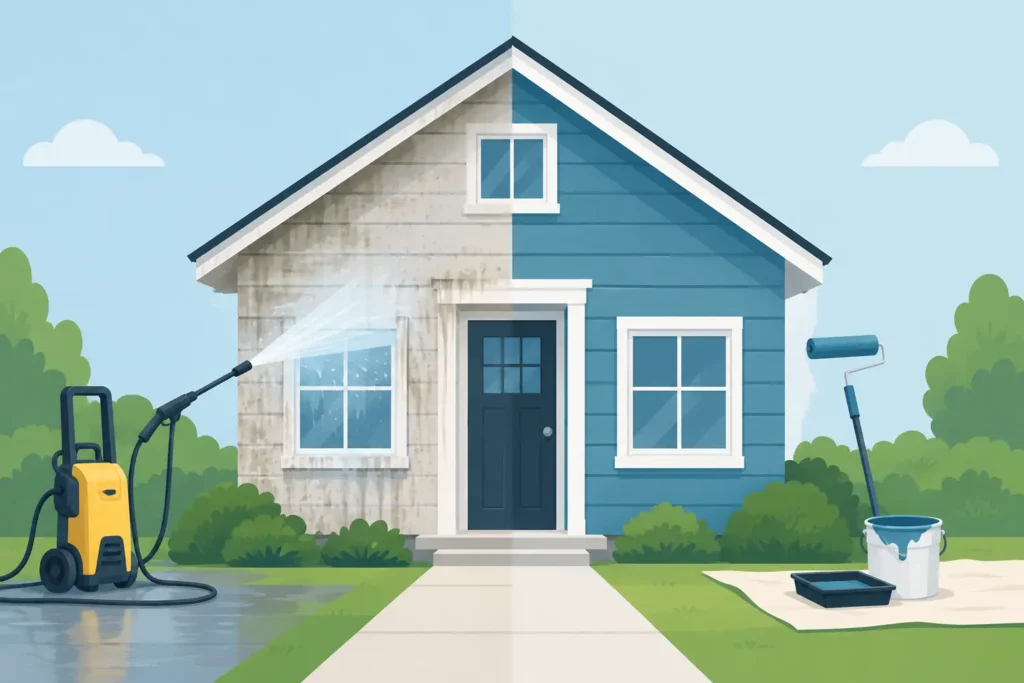
A faded-looking exterior does not always need a paint crew. On Long Island, pollen, salt air, mildew, algae, traffic film, and winter grime can settle onto siding, trim, fences, walkways, and commercial facades until a property looks older than it is. When homeowners weigh washing versus repainting, the right answer often starts with one practical question: is the surface dirty, or is the finish actually failing?
A professional wash can make a dramatic difference at a fraction of the cost of repainting. But cleaning is not a substitute for paint that is peeling, cracking, chalking heavily, or no longer protecting the material beneath it. Knowing the difference helps you spend wisely, protect your property, and get the best-looking result.
Start With Washing Versus Repainting, Not Assumptions
It is easy to look at dark streaks, dull siding, or a stained deck and assume the color is gone for good. In many cases, the color is still there under a layer of buildup. Mold and mildew can make white vinyl look gray or green. Algae can leave dark staining on shaded siding and walkways. Dust, pollen, and grime can flatten the appearance of painted trim and masonry.
Cleaning removes what does not belong on the surface. Repainting replaces or renews the protective coating itself. Those are very different jobs, and choosing paint before assessing the surface can mean paying for work you did not need.
For a property that is structurally sound and has intact finishes, professional exterior cleaning is usually the sensible first step. It gives you a clear view of the condition underneath the grime. Afterward, you may find that the home, storefront, fence, or patio simply needed a proper reset.
When Professional Washing Is the Better Choice
Washing is typically the right first move when the main issue is surface buildup. This is common after a wet spring, a humid summer, or several seasons without regular exterior maintenance. Long Island properties near trees, shaded areas, busy roads, and coastal conditions can collect grime quickly.
Look closely at the area in question. If the color appears even beneath the dirt, if there are no loose paint chips, and if the surface feels solid, cleaning may restore its appearance. A professional wash can remove algae, mildew, mud, cobwebs, pollen, and other stains that make an otherwise healthy exterior look neglected.
This is especially true for vinyl siding, concrete, pavers, brick, composite decking, fences, patios, driveways, and many commercial exterior surfaces. These materials often respond extremely well to the right cleaning approach. The visible change can be immediate: brighter siding, cleaner walkways, more defined pavers, and a more welcoming entrance.
For businesses and rental properties, washing can also be a smart way to improve presentation between larger maintenance projects. A clean facade and entrance show customers, tenants, and visitors that the property is cared for. It is a practical improvement that does not require closing off a large area for a full paint project.
Signs Repainting Is Really Needed
There are times when cleaning will reveal, rather than solve, a paint problem. Paint is not only about color. On wood, trim, railings, and other painted surfaces, it acts as a protective barrier against moisture and weather. When that barrier breaks down, repainting should not be delayed simply because the surface looks cleaner after washing.
Repainting is likely the better investment if you see peeling or flaking paint, deep cracks, bubbling, bare patches, rotting wood, or persistent chalky residue that rubs off heavily on your hand. Fading from years of direct sunlight can also signal that the coating has reached the end of its useful life, even if it is not visibly peeling yet.
Pay particular attention to window trim, soffits, fascia boards, porch railings, and wood fences. These areas take a lot of weather exposure and can hold moisture. If paint is lifting or wood feels soft, the job may involve repairs, surface preparation, priming, and repainting. Washing is still often part of that process, but it is preparation, not the final answer.
A good rule of thumb is simple: if the problem comes off, wash it. If the coating itself is coming off, repaint it.
Why Washing Often Comes Before Painting
Even when repainting is necessary, exterior cleaning should usually happen first. Paint needs a clean, sound surface to bond properly. Applying fresh paint over dirt, mildew, chalk, or loose material can shorten the life of the new finish and create an uneven appearance.
A professional cleaning helps remove contaminants before painters begin repairs and prep work. It also makes it easier to identify damaged areas that were hidden by grime. That means your painter can address the actual condition of the surface instead of estimating around stains and buildup.
Timing matters. The washed surface needs enough time to dry fully before painting, especially on wood or porous materials. Your painting contractor can advise on the right schedule based on the material, weather, and condition of the property. On Long Island, planning around humidity, rain, and temperature is part of getting a lasting result.
The Cost Difference Can Be Significant
For many property owners, budget is a major part of the decision. Exterior washing is generally far less expensive than a full repaint because it does not involve extensive prep, material costs, labor for repairs, primers, or multiple coats of paint.
That does not mean washing is always the cheaper choice in the long run. If old paint is failing, postponing repainting can lead to more expensive repairs later. Exposed wood can absorb moisture, deteriorate, and require replacement. In that situation, repainting protects the property as well as improves its appearance.
The best value comes from matching the service to the condition. Clean a healthy surface to extend its good appearance. Repaint a failing surface to protect it before damage spreads. There is no benefit to paying for paint when professional washing will do the job, and no benefit to repeatedly washing a surface that truly needs restoration.
Different Surfaces Need Different Answers
Not every exterior material belongs in the same category. Vinyl siding is often a strong candidate for professional washing because many stains are caused by organic growth and airborne dirt, not permanent color loss. Brick and concrete can also look dramatically better after cleaning, though stubborn staining or deterioration may require additional attention.
Painted wood is more dependent on the condition of the coating. A light layer of grime may wash away beautifully, but peeling paint or damaged boards call for repairs and repainting. Decks and fences require a similar assessment. If the wood is weathered but solid, cleaning may be the first step before sealing or staining. If boards are split, soft, or unstable, repair should come first.
Metal surfaces, such as railings and certain commercial fixtures, should be checked for rust. Cleaning can remove dirt and surface staining, but active rust or failing paint needs proper treatment and a new protective coating. For roofs, delicate siding, and surfaces with existing damage, the wrong pressure or technique can make problems worse. That is why an in-person assessment is more useful than guessing from a photo.
Avoid the Common Mistake of Overwashing
Power washing is effective, but more pressure is not always better. High pressure used incorrectly can scar wood, force water behind siding, loosen paint, damage mortar, or etch concrete. The goal is a clean surface, not an aggressive one.
Professional exterior cleaning should be tailored to the material and the condition of the property. Some areas benefit from controlled pressure, while others need a gentler washing method and appropriate cleaning solutions. This approach protects the surface while delivering the visible results property owners want.
For homeowners, landlords, and property managers, that means less guesswork and less risk than renting a machine and hoping for the best. A trained local team can inspect the surface, explain what cleaning can realistically accomplish, and tell you honestly when paint or repairs should be the next step.
Make the Decision With a Clear View of the Surface
If your exterior looks dingy, stained, or overdue for attention, do not assume the answer is a costly repaint. Start by determining whether grime is hiding a finish that is still in good shape. A professional wash can restore curb appeal, brighten the property, and help you delay repainting until it is genuinely necessary.
If the surface is peeling, cracked, bare, or damaged, cleaning can still be an important first step, but plan for the repairs and repainting that will protect your investment. Father & Son Power Washing provides in-person assessments and clear, no-obligation quotes for property owners across Nassau and Suffolk counties, so you can make the call based on the real condition of your exterior.
A clean property makes it easier to see what it truly needs, and that is always the best place to start.