
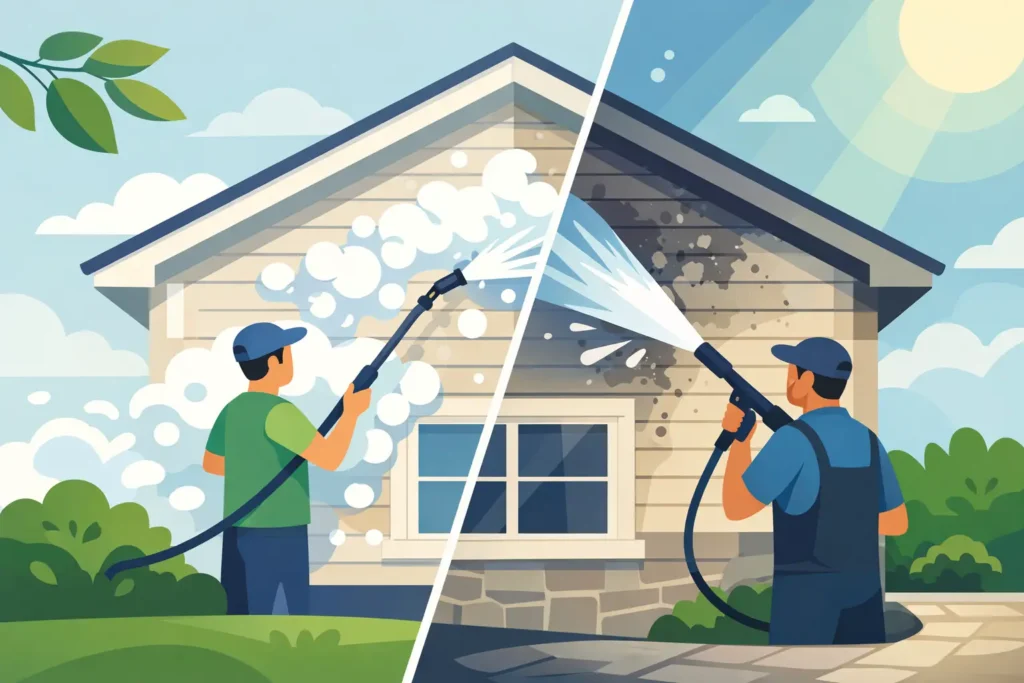
A black-streaked roof, green siding, or grimy driveway can make an otherwise well-kept Long Island property look neglected. The question is not simply how to get it clean. With soft washing versus pressure washing, the right method protects the material while delivering the fresh, visible results you want.
Both methods remove outdoor buildup, but they do not do the same job. Pressure washing uses the force of water to lift away surface dirt. Soft washing uses low pressure and carefully selected cleaning solutions to treat organic growth such as algae, mold, mildew, and lichen. Choosing based on the surface, the type of staining, and its condition matters far more than choosing the strongest stream of water.
Soft Washing Versus Pressure Washing: The Main Difference
Pressure washing relies on high-pressure water to break loose and rinse away dirt, mud, salt residue, loose paint, and other surface-level grime. It is a strong fit for durable hard surfaces that can handle the force, including concrete walks, patios, curbs, and many driveways.
Soft washing works differently. The equipment applies a cleaning solution at low pressure, often similar to the pressure from a garden hose, then gives it time to treat the source of the staining. The surface is rinsed gently afterward. Rather than blasting away a green or black stain, soft washing is designed to clean the growth causing it.
That difference is especially useful on surfaces that can be damaged by aggressive pressure. Roof shingles, vinyl siding, painted trim, stucco, certain deck materials, and older exterior finishes may look tough from a distance, but a poorly aimed high-pressure stream can leave marks, force water where it does not belong, or remove protective coatings.
When Soft Washing Is the Better Choice
Soft washing is generally the safer approach when the problem is biological growth or when the exterior material is more delicate. On Long Island, damp weather, shade from trees, coastal moisture, and seasonal pollen can create ideal conditions for algae and mildew. Those stains often return quickly if they are only rinsed off without being treated.
Roofs and Roof Stains
Dark roof streaks are commonly caused by algae, not ordinary dirt. Pressure washing asphalt shingles can strip granules, shorten the roof’s useful life, and create unnecessary risk. A professional soft wash treats the discoloration without using damaging force.
The same caution applies to many other roofing materials. Every roof needs to be assessed before cleaning because age, condition, pitch, and material all affect the proper process. A roof that has loose shingles, active leaks, or significant deterioration may need repair attention before cleaning begins.
Siding, Trim, and Painted Surfaces
Vinyl siding often collects mildew near landscaping, downspouts, and shaded sides of the home. Soft washing can remove that film without driving water behind panels or leaving visible pressure marks. It is also commonly preferred for painted wood, composite siding, soffits, gutters, and exterior trim.
The goal is not to use as little water pressure as possible on every job. The goal is to use only the pressure the surface can safely handle. Soft washing combines low-pressure application with the appropriate cleaning treatment so the exterior looks brighter without taking unnecessary chances.
Fences, Decks, and Outdoor Living Areas
Wood can be particularly unforgiving. Too much pressure can raise the grain, create uneven lines, or gouge the surface, leaving a deck or fence looking worse than before. Composite decking and older painted surfaces also require care.
A cleaning professional may use soft washing as the primary method, or pair a gentle treatment with a controlled rinse depending on the material and condition. If a deck is scheduled for staining or sealing, proper cleaning is the first step toward an even finish.
When Pressure Washing Is the Better Choice
Pressure washing has an important place in exterior maintenance. Hard, durable surfaces hold onto dirt, tire marks, salt, mud, and tracked-in grime that cleaning solutions alone may not remove efficiently. Controlled pressure can restore a clean, more uniform appearance quickly.
Concrete, Pavers, and Driveways
Concrete sidewalks, patios, pool surrounds, and driveways are common candidates for pressure washing. These surfaces are built to withstand more force than roofing or siding, but technique still matters. Too much pressure in one area can leave stripes, etch softer concrete, or disturb joint sand between pavers.
Oil stains and rust marks may also need more than pressure. The right pretreatment can make a noticeable difference, especially on high-traffic driveways, loading areas, and commercial walkways. A professional assessment identifies what can be cleaned successfully and what staining may be permanent.
Commercial Hardscapes
For storefronts, office buildings, apartment communities, restaurants, and other commercial properties, clean sidewalks and entry areas set the tone before a customer walks inside. Pressure washing is often effective for concrete paths, dumpster pads, parking-area curbs, and other durable exterior surfaces.
Commercial work also requires planning. The cleaning team should consider pedestrian traffic, nearby vehicles, landscaping, drainage, business hours, and the need to keep entrances accessible. A clean property should not create a disruption for tenants, customers, or staff.
Why the Wrong Method Can Cost More
The temptation to rent a machine or use maximum pressure is understandable. It can seem like the quickest route to a clean exterior. But pressure is not a one-size-fits-all solution.
Used incorrectly, high pressure can scar siding, splinter wood, loosen mortar, strip paint, damage window seals, or force water behind exterior materials. On roofs, it can cause much more expensive problems than the original staining. Soft washing also requires experience because the solution, application rate, dwell time, and plant protection practices must match the job.
That is why an in-person look at the property is valuable. The best method depends on the material, the level of buildup, the age and condition of the surface, and what is around it. Landscaping, outdoor furniture, nearby electrical fixtures, and drainage all deserve attention before work starts.
What a Professional Cleaning Plan Should Include
A good exterior cleaning plan begins with clear expectations. You should know what surfaces will be cleaned, which method is recommended, what results are realistic, and how long the project should take. There should be no guesswork about the quote or surprise pressure applied to a delicate surface.
Before cleaning, a professional team should inspect the area for loose materials, damaged surfaces, and spots needing special treatment. Plants and sensitive nearby areas should be protected. Afterward, the property should be rinsed as needed and checked for an even finish.
For homeowners, this approach helps preserve curb appeal and reduces the hassle of tackling a messy weekend project. For landlords and property managers, it helps maintain a cleaner presentation between tenants, inspections, or seasonal maintenance cycles. For businesses, it supports the professional first impression customers expect.
How Often Should You Clean Exterior Surfaces?
There is no single schedule that fits every property. A sunny home with limited tree coverage may stay cleaner longer than a shaded property near dense landscaping. Roofs, siding, decks, and concrete should be cleaned when visible buildup begins to affect appearance or when organic growth is spreading.
Many Long Island property owners plan exterior cleaning annually or every couple of years, with high-traffic commercial areas needing more frequent attention. Waiting until stains are deeply established can make cleaning more difficult. Regular maintenance is usually easier on both the surface and the budget.
Father & Son Power Washing can assess your exterior, explain whether soft washing or pressure washing is the better fit, and provide a free, no-obligation quote with a clear project timeline. The right cleaning method should leave you with a property that looks cared for, not a surface that has been cleaned too aggressively.