
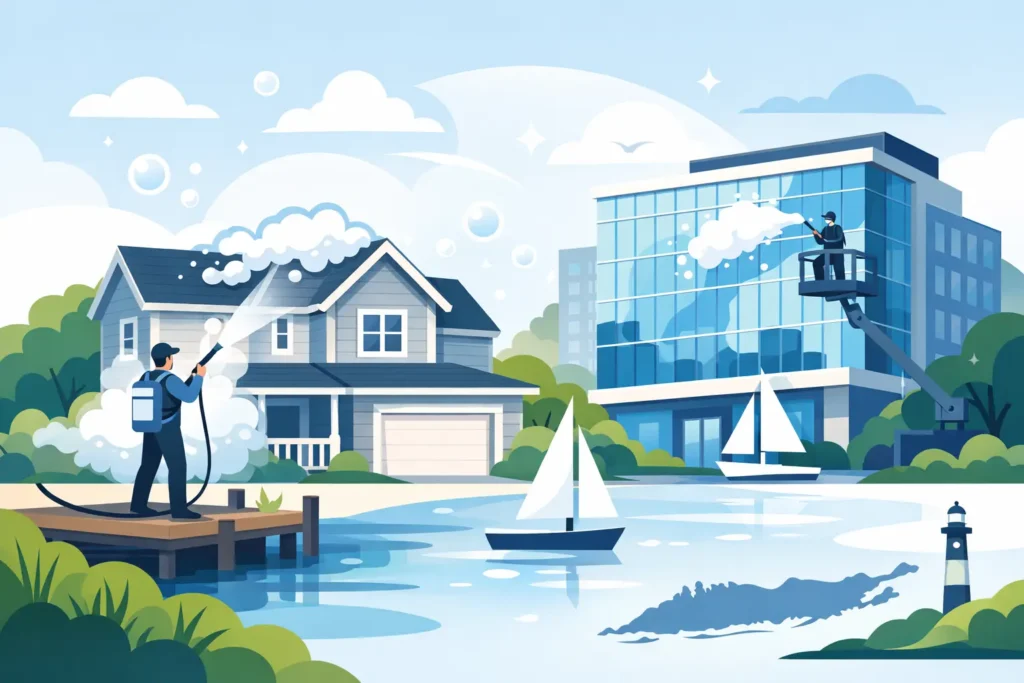
Green streaks on vinyl siding, dark roof stains, and mildew along walkways can make a well-kept Long Island property look neglected fast. Soft washing gives property owners a practical way to remove that buildup without using the force needed for tougher surfaces such as concrete. The result is a cleaner exterior, stronger curb appeal, and a treatment approach designed for materials that need a lighter touch.
What Is Soft Washing?
Soft washing is a low-pressure exterior cleaning method used to treat and remove organic buildup such as algae, mold, mildew, moss, and surface grime. Instead of relying on high water pressure to blast stains away, the process uses a carefully applied cleaning solution and gentle rinsing to clean the surface.
That difference matters. High-pressure cleaning is highly effective for durable materials such as driveways, patios, curbs, and certain masonry. But too much pressure on the wrong surface can cause problems, including loose siding, damaged paint, water forced behind exterior materials, or weakened roof shingles.
Soft washing is often the better choice when the goal is to clean a delicate exterior surface while helping preserve its finish. It treats the source of common staining rather than simply knocking visible dirt off the surface.
Why Long Island Properties Need Regular Exterior Cleaning
Nassau and Suffolk County properties deal with a mix of coastal moisture, seasonal pollen, tree debris, humidity, and winter weather. That environment creates ideal conditions for algae and mildew to grow, especially on shaded sides of homes, north-facing walls, roofs beneath trees, fencing, and commercial buildings with limited sunlight.
What starts as a faint green film can spread over time. On siding, it can dull the color and make an otherwise clean home look older than it is. On roofs, black streaks can distract from the entire property and create the impression that the roof is in poor condition, even when the issue is primarily surface staining.
For landlords and property managers, exterior buildup can quickly become a presentation issue. Tenants, guests, customers, and prospective buyers notice entryways, building facades, sidewalks, and common areas before they notice anything else. A clean exterior sends a simple message: the property is cared for.
Where Soft Washing Makes Sense
Soft washing is not a one-size-fits-all service. The right method depends on the surface, its condition, the type of buildup, and the surrounding landscaping. A professional assessment helps determine whether soft washing, traditional power washing, or a combination of both will deliver the best result.
House Siding
Vinyl, painted wood, stucco, Hardie board, and other siding materials can collect dirt, pollen, algae, and mildew. Soft washing is commonly used to clean these surfaces without the aggressive pressure that may damage finishes or drive water into gaps.
A proper cleaning can make siding look brighter and more even, particularly after a damp spring or summer. It also helps remove the grime that gathers around trim, shutters, gutters, soffits, and areas protected from direct sun.
Roofs
Roof cleaning requires special care. Shingles are not designed to withstand high-pressure washing, which can remove protective granules and shorten the material’s useful life. For many stained shingle roofs, a soft wash approach is the safer option.
Roof stains are often caused by algae, not simply dirt. Cleaning the roof with the appropriate method can improve its appearance significantly without the unnecessary risk of pressure damage. The roof’s age, material, pitch, and manufacturer guidance should always be considered before work begins.
Decks, Fences, and Outdoor Features
Wood and composite surfaces can benefit from a low-pressure cleaning method when they have mildew, algae, or general outdoor grime. A soft wash can refresh the appearance of fencing, railings, pergolas, and certain deck surfaces while reducing the risk of gouging wood or stripping a finish.
The condition of the material matters. A weathered deck with peeling stain may need more than cleaning, while a newer composite deck may respond well to a gentle wash and rinse. This is why a quick look at the surface before quoting the job is worth the time.
Commercial Buildings and Common Areas
Retail storefronts, office buildings, multifamily properties, restaurants, and professional offices all benefit from a clean exterior. Soft washing can be a useful option for facades, awnings, siding, signs, entry areas, and other surfaces where excessive pressure would not be appropriate.
For commercial properties, the best timing often depends on foot traffic and business hours. A customized cleaning plan can keep disruption low while giving customers, tenants, and visitors a better first impression.
Soft Washing vs. Power Washing
Soft washing and power washing are both valuable exterior cleaning methods, but they serve different purposes. The choice should be based on what needs cleaning, not on which name sounds stronger.
Power washing uses higher pressure and is often the right fit for hard, durable surfaces. Concrete driveways, patios, pavers, sidewalks, pool decks, and heavily soiled masonry may need that added force to lift embedded dirt and restore a more uniform appearance.
Soft washing uses lower pressure and a cleaning solution to address organic stains on more sensitive materials. It is commonly selected for siding, roofs, painted exteriors, fences, and surfaces with mildew or algae growth.
Many properties need both. A homeowner may choose soft washing for the house and roof, then use power washing for the driveway, front walk, and patio. Cleaning the entire property with the right method for each surface creates a more complete before-and-after result.
What a Professional Soft Washing Visit Should Include
A good soft washing job starts before any equipment is turned on. The cleaner should look at the exterior materials, identify staining, note damaged or vulnerable areas, and consider nearby plants, outdoor furniture, electrical fixtures, and water access.
The process generally includes preparing the work area, protecting sensitive features, applying the right treatment, allowing it time to work, and rinsing carefully at low pressure. Some heavily stained areas may need additional attention, while light seasonal buildup can often be handled more quickly.
Property owners should not be surprised if a professional asks questions about prior paintwork, roof repairs, landscaping, or problem areas. Those details help prevent avoidable issues and support a more accurate quote and timeline.
At Father & Son Power Washing, the goal is straightforward: assess the property in person, explain what the job requires, and provide a free no-obligation quote with clear expectations. That personal approach helps ensure the service fits the surface instead of forcing every project into the same cleaning method.
How Often Should You Schedule Soft Washing?
For many Long Island homes, soft washing every one to three years is a reasonable starting point. Properties near dense trees, areas with consistent shade, or locations exposed to more moisture may need cleaning more often. Commercial properties with high visibility may benefit from a regular maintenance schedule based on their location and customer traffic.
The best sign that it is time to clean is visible buildup. Green or black staining, dull siding, mildew around exterior trim, and dirty entry areas are all signals that an exterior cleaning can make a noticeable difference.
Waiting too long is not always a money-saving move. More established buildup can take additional time to treat, and stains may become harder to remove from porous surfaces. Regular service keeps the work manageable and helps your property look cared for throughout the year.
A Cleaner Exterior Starts With the Right Method
Soft washing is not about using less effort. It is about using the right approach for surfaces that need careful cleaning. When algae, mildew, and grime are making your home, rental property, or business look worn down, a professional assessment can identify the safest and most effective path to a cleaner exterior.
A quick conversation and an in-person quote can take the guesswork out of the job. Whether you need one problem area cleaned or want to refresh the entire property, choosing the right method helps protect the surfaces you have worked hard to maintain.