
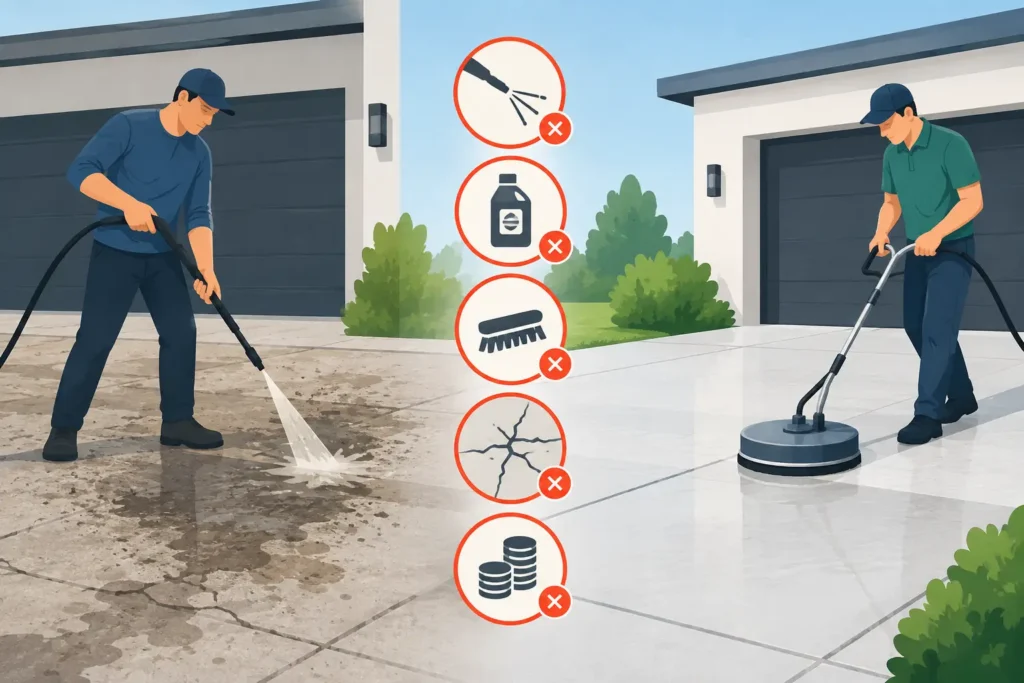
A driveway can look worse after a weekend cleaning attempt than it did before it started. That is the frustrating result of many concrete cleaning mistakes: permanent pressure marks, faded patches, damaged edges, or stains that return a few days later. For Long Island property owners, the goal is simple – a cleaner surface that improves curb appeal without creating a costly repair project.
Concrete is tough, but it is not invincible. Its porous surface holds dirt, algae, road film, salt residue, oil, and organic stains. The right approach depends on the age and condition of the concrete, the type of stain, and whether the surface has been sealed. A little care in the planning stage can make a major difference in the final result.
1. Using Too Much Pressure
More pressure does not always mean a better clean. One of the most common mistakes is putting a high-powered nozzle too close to the surface and trying to blast away every dark spot. This can leave visible wand lines, roughen the surface, expose aggregate, and make a driveway or patio look uneven in certain light.
Pressure washing works best when pressure, water flow, cleaning solution, and technique are matched to the job. A broad, even cleaning path is usually safer than holding a narrow stream over one stubborn area. Older concrete, cracked sections, and concrete with flaking or weak surface layers need extra caution.
If a section looks chalky, pitted, or already worn, aggressive pressure may cause more damage than cleaning. That is a good time to step back and have the surface assessed before continuing.
2. Skipping the Pre-Treatment
Water pressure alone is not the answer to every stain. Algae, mildew, tire marks, oil, leaf tannins, and rust all behave differently. Skipping a suitable pre-treatment often leads people to compensate with excessive pressure, which is where damage begins.
A proper cleaner gives the stain time to loosen before rinsing. For example, an outdoor growth treatment can address green or black biological buildup on shaded walkways, while a degreaser is more appropriate for fresh automotive oil. Rust requires a different product and careful handling. Using the wrong chemical may do very little, or it may discolor the concrete and nearby materials.
Pre-treatment also helps deliver a more even finish. Instead of repeatedly attacking the darkest spots, the entire surface can be cleaned in a controlled, consistent way.
3. Using Household Cleaners Without Checking the Label
Bleach, vinegar, dish soap, and other household products are often suggested as quick fixes. Some may seem harmless, but concrete cleaning is not one-size-fits-all. Strong acids can etch concrete. Harsh products can affect surrounding grass, landscaping, painted surfaces, metal fixtures, and natural stone. Even a product that works on one stain may be a poor choice for another.
Never mix cleaners. Combining chemicals can create dangerous fumes or reactions, and it does not improve the cleaning result. Use a product specifically labeled for the stain and surface, follow its dilution instructions, and protect nearby plants with water before and after the work when appropriate.
For a small, isolated spot, test any cleaner in an inconspicuous area first. On a large driveway, pool deck, or commercial walkway, guessing can turn a manageable cleaning job into a broader restoration issue.
4. Cleaning Only the Stained Spot
A dark oil mark or patch of algae naturally draws attention, but spot-cleaning often creates a lighter circle that is just as noticeable. Concrete changes color over time as it collects dirt, moisture, and sun exposure. When one small area is cleaned much more aggressively than the rest, the contrast can remain long after the stain is gone.
The better approach is to treat the stain directly, then clean the surrounding section evenly. Depending on the layout, that may mean cleaning the full parking space, patio panel, walkway run, or driveway section. It takes more time, but the finished surface looks more natural.
This matters especially for front walkways and driveways, where uneven cleaning is easy to see from the street. A uniform result is what makes a property look cared for, not simply a collection of lighter patches.
5. Forgetting About Plants, Windows, and Drainage
Concrete cleaning affects more than concrete. Runoff can carry dirty water and cleaning products toward garden beds, storm drains, basement entrances, garages, and neighboring areas. Overspray can leave residue on windows, siding, doors, or outdoor furniture.
Before starting, move what can be moved and cover or wet nearby plants as needed. Pay attention to the slope of the surface. A driveway that drains toward a garage needs a different plan than a flat patio that drains toward a lawn. Commercial properties may also have drainage rules or high-traffic areas that require careful scheduling and containment.
Do not let cleaning solution dry on glass, painted trim, or landscaping. Rinse surrounding surfaces promptly and thoroughly. These basic steps protect the rest of the property while the concrete gets cleaned.
6. Ignoring Cracks, Loose Concrete, and Failing Sealer
Pressure washing will not repair damaged concrete, and it can reveal or worsen existing problems. Small cracks, crumbling edges, loose pieces, and areas with scaling deserve attention before cleaning begins. Water forced into weak joints or damaged areas can contribute to further deterioration, particularly through a Long Island winter of freezing and thawing.
A failing sealer can create another surprise. Some sealed surfaces clean easily, while others show blotchy results if the sealer has worn unevenly. If water beads in some places but soaks in quickly elsewhere, the surface may have inconsistent protection. Cleaning can still be possible, but it should be approached with realistic expectations.
After cleaning, allow concrete to dry fully before considering a new sealer. Sealing a damp surface can trap moisture and lead to a cloudy or uneven appearance. It also pays to remember that a sealer is not a cure-all. The best choice depends on the concrete’s use, finish, and exposure to sun, vehicles, pool water, or deicing materials.
7. Waiting Until the Surface Is Heavily Soiled
The hardest concrete jobs usually did not become hard overnight. Organic growth builds up in shaded areas. Oil drips sit and soak in. Leaves and wet debris leave marks. Winter grime and salt residue collect through the season. Waiting until the surface looks severely neglected can mean more labor, more cleaning solution, and a greater chance that some stains have become permanent.
A practical maintenance schedule is easier on the surface and easier on the budget. Most homes benefit from an annual check of driveways, sidewalks, patios, stoops, and pool areas, with more frequent attention for heavily shaded or high-traffic areas. Businesses may need service on a schedule that reflects customer traffic, deliveries, and the appearance they want visitors to see.
When It Makes Sense to Call a Professional
A basic rinse of sound concrete can be a reasonable DIY project when there are no major stains, fragile nearby surfaces, or drainage concerns. The trade-off is that rental equipment and trial-and-error techniques can leave an inconsistent finish. The risk rises with large driveways, deep oil stains, rust, heavy algae, old concrete, pavers beside the concrete, or surfaces close to siding and landscaping.
A professional assessment removes much of the guesswork. The surface can be evaluated in person, the likely results can be discussed honestly, and the cleaning plan can be matched to the condition of the property. For homeowners, landlords, and commercial property managers in Nassau and Suffolk counties, Father & Son Power Washing provides free, no-obligation quotes with a clear scope before work begins.
Your concrete does not need to look brand new to make a strong impression. It needs to look clean, even, and cared for. Address buildup before it becomes a bigger issue, and choose a cleaning method that protects the surface you worked hard to maintain.