
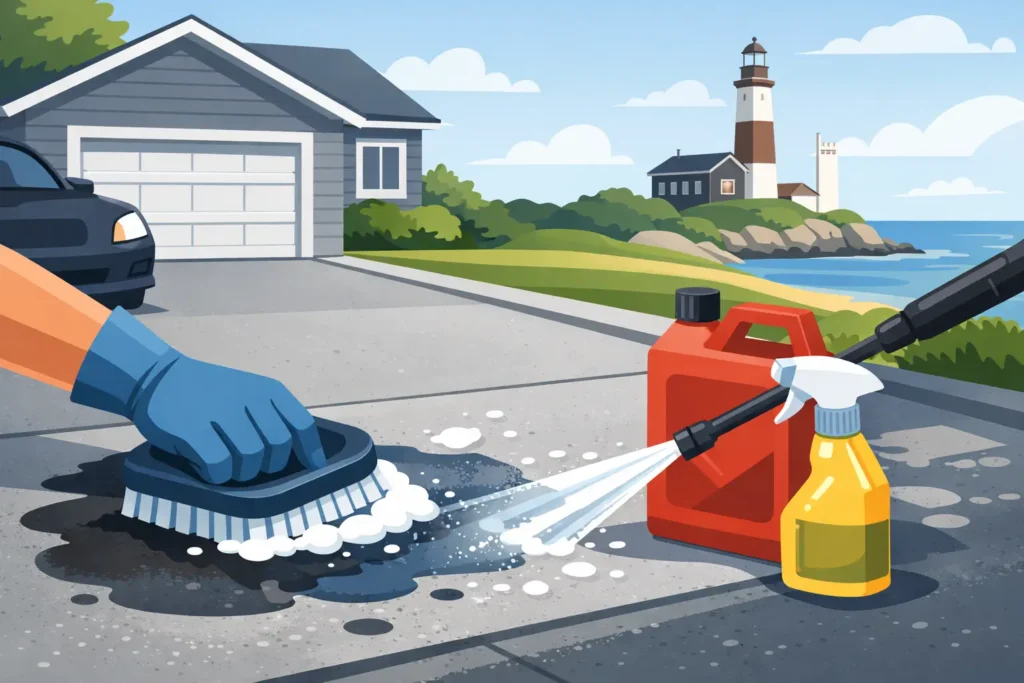
A dark oil spot can make an otherwise clean driveway look neglected fast. Driveway oil stain removal is most successful when the spill is treated early, with the right cleaner for the surface and a plan to keep oily runoff out of nearby grass, drains, and streets.
For Long Island homeowners, landlords, and property managers, this is usually more than a cosmetic issue. A stained driveway affects curb appeal, can create a slippery area when wet, and may become much harder to clean after weeks of sun, rain, and vehicle traffic push the oil deeper into the surface.
Why Oil Stains Set Into Driveways
Motor oil, transmission fluid, brake fluid, and power steering fluid do not simply sit on top of concrete or asphalt. Concrete is porous, so oil can travel below the visible surface. Asphalt has a different challenge: strong chemicals and excessive pressure can damage or strip the binder that holds the surface together.
Age matters too. A fresh drip may lift with absorbent material and a good degreaser. A stain that has baked through a Long Island summer, been through freeze-thaw cycles, or collected dirt for months may leave behind a shadow even after careful cleaning. That does not mean the job was unsuccessful. It means the goal may be reducing the stain dramatically rather than promising an unrealistic, perfectly uniform surface.
The size and source of the stain also matter. A few drops beneath a parked car call for a different approach than a large, repeated leak from a vehicle or commercial fleet. If the leak is still active, have the vehicle repaired first. Otherwise, the driveway will be stained again before the cleaning work has a chance to last.
Driveway Oil Stain Removal Starts With the Fresh Spill
When oil is fresh, act before reaching for a hose. Water alone does not remove oil, and rinsing the area immediately can spread the contamination farther across the driveway.
Start by covering the spill with a dry absorbent material, such as clay-based kitty litter, oil-dry absorbent, baking soda, or another product designed for oil pickup. Let it sit long enough to draw out the liquid, then sweep it up and dispose of it according to local guidance. Do not wash the used material into a storm drain.
After the loose oil has been absorbed, apply a driveway-safe degreaser according to the label. Work it into the spot with a stiff nylon brush, not a wire brush that can scratch or leave metal marks on concrete. Give the cleaner time to work, then collect or control the residue as much as possible before using a modest amount of water.
A fresh stain may need two applications. That is normal. Rushing the process with too much water can dilute the cleaner before it has time to break up the oil.
Avoid harsh shortcuts
Some common home remedies create more problems than they solve. Gasoline, kerosene, and similar solvents are unsafe, highly flammable, and can drive oil deeper into the pavement. Bleach is not a dependable oil remover and can harm nearby landscaping. Acid-based products may alter the color or texture of concrete, especially when used without experience.
Dish soap can help with very small fresh drips, but it is not always strong enough for a set-in automotive oil stain. It can also create a large amount of suds that are difficult to control outdoors. For an older spot, use a product specifically made for oil and grease on the type of driveway you have.
The Right Method Depends on Your Driveway Surface
Concrete, pavers, and asphalt should not be treated as if they are the same material. This is where a little caution protects the value of the property.
Concrete driveways
Concrete is durable, but it is porous. A degreaser, agitation with a nylon brush, and controlled rinsing are often the right starting point. Professional surface cleaning can improve the overall appearance after spot treatment, particularly when dirt and mildew make the driveway look uneven around the oil mark.
However, pressure alone is rarely the answer to embedded oil. A powerful pressure washer can leave visible cleaning lines, etch the concrete, or push oily water into surrounding areas if the stain has not been properly treated first.
Asphalt driveways
Asphalt needs a gentler touch. Certain degreasers and solvents can soften the asphalt binder and leave a worn or patchy area. High pressure can also disturb older asphalt, especially around cracks and weak edges.
For asphalt, start with absorbent material and choose a cleaner clearly labeled as safe for asphalt. Test it in a small, less noticeable area first. When a deep stain remains, it may be better to reduce the oil and discuss whether a future sealcoat is appropriate rather than aggressively scrubbing until the driveway is damaged.
Pavers and stone
Pavers can absorb oil and may hold it in the joints between pieces. Cleaning often requires treating the individual pavers, brushing carefully, and managing runoff so residue does not settle back into the joint sand. Natural stone varies widely, so avoid assuming that a product safe for concrete is safe for every stone surface.
When DIY Cleaning Is Worth Trying
A homeowner can often handle a small, recent drip if there is time to treat it promptly and the right products are available. The best DIY jobs are usually limited to one small area, on a surface in good condition, with no nearby drain or slope that makes runoff difficult to control.
It is smart to call in a professional when the stain is old, widespread, repeatedly returns, or covers a driveway that already has heavy buildup. The same is true for rental properties, storefronts, office sites, and other locations where a stained entrance affects the first impression of the property.
Professional cleaning brings more than stronger equipment. It includes assessing the surface, selecting an appropriate cleaning approach, and avoiding damage from excessive pressure or the wrong chemical. For larger jobs, the work can also be coordinated with cleaning walkways, patios, siding, or other exterior surfaces so the property looks consistently maintained rather than partly refreshed.
What Results Should You Expect?
The most honest answer is that it depends on the age of the stain, the type of oil, and the driveway material. Fresh spots often respond well. Older stains can usually be lightened significantly, but a faint shadow may remain where oil penetrated deeply into porous concrete.
A clean surrounding surface can make a major difference even when a stubborn stain does not disappear completely. Dirt, tire marks, algae, and general discoloration often make an oil spot look worse. Once those are removed, the remaining mark may be much less noticeable.
Be careful with anyone who guarantees that every stain will vanish without first seeing the driveway. A reliable provider should explain what is realistic, point out any risks, and give you a clear estimate before work begins.
Keep New Oil Spots From Becoming Permanent
The simplest prevention is regular vehicle maintenance. Check for leaks after an oil change, watch for fresh drips where cars normally park, and place a drip pan or protective mat under a vehicle until the repair is made.
For concrete driveways, a properly selected sealer can help limit future absorption. Sealing is not a cure for an existing leak, and it should be done only after the surface is clean and dry. On asphalt, follow the recommendations for the age and condition of the driveway before scheduling sealcoating.
It also helps to sweep the driveway regularly. Leaves, soil, and dust hold moisture and can disguise fresh drips until they have already set in. Catching a stain early is always easier and more affordable than dealing with a dark, embedded patch later.
For driveway oil stains that are too old, too large, or too stubborn for a weekend cleanup, Father & Son Power Washing can provide an in-person assessment and a free, no-obligation quote for Long Island properties. A straightforward evaluation gives you a realistic plan for a cleaner driveway and better curb appeal without taking unnecessary risks with the surface.