
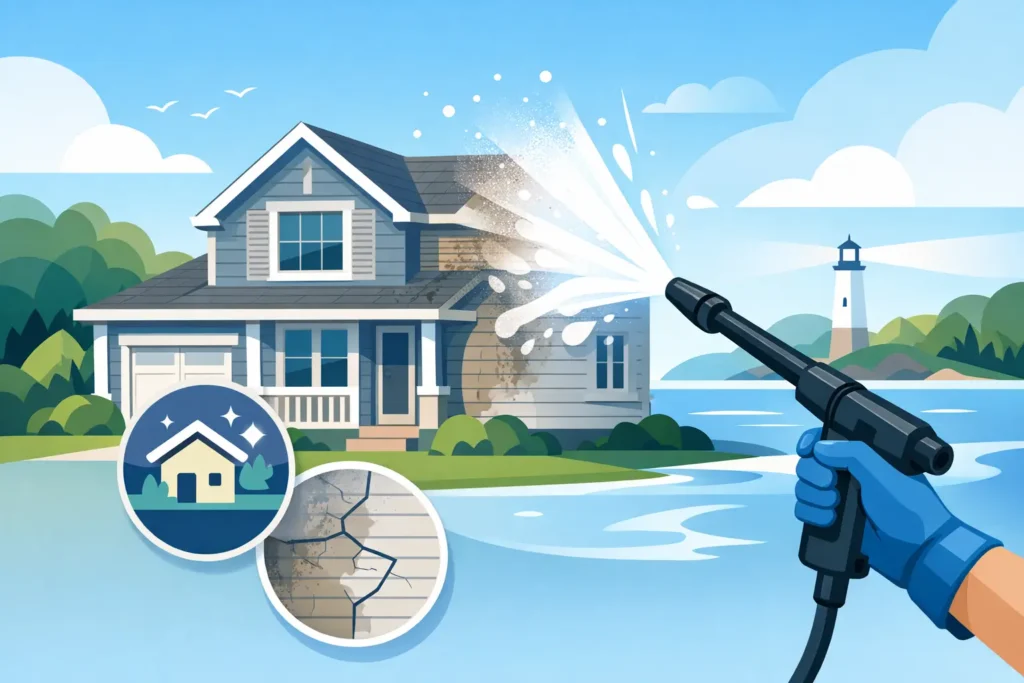
A dark, streaked driveway or green buildup on siding can make an otherwise well-kept Long Island property look neglected. But before aiming a powerful stream of water at the problem, homeowners understandably ask: is power washing safe? It can be, but only when the pressure, cleaning solution, and technique match the surface being cleaned.
Power washing is not a one-setting job. The same force that lifts years of grime from concrete can damage wood, force water behind siding, or leave marks on a softer surface. Safe cleaning starts with looking at the property as a whole, not just the stain that needs to come off.
Is Power Washing Safe? It Depends on the Surface
Power washing is generally safe for durable exterior materials when performed correctly. Concrete driveways, brick walkways, many patios, and sturdy masonry can often handle higher pressure. Even then, the right distance, nozzle, and water flow matter. Holding a wand too close to concrete can leave visible lines or etching, especially on older surfaces.
Other materials need a lighter approach. Vinyl siding, painted surfaces, composite decking, window trim, outdoor furniture, and fencing can be cleaned effectively with lower pressure and a surface-appropriate solution. This approach is often called soft washing. Rather than relying on force alone, it allows the cleaning product time to loosen organic buildup such as algae, mildew, and pollen before a gentle rinse.
That distinction matters on Long Island, where humid summer weather and shaded areas around homes can encourage green growth. A surface may look like it needs more pressure when it really needs the right cleaning method.
What Can Go Wrong With Improper Power Washing?
Power washing has real benefits, but it is not risk-free in inexperienced hands. The most common problems come from using too much pressure, choosing the wrong nozzle, or treating every surface the same way.
Damage can include stripped paint, gouged wood, torn window screens, chipped mortar, and water pushed into cracks around windows or siding. Older homes deserve extra care because loose paint, aging caulk, weathered wood, and deteriorating mortar may not tolerate aggressive cleaning.
Roofs are another area where caution is essential. High-pressure washing can dislodge shingles, shorten the life of roofing materials, and push water where it does not belong. Roof staining should be evaluated separately and cleaned with a roof-safe method, not a standard high-pressure setting.
There is also a personal safety concern. A pressure washer stream can cause serious injury if it hits skin, and the combination of wet surfaces, hoses, and cleaning equipment creates slip-and-fall hazards. Cleaning a second-story area from a ladder adds another layer of risk. A cleaner exterior is never worth an emergency room visit or a fall.
How Professionals Make Exterior Cleaning Safer
A professional cleaning crew does more than bring a larger machine. The safer result comes from planning the work around your property’s materials, condition, and problem areas.
Start with an in-person assessment
Before cleaning begins, the property should be checked for peeling paint, loose siding, cracked concrete, fragile landscaping, damaged mortar, open electrical fixtures, and other concerns. This assessment helps determine whether a surface needs high pressure, low pressure, a specialty cleaner, or a different service altogether.
It also prevents surprises. If a deck has splintering boards or a driveway has existing cracks, those conditions should be identified before work starts. Clear communication protects both the property owner and the cleaning team.
Use pressure as a tool, not the whole solution
The goal is not to use the highest pressure possible. The goal is to remove buildup without harming the material underneath. Professionals adjust pressure, nozzle angle, distance, and water volume based on the job.
For example, a concrete patio may need a controlled higher-pressure wash to remove embedded dirt. A vinyl-sided home may need a low-pressure rinse after a cleaning solution breaks down surface grime. The visible result can be just as dramatic, without unnecessary force.
Protect plants, windows, and outdoor features
Good preparation makes a major difference. Nearby plants should be pre-rinsed and protected as needed. Outdoor furniture, grills, decorative items, and sensitive fixtures should be moved or covered. Windows and doors should be checked for proper closure, while exterior outlets and light fixtures require special attention.
Cleaning solutions should be selected and applied responsibly. The right product, proper dilution, controlled application, and thorough rinsing help protect landscaping and reduce the chance of residue being left behind.
When Power Washing May Not Be the Right Choice
Sometimes the safest recommendation is to avoid power washing a particular area. Severely deteriorated wood, failing paint, loose masonry, damaged siding, and old window seals may need repair before cleaning. Pressure washing will not fix a failing surface, and it can make an existing issue more noticeable.
Delicate materials also call for a different method. Natural stone, older brick, stucco, and certain painted finishes can vary widely in strength and condition. A small test area is often the smart first step. If the surface reacts poorly, a gentler cleaner and rinse may be the better option.
The time of year can matter, too. Freezing temperatures are not ideal for exterior washing because water can freeze on walkways and in small cracks. On hot, sunny days, cleaning products can dry too quickly if they are not managed carefully. A professional can schedule and adjust the work around weather conditions instead of taking chances with the finish.
Is DIY Power Washing Safe for Homeowners?
For a simple, durable surface and a homeowner who understands the equipment, DIY power washing can be manageable. Still, renting or buying a machine does not automatically make every job a good do-it-yourself project. Pressure washers are powerful, and the learning curve is real.
If you choose to handle a small job yourself, read the equipment instructions, wear closed-toe shoes and eye protection, and keep the spray away from people, pets, electrical components, and glass. Start with the lowest effective setting and test an inconspicuous area first. Never spray upward into siding, and do not use a ladder while operating a pressure washer.
For whole-house washing, elevated areas, roofs, delicate surfaces, or properties with extensive staining, hiring a trained local crew is usually the safer and more efficient choice. It saves you from guessing which setting to use and reduces the chance that a weekend project turns into an expensive repair.
A Safer Way to Restore Curb Appeal
The best exterior cleaning results come from matching the method to the material. A clean driveway, brighter siding, and refreshed patio can make a property feel cared for again, but the job should never be rushed for the sake of a quick before-and-after photo.
Father & Son Power Washing helps Nassau and Suffolk County property owners start with an in-person look at the work, followed by a clear, no-obligation quote and expected project timeline. That process makes it easier to address the surfaces that need attention while avoiding unnecessary risk to the ones that need a gentler touch.
If your exterior has buildup, staining, or weathered areas, take a close look before reaching for the highest-pressure setting. The right approach can restore the appearance you want while treating your home, business, and landscaping with the care they deserve.