
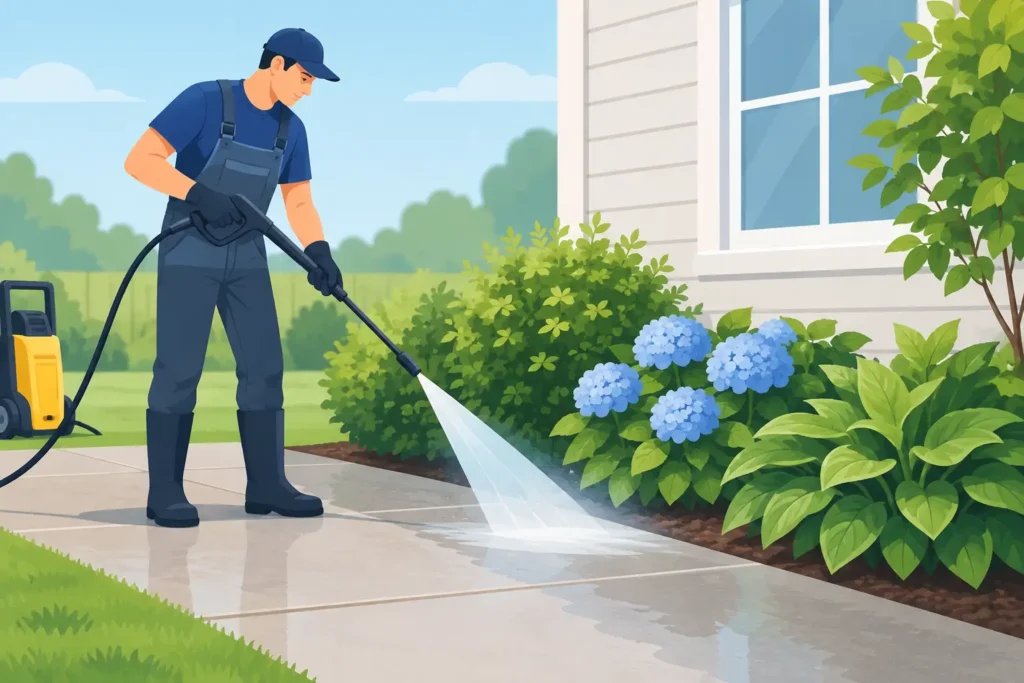
A clean driveway, patio, or siding can make your property look completely refreshed in a single afternoon. But if you have flower beds beside the house, shrubs along the walk, or containers near the patio, you may reasonably ask: will power washing affect plants? It can, if the job is rushed or handled without protecting the landscape first. With the right preparation, equipment settings, and cleanup process, power washing can be completed safely around most established plants.
For Long Island homeowners and property managers, the goal is simple: remove the dirt, mildew, algae, and stains without trading a cleaner exterior for damaged landscaping. Here is what affects the risk and how a careful power washing crew protects your property.
Will Power Washing Affect Plants? It Depends on the Process
Water pressure alone is not usually the biggest concern for plants. A strong, direct spray can break leaves, snap tender stems, or disturb freshly planted flowers, but established shrubs and perennials can generally handle nearby cleaning when they are shielded from the spray.
The greater concern is often cleaning solution and runoff. Some exterior surfaces need more than water to remove algae, mold, mildew, or deep organic staining. If a solution is used too heavily, allowed to sit too long, or left on foliage and soil, it can stress or damage plants.
That does not mean landscaping and professional cleaning do not mix. It means the work needs to be scoped properly. The surface being cleaned, the condition of the property, the location of plant beds, drainage, and the types of plants nearby all matter.
What Can Put Landscaping at Risk
Most plant-related problems come from avoidable issues, not from the idea of power washing itself. Direct high-pressure contact is one example. Pressure that is right for a concrete driveway may be too aggressive near a delicate hydrangea, young evergreen, or a row of annuals.
Runoff is another factor. Water carrying loosened grime or cleaning solution can flow into beds along the foundation, pool around tree roots, or collect in low spots. This is especially worth watching on properties with tight planting areas beside walkways, patios, decks, and siding.
Newly installed landscaping needs extra attention. A mature boxwood hedge is more resilient than freshly planted shrubs with shallow roots. Vegetable gardens, herbs, flowering annuals, and potted plants should also be treated with greater care because they are more sensitive and easier to move or cover before work begins.
Weather can change the equation too. On a hot, sunny day, moisture or solution on leaves can dry faster. After heavy rain, saturated soil may carry runoff farther than expected. A professional assessment helps identify these details before the cleaning starts.
How Plants Are Protected During Power Washing
A careful crew does not arrive, turn on the machine, and spray every surface the same way. Protecting landscaping begins with a walkthrough of the property. This makes it possible to identify plant beds, sensitive areas, downspouts, drainage paths, outdoor furniture, and surfaces that need a gentler approach.
Water Before and After Cleaning
Pre-wetting nearby plants and soil is one of the simplest protective steps. Moist leaves and hydrated soil are less likely to absorb cleaning residue than dry foliage and dry ground. After the work is complete, plants are rinsed again to wash away any residue that may have reached them.
This step is especially helpful around foundation plantings, where beds sit directly below siding or near a walkway being cleaned.
Use the Right Pressure for the Surface
Not every job calls for maximum pressure. Concrete, pavers, vinyl siding, wood, composite decking, and painted surfaces all require different methods. Lower pressure and the right nozzle can clean effectively while reducing the chance of spray reaching nearby leaves and stems.
For certain exterior cleaning jobs, a low-pressure application and rinse may be a better choice than forceful washing. The best method is based on the surface and the condition of the buildup, not on using more pressure than necessary.
Cover or Move Sensitive Plants When Needed
Small pots, hanging baskets, garden décor, and lightweight planters can usually be moved out of the work area. Delicate flowers or low-growing plants may be covered temporarily when appropriate. Covers should not stay in place longer than necessary, particularly on warm days, since plants still need airflow.
Larger shrubs are typically protected through controlled spray direction, distance, and rinsing rather than wrapping them completely.
Control Runoff and Clean Up Thoroughly
A clean result should include attention to where water goes. Crews should avoid pushing dirty water into beds or allowing it to sit around roots. After cleaning, the surrounding area should be checked for overspray, standing water, and debris.
This is one reason a property-specific plan matters. A large commercial walkway with landscaped edges has different runoff concerns than a backyard patio with container plants.
What You Can Do Before Your Appointment
You do not need to prepare your entire yard for a power washing visit, but a few quick steps can make the job easier and help protect the areas you care about most. Move portable pots, planters, bird feeders, and outdoor decorations away from the cleaning area if possible. Let the crew know about newly planted beds, fragile flowers, vegetable gardens, or any irrigation issues.
It also helps to point out areas where drainage has caused trouble in the past. If water tends to collect near a basement entry, pool beside a garden bed, or run toward a neighboring property, that information allows the work to be planned more carefully.
Keep windows closed, move vehicles away from the work zone, and make sure outdoor water access is available if requested. From there, the cleaning team should handle the surface assessment and protection plan.
Signs Your Plants May Need Extra Attention
Most plants will look normal after a properly handled cleaning. Still, it is smart to check nearby landscaping over the next day or two. Leaves may need a simple rinse if they appear dusty or have visible residue. If a plant looks wilted after being covered or exposed to warm weather, water it as you normally would and allow it time to recover.
Call attention to any unusually sensitive plants before work begins rather than after. Specialty roses, new shrubs, prized perennials, and edible gardens deserve an extra conversation. A good contractor will not treat those concerns as an inconvenience. They are part of doing the job right.
Why Professional Planning Makes a Difference
DIY power washing can look straightforward until you are balancing pressure settings, slippery surfaces, hoses, cleaning products, landscaping, and drainage at the same time. The risk is not only plant damage. Incorrect pressure can scar wood, etch concrete, force water behind siding, or leave uneven results.
Professional service gives you a clearer process: an in-person look at the property, a recommendation based on the surfaces and surrounding landscape, and a defined plan for the work. At Father & Son Power Washing, that starts with understanding what needs cleaning and what needs protecting, followed by a free, no-obligation quote.
The right approach keeps the focus where it belongs: a noticeably cleaner home or commercial property, protected landscaping, and no unnecessary guesswork. Before scheduling, take a quick walk around your exterior and make note of the plants and drainage areas you want your cleaning team to see. That small conversation can help deliver the fresh, well-kept result you want without putting your garden in the line of fire.