
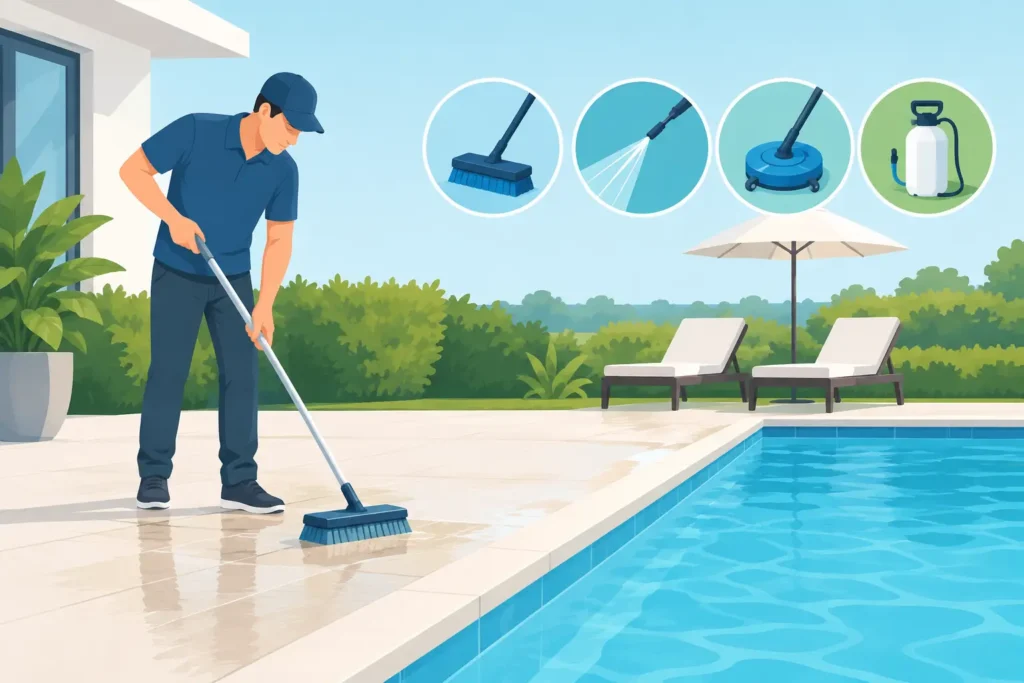
A pool deck can look tired long before the pool itself does. Leaf stains, sunscreen residue, algae, dirt tracked in from the yard, and Long Island humidity can leave the surface dark, slippery, or uneven in color. The right pool deck cleaning methods make a visible difference, but choosing the wrong one can damage concrete, strip paver sand, or leave a delicate stone surface worse than before.
For most Nassau and Suffolk County property owners, the goal is simple: a deck that looks clean, feels safer underfoot, and is ready for family, guests, tenants, or customers. The best approach depends on the material, the type of buildup, and the condition of the surface.
Start With the Pool Deck Material
There is no one setting or cleaning product that works safely on every pool deck. Before any cleaning begins, identify what you are standing on. Concrete, pavers, natural stone, stamped concrete, and composite materials all respond differently to water pressure and cleaning solutions.
Standard concrete is durable, but it can still show wand marks when pressure is too concentrated or the operator works too close to the surface. Stamped concrete needs even more care because aggressive washing can wear down color, sealant, and surface detail. Pavers can handle a thorough cleaning, but high pressure may dislodge the joint sand that helps hold them in place.
Natural stone is where caution matters most. Travertine, limestone, sandstone, and similar materials can be porous or soft. The wrong chemical can discolor the stone, while excessive pressure can etch its face or open up weak areas. A professional assessment helps match the cleaning method to the deck instead of treating every surface the same.
Pool Deck Cleaning Methods for Common Problems
Most deck cleaning work combines more than one method. A clean result is not just about blasting away visible dirt. It means treating the cause of the staining, rinsing thoroughly, and protecting the surrounding pool area, landscaping, and exterior features.
Low-Pressure Washing for Organic Growth
Green or black buildup is often algae, mildew, mold, or a mix of organic residue and trapped moisture. This is common in shaded areas, along fence lines, near landscaping, and on decks that stay damp after rain or pool use.
Low-pressure washing with an appropriate cleaning solution is often the better choice for this problem. The solution does the work of breaking down growth, while a controlled rinse lifts it from the surface. This approach is especially useful for painted concrete, sealed surfaces, and many types of natural stone.
Pressure alone can remove the top layer of algae, but it may not fully address what is settled into pores and small surface imperfections. That can lead to a deck that looks better briefly, then develops dark spots again sooner than expected.
Controlled Power Washing for Concrete and Pavers
For unsealed concrete and properly installed pavers, controlled power washing can remove embedded grime, mud, shoe marks, pollen, and buildup from busy outdoor areas. The key word is controlled. Water pressure, nozzle selection, distance from the deck, and cleaning pattern all affect the final result.
A trained technician works in overlapping passes to avoid streaks and uneven clean areas. This matters on large patios and pool surrounds, where a patchy finish is easy to notice once the deck dries. The technician should also take care around coping, expansion joints, drainage areas, and the pool edge.
Paver decks may need follow-up attention after cleaning. If the work removes loose joint sand, the joints may need to be refilled so the pavers remain supported and weed growth is less likely to return. That extra step is one reason a low price is not always the best value.
Spot Treatment for Rust, Leaf Marks, and Mineral Stains
Not every stain should be handled with pressure. Rust from patio furniture, irrigation systems, metal planters, or pool accessories often needs a targeted treatment. Leaf and acorn stains can also settle deeply into porous concrete or stone, especially when wet debris sits on the deck for days.
Mineral deposits near water features, pool edges, or hard-water splash zones may need a different cleaner again. Using a general-purpose chemical on every stain can create discoloration or leave the original problem behind. Spot treatment allows the cleaner to address difficult areas without overworking the entire deck.
If a stain has been present for years, complete removal may not always be realistic. A reliable cleaning company should set clear expectations before the job rather than promise a result the surface cannot deliver.
Why DIY Pressure Washing Can Go Wrong
Renting a pressure washer seems like a fast weekend project. For light dirt on durable concrete, it can be. But pool decks have more risks than a typical driveway because the surface is often finished, sealed, textured, or close to water.
Too much pressure can create permanent lines in concrete that only become obvious after the deck dries. It can loosen pavers, chip surface coatings, damage grout, and push dirty runoff toward the pool. Cleaning chemicals create another concern. Products that are too harsh can affect nearby grass and landscaping, while improper application near the pool can create water-quality issues.
There is also the time factor. Moving furniture, protecting nearby areas, pre-treating stains, washing evenly, rinsing residue, and cleaning up afterward can turn a small project into a full day of work. For homeowners, landlords, and property managers who want dependable results without the trial and error, professional service is usually the easier route.
The Right Time to Clean a Pool Deck
Spring is a popular time to schedule pool deck cleaning because it clears away winter grime before outdoor season begins. However, fall cleaning can be just as worthwhile. Removing leaves, dirt, and organic buildup before winter helps prevent stains from sitting on the surface for months.
For decks with heavy shade, mature trees, frequent pool use, or noticeable algae, a cleaning once a year may not be enough. Some properties benefit from a lighter midseason service. Commercial pool areas, rental properties, and multi-family communities may need a regular maintenance plan to keep walkways presentable and reduce slip concerns.
Watch for early signs that it is time to act: a dull gray film, darkened edges, slippery areas after rain, visible green growth, rust marks, or a deck that still looks dirty after sweeping. Addressing buildup early is usually easier and more affordable than waiting until stains become deeply set.
What Professional Pool Deck Cleaning Should Include
A quality service starts before the equipment comes out. The cleaning team should look at the deck material, identify problem areas, ask about past sealing or repairs, and note nearby landscaping, furniture, drains, and pool features. That assessment determines whether the deck needs soft washing, controlled power washing, stain treatment, or a combination of methods.
Preparation matters. Furniture and loose items should be moved or protected, and debris should be cleared before washing begins. The cleaner should use an even process designed for the surface, not simply focus pressure on the darkest spots. A final rinse removes residue and leaves the area ready to dry naturally.
For pavers and older concrete, ask whether the service includes recommendations for joint sand, sealing, crack repair, or future maintenance. Cleaning restores presentation, but it cannot replace repairs when the surface has structural wear.
Father & Son Power Washing provides in-person assessments and free, no-obligation quotes for pool decks and other exterior surfaces throughout Nassau and Suffolk counties. That gives property owners a clear scope and price before work begins, with a plan suited to the condition of their deck.
Keep the Deck Cleaner Between Services
A few simple habits can help a professionally cleaned deck stay fresh longer. Sweep leaves and lawn debris before rain presses them into the surface. Rinse off spilled drinks, sunscreen, and muddy footprints when possible. Move planters and patio furniture occasionally so moisture and staining do not build up in one place.
Trim back plants that keep the deck shaded and damp, especially around corners where algae tends to form. If irrigation hits the deck, adjust the spray pattern to reduce mineral spotting and wet areas. These small steps will not replace a proper cleaning, but they can extend the time between services.
A clean pool deck changes how the whole backyard feels. Whether you are getting ready for the first warm weekend, preparing a rental property, or improving the appearance of a commercial outdoor area, start with an assessment that respects the surface beneath the dirt. The best result is a deck that looks refreshed, stays safer underfoot, and lets you enjoy the space without another project hanging over your weekend.