
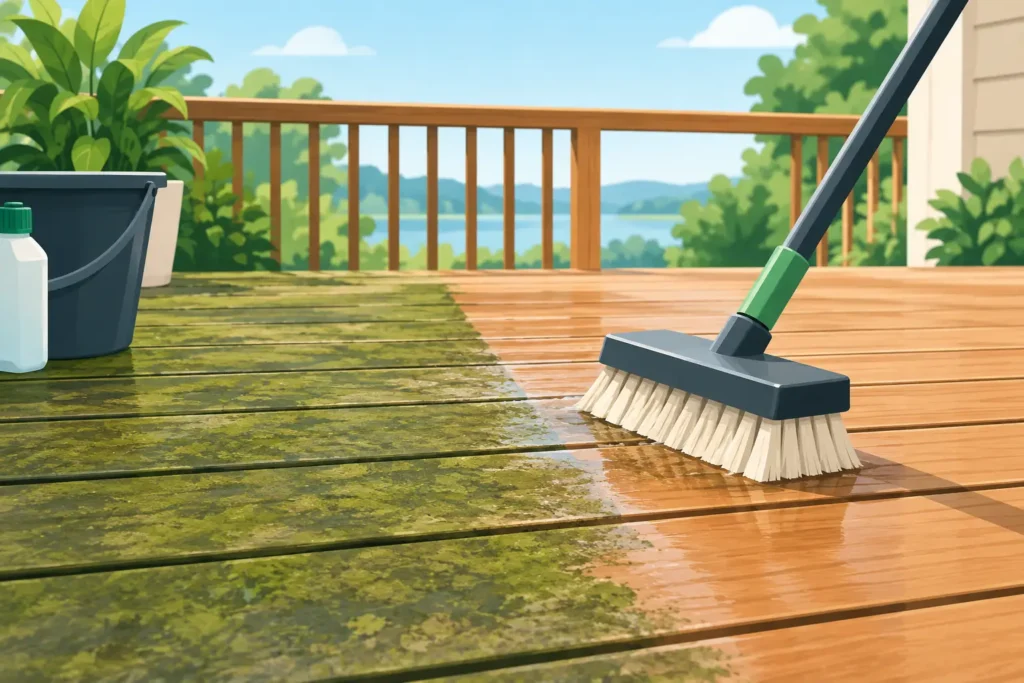
A green film on a deck can make a well-kept Long Island home look neglected fast. More than a cosmetic problem, algae holds moisture against the surface and creates a slippery walking hazard after rain or morning dew. Removing deck algae the right way restores the look of the space while helping you avoid unnecessary damage to the wood, composite boards, nearby landscaping, and railings.
For many homeowners, the question is not whether the deck needs cleaning. It is whether a quick do-it-yourself wash is enough or if the surface needs professional care. The answer depends on the deck material, the amount of buildup, and the condition of the boards.
Why Deck Algae Keeps Coming Back
Algae thrives where water lingers and sunlight is limited. On Long Island, decks beneath trees, along the north side of a home, or near dense landscaping often stay damp longer than open, sunny areas. Pollen, leaves, soil, and organic debris give algae something to feed on, especially through humid summer weather and wet fall months.
Wood decks are particularly vulnerable because the grain and small surface imperfections can trap moisture. Composite decking is less porous, but it can still develop a slick green coating when dirt and moisture build up. Even a newer deck may need attention if drainage is poor or furniture, rugs, and planters prevent the surface from drying evenly.
Cleaning removes the visible growth, but preventing a quick return takes a little follow-up. Clearing debris, moving planters occasionally, and trimming back vegetation can make a real difference.
Start by Identifying Your Deck Surface
Before choosing a cleaner or bringing out a pressure washer, determine what the deck is made of. The same approach does not fit every surface.
Pressure-treated lumber, cedar, and redwood can all be cleaned successfully, but older or weathered wood needs a gentler touch. Too much pressure can leave raised fibers, splinter boards, and create uneven marks that are difficult to correct. Cedar and redwood are especially easy to scar if the cleaning is too aggressive.
Composite decks generally tolerate water well, but manufacturers may have specific recommendations for cleaners and pressure settings. Some composite boards can show marks or lose their finish when exposed to harsh chemicals or a pressure washer held too close. If you are unsure, check the manufacturer guidance before applying any product.
Take a close look at the deck before cleaning. Loose boards, popped fasteners, peeling stain, cracked railings, and soft spots should be addressed first. Cleaning will not fix structural wear, and a weak board can become more noticeable once the surface dirt is gone.
Removing Deck Algae Safely
The safest process begins with preparation, not pressure. Remove furniture, grills, rugs, planters, and anything else resting on the deck. Sweep away leaves, dirt, and loose debris so a cleaning solution can reach the algae directly. Cover or thoroughly wet nearby plants before using any deck cleaner, then rinse them again when the work is complete.
A deck-safe cleaning solution is usually the best first step. Apply it according to the label directions and give it enough dwell time to loosen algae and grime. Do not let cleaner dry on the boards, especially in direct sun. Work in manageable sections so you can keep the surface damp and rinse each area completely.
For light buildup, a soft-bristle brush and garden hose may be all that is needed. Brush along the direction of the wood grain rather than across it. This helps lift the algae without roughening the surface unnecessarily.
When buildup is heavier, controlled pressure washing can provide better results. The key word is controlled. A professional adjusts the technique to the material and condition of the deck, using appropriate pressure, distance, spray pattern, and cleaning products. The goal is to remove organic growth evenly, not blast the surface until it looks lighter.
A common mistake is using the narrowest spray tip at close range. That can carve lines into wood in seconds. It may look clean at first, but the damaged texture becomes more likely to hold dirt and moisture later. High pressure can also force water into gaps, lift aging stain, and disturb compromised boards.
Cleaners and Methods to Avoid
A stronger product is not always a better product. Household cleaners not made for exterior surfaces can discolor decking, harm nearby plants, or leave residue behind. Mixing cleaning chemicals is also unsafe and should never be done.
Bleach is often suggested as a fast answer for algae, but it comes with trade-offs. It can affect surrounding vegetation, may alter the color of wood, and does not always address the dirt and organic material that help algae return. If a product containing bleach is used, it should be used carefully, diluted only as directed, and rinsed thoroughly. For many decks, a purpose-made exterior cleaner is the more practical choice.
Avoid metal wire brushes, which can leave marks and fragments behind. Skip sanding as a first response to algae as well. Sanding may be appropriate later if weathered wood needs refinishing, but it does not replace proper cleaning and can make a large project much bigger than necessary.
When Professional Deck Cleaning Makes Sense
A homeowner can often handle a small, light patch of algae with the right cleaner and a brush. Professional service is worth considering when the deck is large, the growth is widespread, the boards are aging, or the surface has a mix of stains, algae, mildew, and ground-in dirt.
It is also a smart option when you have already tried cleaning and the deck still looks uneven. Streaking, fuzzy wood fibers, and patchy color are signs that the surface may need a more careful approach than a standard rental pressure washer can provide.
For rental properties, commercial spaces, and homes preparing for a gathering or sale, professional cleaning saves time and helps create a more consistent result. A clean deck makes patios, yards, entrances, and outdoor seating areas feel more inviting. It also gives property owners a clearer view of what maintenance or repairs may be needed next.
Father & Son Power Washing provides in-person assessments for properties across Nassau and Suffolk counties, so you can get a clear recommendation and a free, no-obligation quote before scheduling work. Every deck has different needs, and a quick look at the material, buildup, and surrounding area helps avoid guesswork.
Help Keep Algae From Returning
Once the deck is clean, regular upkeep is easier than waiting for a thick green layer to develop again. Sweep off leaves and pollen often, particularly after storms and during fall. Keep gaps between boards clear so water can drain instead of sitting on the surface.
Move furniture, rugs, and planters from time to time. These items can trap moisture and create darker patches that algae favors. If branches hang over the deck, selective trimming may allow more sunlight and airflow without changing the feel of your yard.
For wood decks, maintaining the protective stain or sealer is one of the best long-term defenses. A properly maintained finish helps slow water absorption and makes routine cleaning easier. The schedule varies based on the product, weather exposure, foot traffic, and condition of the wood, so inspect the deck each spring rather than relying on a fixed calendar date.
A Cleaner Deck Is Easier to Enjoy
Deck algae rarely stays a small problem when moisture and debris are left in place. Addressing it early can improve traction, brighten the entire backyard, and help protect the surface from unnecessary wear. Whether the job calls for a brush and deck cleaner or a professional wash, the best result comes from treating the material carefully and giving the deck a chance to dry, breathe, and look like part of a well-cared-for property again.