
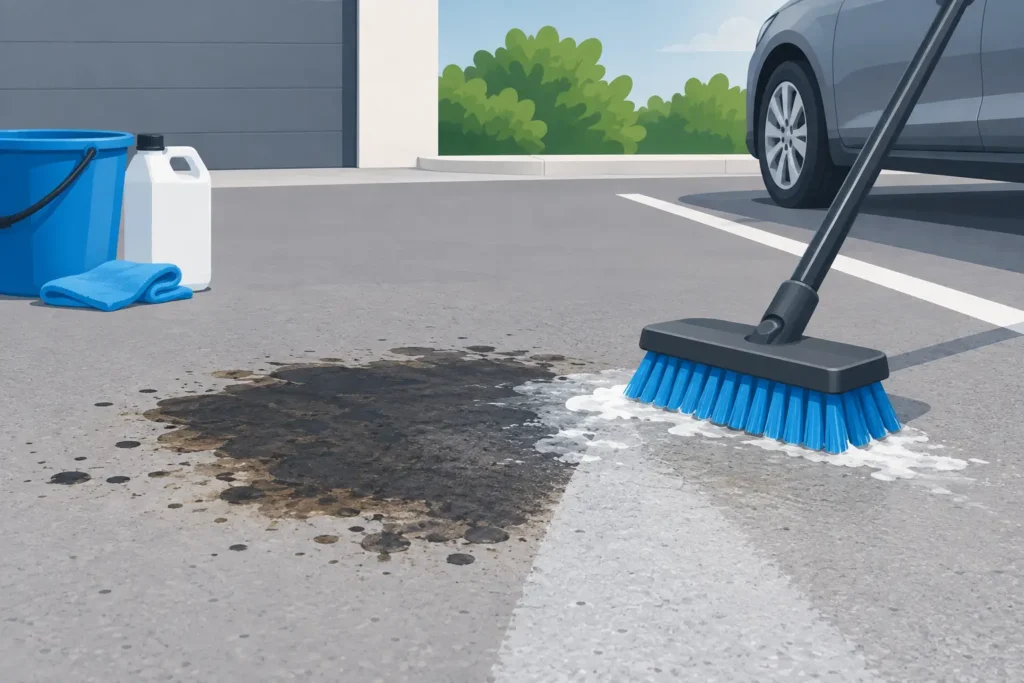
A fresh oil spot on a driveway can turn into a stubborn black stain faster than most property owners expect. Oil stain removal is not just about making concrete or asphalt look better. Left in place, oil attracts dirt, spreads with rain, and gives a driveway, parking area, or service entrance a neglected appearance. For Long Island homes and businesses, a clean hard surface makes a real difference in curb appeal.
The good news is that many oil stains can be improved. The challenge is matching the cleaning approach to the surface, the age of the spill, and how deeply the oil has soaked in. A quick response may save a homeowner from a lasting mark. Older stains often need professional treatment and power washing to achieve the best possible result.
Why Oil Stains Are So Difficult to Remove
Motor oil, transmission fluid, cooking oil, and hydraulic fluid do not simply sit on top of pavement. On porous concrete, they work their way down into tiny openings below the surface. Asphalt has its own complication: petroleum-based cleaners or overly aggressive washing can soften or damage the binder that holds the pavement together.
That is why a one-size-fits-all solution rarely works. A product that helps lift oil from concrete may not be appropriate for asphalt. The condition of the surface also matters. A newer sealed driveway may release a stain more easily than older, unsealed concrete with years of wear.
Weather can make the problem worse. Summer heat can bake oil into the surface, while rain can carry residue toward curbs, landscaping, and drains. For commercial properties, a single leak near an entrance or loading area can quickly affect the professional appearance of the entire site.
Oil Stain Removal Starts With Fast Action
If the spill is still fresh, absorb as much oil as possible before it spreads. Do not start by spraying the area with a hose. Water can move the oil across the driveway and push it into nearby soil or storm drains.
Use an absorbent material made for oil spills, or use a dry, absorbent household option if that is what you have on hand. Let it sit long enough to pull up the liquid, then sweep it up carefully. Repeat if necessary. The goal at this stage is not to scrub the stain away. It is to stop more oil from soaking into the pavement.
Once the excess is absorbed, a concrete-safe degreaser may help with the remaining surface residue. Follow the product directions closely, especially regarding dwell time and rinsing. Scrub with a stiff nylon brush rather than a wire brush, which can leave marks or damage certain surfaces.
For a small, recent spot, this can make a noticeable improvement. Still, it is normal for a faint shadow to remain after the first treatment. Deep stains often need more than one cleaning cycle.
What Homeowners Should Avoid
Oil stain removal can become more difficult when the wrong method is used. Harsh chemicals may discolor concrete, hurt nearby grass or plants, or create runoff concerns. Gasoline, brake cleaner, and similar solvents should never be used as a driveway cleaning shortcut. They are unsafe, flammable, and can spread contamination instead of removing it.
High pressure alone is another common mistake. A pressure washer can rinse loose dirt from a surface, but pressure without the proper cleaning solution may simply force oily residue deeper into pores or spread it across a wider area. On older concrete, excessive pressure can also leave visible cleaning lines or expose weak sections of the surface.
Asphalt deserves extra caution. Strong degreasers, solvents, and aggressive pressure can strip material from the surface or leave a lighter, uneven patch. If you are not sure whether a cleaner is safe for your driveway or parking lot, it is better to stop before causing damage that is more noticeable than the original stain.
Concrete Driveways Need a Different Approach Than Asphalt
Concrete is durable, but it is porous. Oil can soak below the top layer, which means successful cleaning usually requires a degreaser that breaks down the residue, time for the product to work, agitation, and controlled rinsing. A professional can adjust the process based on whether the stain is fresh, old, widespread, or sitting near a garage door, walkway, or landscaped bed.
Asphalt is more sensitive because oil and asphalt are chemically related. An oil leak may soften the pavement over time, especially in warm weather. Cleaning should focus on removing surface contamination without pulling up the asphalt binder. When a stain has caused soft spots, crumbling, or a sunken area, cleaning alone may not solve the underlying issue. Repairs and sealing may be worth discussing after the area is cleaned.
Pavers and natural stone require their own care as well. Cleaning solutions can affect color, joint sand, or sealers. A spot test in an inconspicuous area is always the safer move.
When Professional Oil Stain Removal Makes Sense
A do-it-yourself effort is reasonable for a small, fresh spill on a surface you understand. But professional help is often the better choice when the stain is old, large, repeated, or located in a highly visible area. That includes front driveways, garage aprons, storefront parking spaces, dumpster pads, loading areas, and entrances used by tenants or customers.
Professional exterior cleaning is also useful when you want the stain addressed as part of a larger property refresh. Oil marks tend to stand out even more after surrounding dirt, algae, tire tracks, and general grime are removed. Cleaning the full driveway or parking area creates a more consistent result than treating one dark spot in isolation.
For property managers and business owners, appearance is only part of the decision. A cleaner parking area helps show customers, employees, and tenants that the property is cared for. It also gives maintenance teams a clearer view of new leaks, cracks, and surface issues that need attention.
Father & Son Power Washing can assess the surface in person, identify the condition of the stain, and provide a clear, no-obligation quote before work begins. This matters because realistic expectations are part of quality service. Some deeply set oil stains can be greatly reduced but may not disappear completely, particularly on older, unsealed concrete. A reliable contractor should explain that upfront rather than promise a result the surface cannot deliver.
How to Keep Oil Stains From Coming Back
The best long-term approach is to address the source of the leak. If a vehicle leaves oil in the same place week after week, cleaning the driveway will only be a temporary fix. Have the vehicle inspected, and use a drip pan or protective mat until the repair is completed.
For concrete driveways, a quality sealer can make future spills easier to manage by reducing how quickly oil penetrates the surface. Sealing is not a guarantee against stains, and it must be done on a properly cleaned and prepared surface, but it can be a smart maintenance step for high-use areas.
Commercial properties benefit from routine exterior cleaning and periodic checks around parking spaces, delivery zones, and equipment areas. Catching a leak early is less expensive and easier than dealing with months of built-up oil, tire marks, and grime.
A Cleaner Surface Makes the Whole Property Look Better
Oil stains can make an otherwise well-kept property look unfinished. Whether the problem is one fresh spot in a residential driveway or years of buildup around a commercial parking area, the right cleaning method can make a visible improvement without unnecessary risk to the surface.
If the stain is stubborn, widespread, or too important to gamble on, an in-person assessment is the simple next step. A clear quote, the right cleaning plan, and professional care can help your driveway or parking lot look like it belongs with the rest of your property again.