
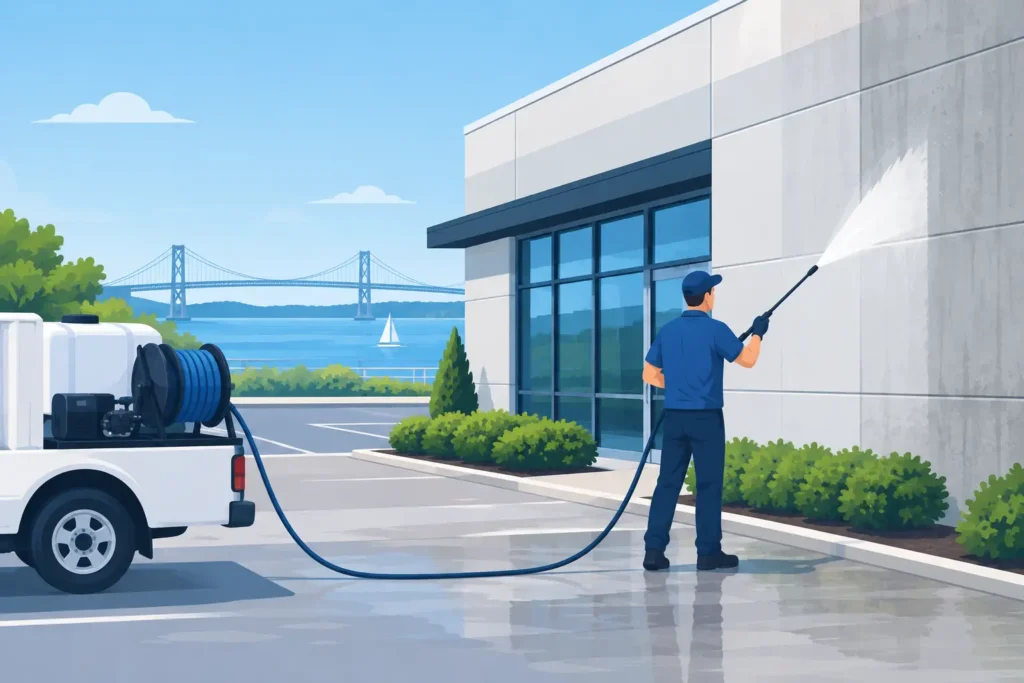
A clean storefront, walkway, loading area, or building exterior sends a message before anyone walks through the door. This commercial washing project guide helps Long Island property owners and managers plan exterior cleaning without guesswork, surprise costs, or unnecessary disruption to daily business.
Commercial power washing is not just about making a property look better for a few days. It removes built-up dirt, mildew, algae, gum, salt residue, and other grime that can make surfaces look neglected or create slippery conditions. The right project plan keeps the work focused, protects the property, and gives you a clear picture of what to expect from start to finish.
Start With the Areas Customers and Tenants Notice
Every commercial property has high-visibility areas that deserve attention first. For a retail business, that may be the sidewalk, entrance, awning area, and front facade. For an office building or professional center, the priority may be walkways, entry steps, common areas, and exterior walls. Apartment communities, warehouses, restaurants, and medical offices each have different needs.
Walk the property as if you were arriving for the first time. Look for dark staining on concrete, algae on shaded sidewalks, cobwebs around entrances, salt buildup near parking areas, and dirt collecting along siding, masonry, curbs, or fences. Taking a few photos during this walk can also make it easier to explain what you want cleaned when requesting an estimate.
A full-property cleaning is sometimes the right call, especially before a grand opening, inspection, seasonal change, or property listing. Other times, a targeted project gives you the best value. Cleaning only the customer-facing entrance and main walkways may be enough when the rest of the property is in good condition.
Define the Goal Before Requesting a Quote
A commercial washing project works best when the goal is clear. Are you preparing for an event? Addressing slippery algae? Improving curb appeal for new tenants? Catching up on maintenance after winter? The answer affects the scope, timing, and priority areas.
Be specific about the result you want. Instead of simply asking for the building to be power washed, explain that you want the front sidewalk brightened, gum removed near the entrance, mildew treated on the north-facing wall, or loading-dock concrete cleaned. A professional can then assess the surfaces in person and recommend the right approach.
It also helps to mention practical conditions at the property. Let the contractor know about limited parking, busy customer hours, gates, security requirements, water access, landscaping, or areas that need extra care. A good assessment accounts for these details before the work is scheduled, not after the crew arrives.
What a Commercial Washing Assessment Should Cover
An in-person assessment makes commercial cleaning simpler because it replaces broad estimates with a project plan based on the actual property. Surface material, staining, access, drainage, and traffic all affect the work.
During an assessment, the cleaning team should identify what needs attention, how the surfaces can be safely cleaned, and whether certain areas require lower-pressure treatment. Concrete, brick, vinyl, painted surfaces, pavers, composite materials, and exterior trim do not all respond the same way. The fastest method is not always the best method if it risks damaging the surface.
The assessment is also the time to discuss the timeline. A small storefront entrance may be completed quickly, while a multi-building property, large parking area, or heavily stained concrete surface may require more planning. Clear expectations about the work area and schedule help business owners avoid interruptions.
At Father & Son Power Washing, the process starts with discussing your needs and reviewing the property in person, followed by a free, no-obligation quote. That allows commercial customers in Nassau and Suffolk counties to understand the scope before making a decision.
Plan Around Business Hours and Property Traffic
Timing matters on a commercial property. The best cleaning schedule is often the one that keeps customers, tenants, deliveries, and employees moving normally.
For busy retail locations and restaurants, early morning or another lower-traffic period may make the most sense. Office properties may have more flexibility during regular business hours if the work can be completed away from main entrances. For apartment buildings and managed communities, advance notice gives residents time to move vehicles or avoid a particular walkway while cleaning is underway.
Think about the areas people need to access throughout the day. Entryways, ramps, sidewalks, handicap-accessible routes, loading zones, and parking lot lanes should be planned carefully. A professional crew can help sequence the work so that cleaning is handled in manageable sections rather than closing off more of the property than necessary.
Weather is another factor. Rain, freezing temperatures, high winds, and heavy leaf drop can affect timing and results. On Long Island, spring cleanup is popular after winter grime and salt exposure, while fall service can help remove organic buildup before colder weather arrives. Still, the right time for your project depends on the property and its condition, not just the calendar.
Prepare the Site for a Smooth Service Day
Most of the preparation is simple, but it makes a difference. Before the crew arrives, make sure there is clear access to the agreed work areas and that someone can answer questions if needed. If your property has locked gates, restricted areas, or a building contact requirement, handle those details in advance.
For larger projects, these four steps are especially useful:
- Move vehicles, outdoor displays, furniture, and loose items away from surfaces being cleaned.
- Let employees, tenants, or vendors know if access routes will temporarily change.
- Identify sensitive landscaping, exterior electrical components, signs, or fixtures that need attention.
- Confirm where the crew can park and whether water access is available on site.
Do not assume every item needs to be moved by the cleaning team. Clarifying responsibilities ahead of time keeps the project on schedule and helps prevent avoidable delays.
Understand What Affects Commercial Cleaning Pricing
Commercial power washing quotes are based on the real work involved, not just the size of the building. Square footage matters, but so do surface condition, staining severity, access, height, water availability, and the number of separate areas included in the project.
For example, a large open concrete pad may be more straightforward to clean than a smaller entrance with gum, heavy mildew, decorative stone, outdoor furniture, and constant foot traffic. A property with deep-set stains may also need more treatment than one receiving routine maintenance.
Competitive pricing should still come with a clear scope. Ask what areas are included, whether spot treatment is part of the work, and what the expected timeline looks like. The lowest number is not always the best value if it leaves out the areas that matter most or does not address the cause of visible staining.
A detailed quote also gives property managers something useful to share with owners, boards, or internal decision-makers. It turns a general maintenance request into a defined project with a clear purpose.
Make Maintenance Easier After the Cleaning Is Done
The cleanest properties are usually not power washed just once after years of buildup. They are maintained before grime becomes a bigger problem. A regular schedule can keep sidewalks safer, storefronts more inviting, and exterior surfaces easier to manage.
The right frequency depends on location and use. A restaurant patio, high-traffic shopping center, or shaded walkway may need attention more often than a low-traffic office building. Properties near trees, busy roads, coastal air, or construction activity may also collect grime faster.
After your first cleaning, pay attention to how quickly staining returns in different areas. That information helps you build a practical maintenance plan instead of paying for a larger restoration project later. In many cases, periodic touch-ups are more budget-friendly than waiting until the entire property looks overdue.
Choose a Team That Makes the Process Simple
Commercial property maintenance already involves enough moving parts. Your exterior cleaning provider should make the process easier with prompt communication, an in-person assessment, a clear quote, and dependable scheduling.
Look for a company that listens to your priorities rather than treating every property the same. A professional team should be comfortable explaining what can be cleaned, what requires special care, and how the project will be organized around your property’s needs. Results matter, but so does having a team that shows up prepared and stands behind the work.
A well-planned cleaning project gives your property the kind of clean, cared-for appearance people notice right away. Start with the areas that represent your business every day, request a clear assessment, and schedule service at a time that works for the people who rely on your property.