
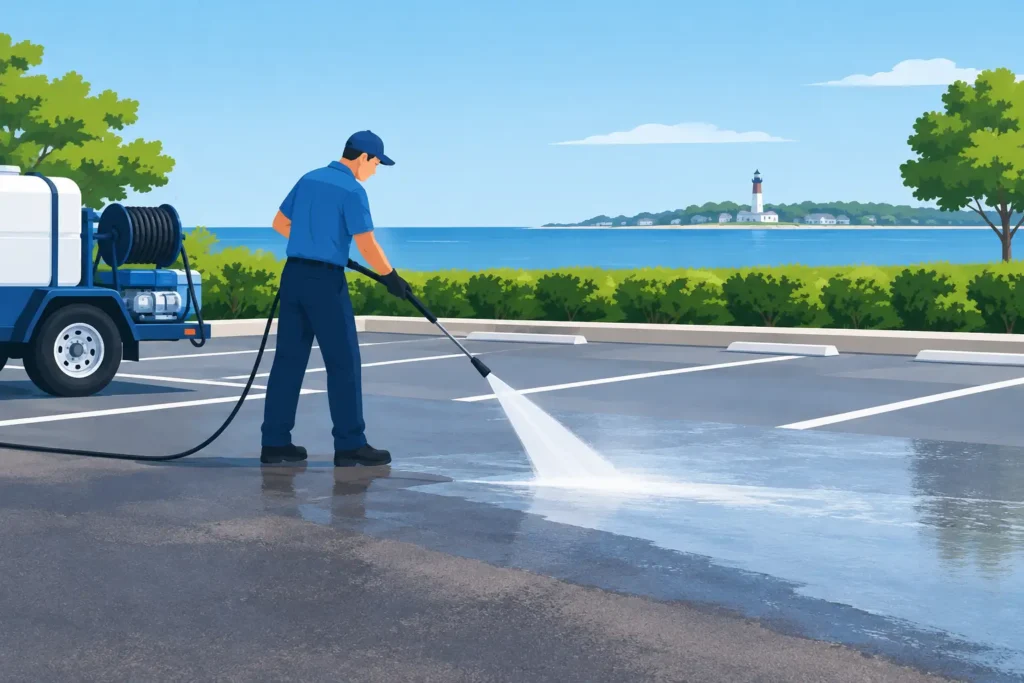
A dirty parking lot can change a customer’s opinion before they reach the front door. Oil spots near parking spaces, gum along sidewalks, overflowing debris at curbs, and dark traffic lanes make a property look neglected even when the building itself is well maintained. This parking lot washing guide helps Long Island property owners and managers plan the work, protect their surfaces, and keep a professional first impression.
For businesses, multifamily properties, retail centers, offices, and restaurants in Nassau and Suffolk counties, parking lot cleaning is not just a cosmetic task. It is part of regular property care. The right schedule depends on traffic, nearby trees, weather exposure, and the type of stains you are dealing with.
What Parking Lot Washing Actually Removes
Parking lot washing uses professional pressure washing methods to remove built-up surface grime from asphalt, concrete, curbs, sidewalks, loading areas, dumpster pads, and entry paths. A proper cleaning targets the dirt people see every day, along with the residue that becomes harder to remove when it sits for too long.
Common problems include tire marks, leaking vehicle fluids, food and drink spills, gum, algae, leaves, salt residue, dirt tracked in from the road, and stains around trash enclosures. On Long Island, winter deicing materials and spring runoff can leave a dull film behind. Summer heat can also bake oil and organic stains into the surface.
Not every mark comes out at the same rate. Fresh spills are usually more responsive than years-old stains, and porous concrete may hold discoloration below the surface. A professional should set clear expectations after seeing the condition of the lot in person rather than promising that every stain will disappear completely.
Start With an On-Site Assessment
The best parking lot washing guide begins with a walk-through, not a guess based on square footage alone. Every property has different access points, drainage patterns, traffic demands, and areas that need extra attention.
During an assessment, identify the main cleaning zones: parking stalls, driving lanes, entrances, sidewalks, curbs, handicap-accessible areas, loading docks, dumpster pads, and exterior common areas. Look for loose debris, cracked pavement, standing water, heavy oil buildup, and nearby landscaping. These details affect how the work should be scoped and how long it may take.
Access matters too. A busy shopping center may need work completed before opening, after closing, or in sections so customers can still park safely. A medical office or apartment complex may need clear notice for tenants and visitors. For many commercial properties, scheduling is just as important as cleaning quality.
An in-person quote gives you a more realistic price and timeline. It also gives you the chance to point out problem areas rather than hoping they are included in a standard package.
Choose the Right Time for Washing
Parking lots do not need to be washed on a fixed calendar just because it is spring or fall. The right frequency depends on use. A lightly traveled office lot may only need a thorough cleaning once or twice a year, while a restaurant, gas station, retail property, or busy apartment complex may benefit from more regular service.
Consider scheduling cleaning when you notice a visible change in appearance, not only when the lot looks severely dirty. Early cleaning can prevent stains from setting and helps the property stay presentable between larger maintenance projects.
For Long Island properties, spring is a smart time to remove winter grime, salt residue, and sand. Late summer or early fall cleaning can help clear organic buildup before leaves and wet weather create another layer of mess. High-traffic areas may need spot cleaning in between.
Weather can affect the schedule. Washing should be planned when surfaces have time to dry and the property can be managed safely. A reliable contractor will discuss conditions, drainage, and access before choosing a service date.
Prepare the Property Before the Crew Arrives
A little preparation helps the job move efficiently and keeps the parking lot accessible. If possible, remove vehicles from the areas being cleaned and let tenants, employees, or customers know about temporary parking changes. Clear movable signs, outdoor displays, carts, and loose items from sidewalks and curbs.
Property managers should also identify any areas that need special care, such as utility covers, drainage grates, landscaping, outdoor seating, or freshly repaired pavement. If there are recurring leaks from specific vehicles or equipment, mention them during the assessment. That information helps the cleaning team select the right approach.
For larger properties, it can make sense to divide the work into phases. One section can remain open while another is cleaned, reducing disruption for visitors and tenants. This may take more coordination than closing the entire lot, but it is often the practical choice for an active business.
Focus on the Areas Visitors Notice First
A full lot cleaning delivers the best overall result, but certain areas deserve priority when time or budget is limited. The entrance drive, front-row spaces, sidewalks leading to the door, curbs, accessible parking areas, and dumpster pad usually have the biggest effect on how the property feels.
Dumpster areas are especially easy to overlook. Grease, spilled bags, litter, and odors can build up quickly, creating an unpleasant impression for customers and employees. Regular cleaning helps maintain a cleaner environment and makes ongoing trash management easier.
Sidewalks and entry paths also matter because they are viewed up close. A bright, clean walkway can make the building exterior look better without changing anything else. If algae or slippery organic buildup is present, prompt cleaning may also improve footing around the property.
Protect Pavement and Drainage Systems
Pressure washing should improve the surface, not create a new problem. Asphalt, concrete, pavers, painted markings, and damaged areas do not all respond the same way. The cleaning method should match the surface condition and the type of buildup.
For example, heavily stained areas may need pretreatment before washing, while delicate painted lines or aging pavement require appropriate care. Strong cleaning products are not automatically better. The goal is to remove grime effectively while respecting the surface and surrounding property.
Drainage deserves equal attention. Parking lots are designed to move water away from buildings and through designated drains. Before service, make sure drains are visible and not blocked by leaves, trash, or sediment. A professional crew should plan the work with runoff control in mind and avoid pushing debris into drainage areas.
If your lot has recurring standing water, pooling near entrances, or drains that clog often, washing alone will not solve the underlying issue. Those problems may point to maintenance or drainage repairs that should be addressed separately.
Know When a DIY Approach Is Not Enough
A small sidewalk or a few light marks may be manageable for a property owner with the right equipment and care. Large commercial lots are different. They require time, water management, proper cleaning techniques, and a plan for keeping people and vehicles out of active work areas.
Rental equipment can also create uneven results. Too much pressure can leave visible striping, damage vulnerable surfaces, or scatter dirty runoff into areas that were already clean. Too little pressure may only rinse the surface without lifting the buildup that makes the lot look worn.
Professional service is often the better value when the job involves oil stains, extensive gum, dumpster pads, high-traffic walkways, a large footprint, or a property that needs to stay operational. The visible difference is important, but so is having the work handled with less hassle for your staff or tenants.
Father & Son Power Washing provides in-person assessments, clear project scoping, and free no-obligation quotes for commercial properties across Nassau and Suffolk counties. That makes it easier to understand what your lot needs before committing to a schedule.
Build Washing Into Your Property Maintenance Plan
The most cost-effective approach is usually regular maintenance rather than waiting for years of buildup. Pair parking lot washing with routine sweeping, litter removal, drain checks, and prompt attention to fresh spills. These simple steps help preserve the results of a deeper cleaning.
Keep a record of recurring trouble spots. If the same corner collects leaves, the same parking spaces show oil drips, or the dumpster area gets messy every week, that is useful information for planning service. It may mean that one area needs more frequent attention than the rest of the property.
A clean parking lot tells customers, tenants, and visitors that the property is actively cared for. When you can see the dirt building up, it is usually the right time to request an assessment and get a clear plan in place before the job becomes bigger than it needs to be.