
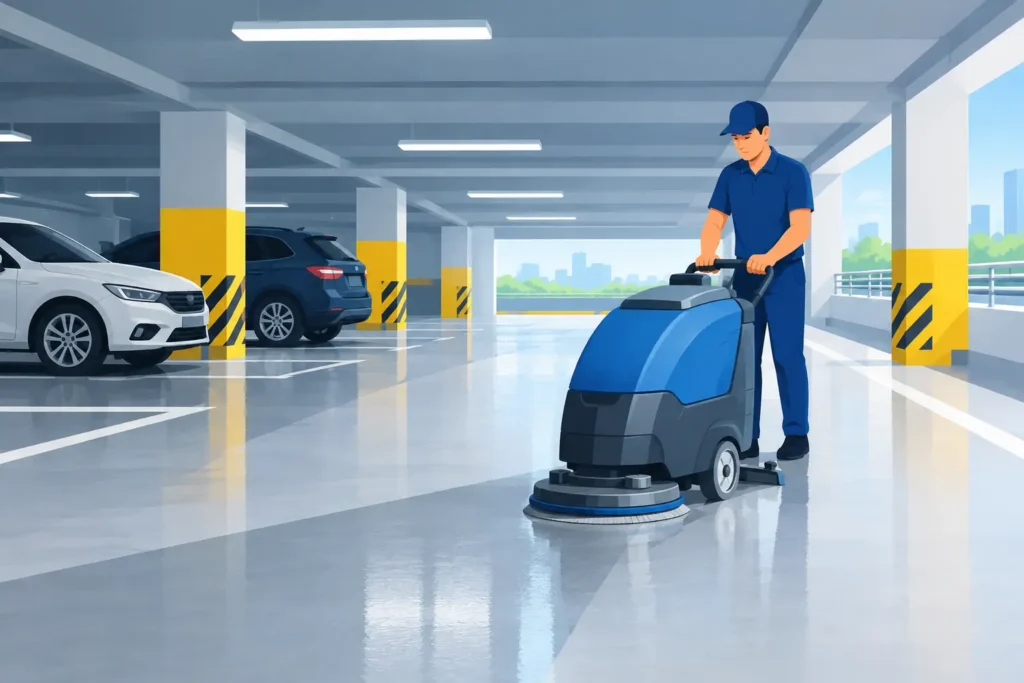
A parking garage can collect months of tire marks, oil spots, salt residue, litter, and tracked-in dirt long before anyone notices how much it affects the property. Professional parking garage cleaning gives tenants, customers, employees, and visitors a better first impression before they even reach the building.
For Long Island property owners and managers, this is not just about making concrete look brighter. A clean garage supports a more professional appearance, helps reduce slippery buildup in high-traffic areas, and shows people that the property is being cared for.
Why a Clean Parking Garage Matters
Parking areas work hard every day. Vehicles bring in road grime, leaking fluids, winter salt, sand, and water. Pedestrians track debris through entrances and stairwells. In an enclosed garage, exhaust residue and odors can make the space feel neglected even when the rest of the property is well maintained.
The result is gradual, but it is visible. Dark tire paths form at entrances and turns. Oil stains gather around parking spaces. Corners collect trash and leaves. Concrete begins to look dull and worn, while walls, curbs, gates, and drains lose their clean appearance.
For an apartment complex, condominium, office building, shopping center, or medical facility, that condition can affect how people view the whole property. Visitors may not mention a dirty garage, but they notice it. A cleaner space feels safer, more organized, and more welcoming.
What Parking Garage Cleaning Can Address
Every garage has different needs based on its size, traffic volume, age, and layout. A lightly used surface lot under a commercial building needs a different approach than a multi-level garage serving hundreds of residents each day.
A properly scoped cleaning project may focus on concrete driving lanes, parking stalls, ramps, curbs, loading areas, entry points, walkways, stairwell entrances, and exterior walls near the garage. The goal is to remove the visible buildup that makes the area look uncared for while treating surfaces with the right level of pressure and cleaning solution.
Common problem areas include:
- Tire marks and road film on driving lanes and ramps
- Oil, grease, and fluid spots around parking stalls
- Salt, sand, and winter debris carried in by vehicles
- Dirt and mildew buildup along curbs, walls, and entrances
- Leaves, trash, and grime collecting in corners and near drains
Not every stain will disappear completely. Older oil spots, rust marks, paint damage, and deeply absorbed stains may leave some shadowing behind. Honest expectations matter. However, a professional cleaning can make a dramatic difference in the overall appearance of the garage, even when a few permanent marks remain.
Parking Garage Cleaning Requires a Smart Plan
A garage is not an open driveway. It has traffic patterns, pedestrians, drainage points, low-clearance areas, parked vehicles, and operating hours to consider. That is why a quick, one-size-fits-all wash is rarely the right answer.
Before work begins, the cleaning plan should account for which areas need access, whether sections must be temporarily cleared, how water will move across the surface, and when the job can be completed with the least disruption. For a residential building, early weekday hours may work best. For a retail property, cleaning outside of peak customer traffic may be the better choice.
The amount of buildup also matters. Routine maintenance cleaning is generally more straightforward than restoring a garage that has gone years without service. If heavy grease, salt residue, or accumulated dirt is present, the project may require more time and focused treatment.
A good contractor should walk the property, identify the priority areas, discuss access and timing, and provide a clear quote. That approach helps avoid surprises and makes it easier for property managers to communicate the schedule to tenants, staff, or customers.
Water and Drainage Need Attention
Garage cleaning often involves water, so drainage is a major part of planning the job. Standing water can create a slip concern, disrupt traffic, or carry debris toward drains. The cleaning process should be managed carefully to keep work areas orderly and to avoid creating unnecessary problems for the property.
This is also why parking garage cleaning is best scheduled when the weather, staffing, and property access support the work. An experienced crew can help determine whether a full cleaning, phased cleaning, or targeted service of the highest-traffic sections makes the most sense.
When Should You Schedule Service?
There is no single schedule that fits every property. A busy commercial garage may benefit from regular maintenance several times a year, especially around entrances, ramps, and driving lanes. A smaller residential property may only need a thorough cleaning annually or after the winter season.
On Long Island, spring is often a practical time to address the salt, sand, and grime left behind by winter. It is also a strong time to refresh a property before heavier seasonal traffic, inspections, leasing activity, or special events. Fall cleaning can be useful as well, particularly for garages near trees where leaves and organic debris collect around corners and drains.
Rather than waiting until the garage looks severely stained, pay attention to early signs. Dark pathways, persistent odors, slippery-looking patches, dirty curbs, and buildup near entrances are all signals that it may be time to schedule an assessment.
Better Results Start With the Right Scope
The lowest quote is not always the best value if it skips the areas that actually affect the appearance of the property. On the other hand, a full garage cleaning may not be necessary if only the entrance lanes, ramps, and visible customer areas need attention.
That is where an in-person assessment helps. It allows the contractor to see the condition of the surfaces, determine the right cleaning approach, and build a project around the areas that will deliver the biggest visual improvement. You can decide whether to clean the entire garage, focus on problem zones, or set up a maintenance plan that keeps the space from reaching that heavily soiled stage again.
For property managers, a phased approach can be especially helpful. Cleaning one level or section at a time may reduce disruption and make scheduling easier. For business owners, concentrating on the entrance, customer parking, and pedestrian routes can improve the public-facing areas without taking on more work than the property needs.
Choosing a Local Cleaning Team
Parking facilities are a visible part of your property, and the work should be handled by a team that communicates clearly from the start. Look for a company that is willing to inspect the space, explain what can reasonably be removed, discuss the expected timeline, and provide pricing before the project begins.
You should also expect straightforward scheduling and respect for your property. The right team will understand that a garage cannot simply be shut down without a plan. They will work with you to coordinate access, minimize inconvenience, and leave the cleaned areas looking noticeably better.
Father & Son Power Washing serves Nassau and Suffolk County property owners with customized exterior cleaning solutions, free estimates, competitive pricing, and a satisfaction-focused approach. Whether your garage needs a seasonal refresh or attention in the areas people see first, an on-site assessment makes it simple to plan the right service.
A cleaner garage does more than improve concrete. It gives every person arriving at your property a clear signal that the details are handled – and that is a difference they can see before they walk through the door.