
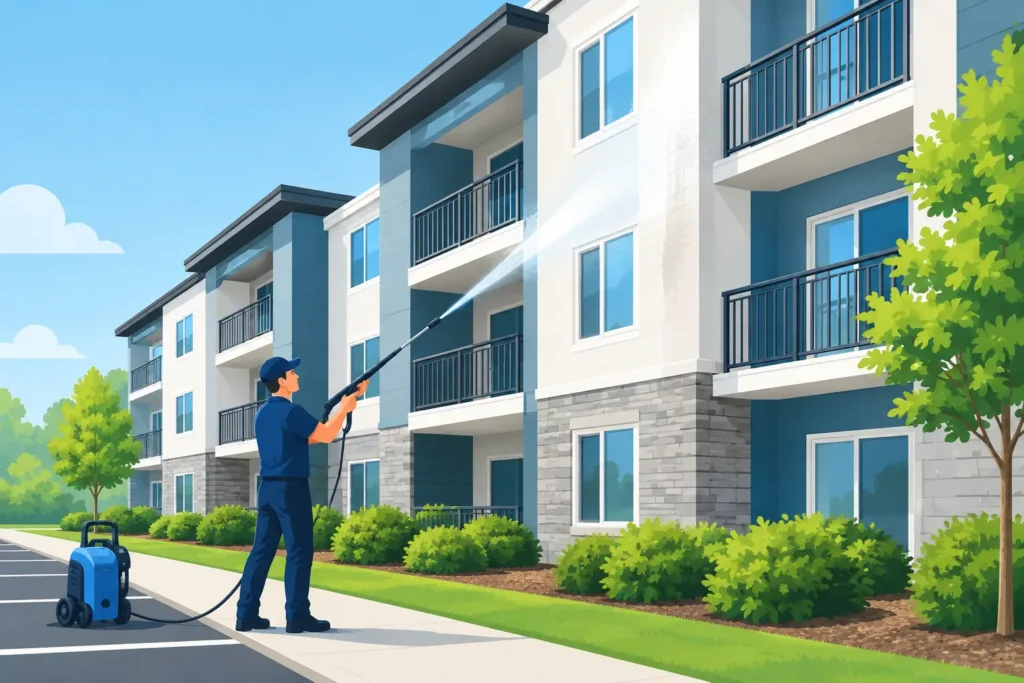
A stained walkway, green siding, or dirty entry canopy can change how tenants and visitors feel about a property before they reach the front door. Apartment complex exterior cleaning is one of the most visible ways to show that a building is managed with care. For Long Island landlords and property managers, it is not about making a property look flashy. It is about keeping common areas clean, welcoming, and ready to make a strong first impression.
Exterior surfaces collect more than ordinary dirt. Moisture, pollen, algae, mildew, salt residue, vehicle exhaust, and foot traffic can all leave their mark. Over time, those conditions can make an otherwise well-maintained apartment community look neglected. A professional cleaning plan removes the buildup and helps protect the presentation of the property between larger maintenance projects.
Why Clean Exteriors Matter to Tenants and Prospects
Residents notice the spaces they use every day: the front entrance, sidewalks, stairs, railings, dumpster areas, parking lots, and building facades. When those areas are clean, the property feels more comfortable and cared for. That matters when a current tenant is deciding whether to renew a lease, and it matters when a prospective tenant arrives for a showing.
Curb appeal also affects the way people talk about a property. A clean exterior gives leasing staff a better backdrop for tours, makes online listing photos more appealing, and supports the work already being done inside units and common spaces. You may have updated landscaping, fresh mulch, and well-kept interiors, but dingy concrete or mildew-covered siding can still pull down the overall impression.
There is a practical side as well. Algae and organic growth can make walkways, steps, and entry areas slippery when wet. While exterior cleaning is not a replacement for repairs or a full safety program, removing surface buildup is a sensible part of maintaining high-traffic common areas.
What Apartment Complex Exterior Cleaning Can Cover
Every property has a different layout, age, and level of buildup. A small garden-style community may need attention around breezeways and walkways, while a larger complex may have several buildings, common patios, clubhouse areas, sidewalks, and parking surfaces to address. The right scope starts with an in-person look at the property instead of a one-size-fits-all package.
Common cleaning areas include:
- Building siding, brick, stucco, and exterior walls
- Front entrances, awnings, canopies, and vestibule areas
- Sidewalks, curbs, stairs, ramps, and breezeways
- Patios, pool decks, courtyards, and shared outdoor spaces
- Railings, fencing, retaining walls, and mailbox areas
- Dumpster pads and other service areas that collect heavy grime
Not every surface should be treated the same way. Concrete may need a stronger approach than painted trim, and older siding may call for a lower-pressure method. A qualified exterior cleaning team should match the process to the material and condition of the surface. The goal is a visible improvement without taking unnecessary risks with finishes, landscaping, or building components.
Start With the Areas Residents See Most
When a full-property cleaning is not in the budget or schedule, prioritize the places that create the biggest daily impact. Entrances, leasing office walkways, main sidewalks, stairwells, and dumpster enclosures are often the best starting point. These are the areas where residents, guests, delivery drivers, and prospects form their first opinion.
A targeted project can make sense before leasing season, an inspection, a property tour, or a community event. It can also be a smart response when algae becomes noticeable after a wet spring or when winter grime has built up along curbs and walkways.
That said, cleaning only the front entrance year after year can create an uneven look if the rest of the property is visibly dirty. For larger communities, a phased plan often works well. Clean the most prominent areas first, then schedule secondary buildings or less-trafficked sections in stages. This gives property managers more control over timing and budget while still moving the entire property in the right direction.
Timing the Work Around Property Operations
Apartment properties do not pause for maintenance. Residents are coming and going, vendors are making deliveries, and parking areas may be full during the day. Good planning keeps exterior cleaning from becoming a disruption.
Before work begins, decide which areas need temporary access restrictions and how residents will be notified. A simple notice about the work date, approximate hours, parking considerations, and any areas to avoid can prevent confusion. For busy entrances or tight parking lots, cleaning may need to be completed in sections rather than all at once.
Weather matters, too. Long Island’s changing seasons bring pollen in spring, humid conditions in summer, falling leaves in autumn, and road salt or grime in winter. Many properties benefit from a deeper cleaning in spring to reset the exterior after winter, followed by touch-up work as needed. High-traffic areas may need more frequent attention than building facades.
The best schedule depends on tree cover, drainage, shade, tenant traffic, and the materials around the property. Shaded sidewalks and north-facing walls, for example, can develop algae faster than sunny, open areas. An in-person assessment makes it easier to identify where recurring buildup is likely to return.
Choose a Provider Who Can Scope the Whole Property
Apartment complex work requires more than showing up with a pressure washer. Property managers need a team that can look at the site, understand the priorities, explain the expected timeline, and provide clear pricing before the work is scheduled.
Ask whether the provider will walk the property with you and identify the surfaces included in the quote. It should be clear whether the estimate covers all buildings, only selected common areas, or a specific number of walkways and entrances. Clear scope helps avoid surprises and makes it easier to compare proposals fairly.
Communication is just as important as equipment. You should know when the crew will arrive, how long the project is expected to take, whether residents need advance notice, and who to contact if plans need to change. For managed properties, dependable scheduling and a straightforward point of contact can be as valuable as the cleaning itself.
Father & Son Power Washing serves Nassau and Suffolk County property owners with in-person assessments, free no-obligation quotes, competitive pricing, and a satisfaction-focused approach. For apartment communities, that personal service helps turn a large exterior project into a clear, manageable plan.
Keep Expectations Realistic and Results Lasting
Professional cleaning can make an immediate difference, but it is not magic paint or a repair service. If siding is faded, concrete is permanently stained, caulking has failed, or a surface is damaged, cleaning may improve the appearance without making the issue disappear. A good provider will be honest about what can be cleaned and what may require repair, sealing, repainting, or replacement.
It is also normal for some areas to need attention sooner than others. Dumpster pads, breezeways near landscaping, and shaded concrete can collect grime quickly. Rather than waiting until the entire complex looks dirty again, build those problem areas into a maintenance schedule. Smaller, regular cleanings can be easier to manage than a rushed, property-wide project after years of buildup.
Make Exterior Cleaning Part of a Stronger Maintenance Plan
The most effective apartment complex exterior cleaning is planned alongside landscaping, gutter care, painting, pavement maintenance, and routine inspections. When these services are coordinated, the property looks consistently cared for instead of receiving occasional cosmetic fixes.
Take a walk around the property from a resident’s point of view. Start at the entrance, follow the main paths, look at the areas near mailboxes and trash enclosures, and notice what a prospective tenant would see on a tour. The spots that stand out to you are likely standing out to everyone else.
A clean exterior sends a simple message: this is a place where details are handled. For residents, that can make coming home feel better. For property managers, it is one more practical way to protect the value and reputation of the community.