
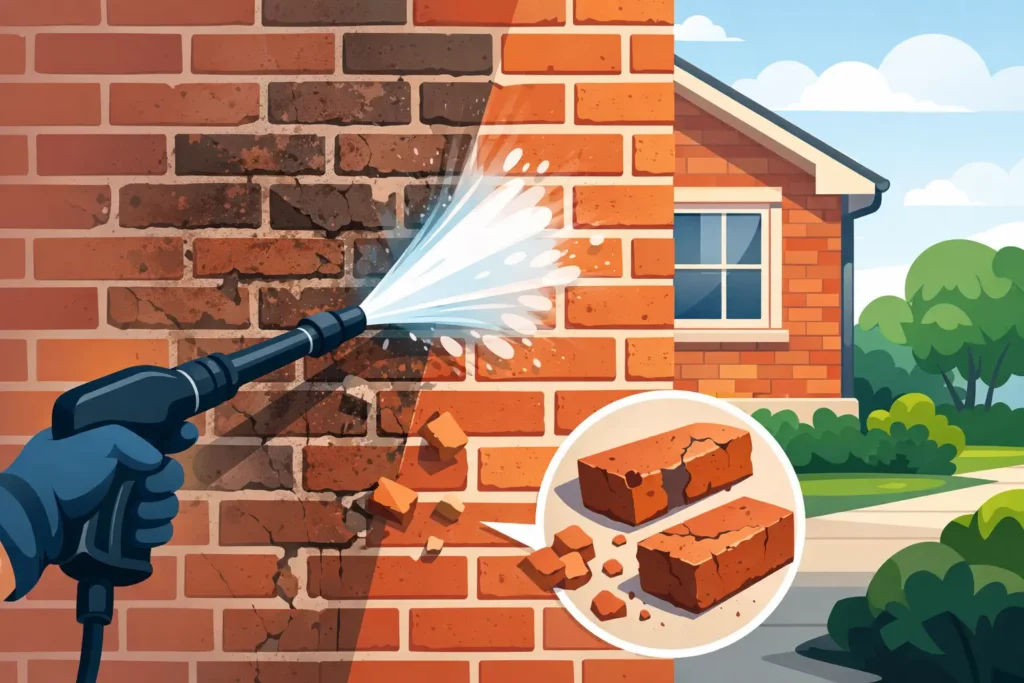
A brick exterior can look tough enough to handle anything. After a Long Island winter, though, salt residue, algae, mildew, soot, and general grime can make even quality masonry look tired. That leads many property owners to ask: can pressure washing damage brick? Yes, it can – when the wrong pressure, nozzle, angle, or cleaning approach is used.
Brick is durable, but it is not indestructible. Older brick, worn mortar, loose pointing, and areas exposed to years of weather need a more careful approach than a newer, well-maintained wall. The goal is not to blast the surface clean. It is to remove buildup safely while protecting the brick and mortar that hold the wall together.
Can Pressure Washing Damage Brick? Yes, in the Wrong Hands
Pressure washing can damage brick when water hits the surface with more force than the masonry can safely handle. The risk is especially high when someone uses a high-powered machine at close range, aims directly into mortar joints, or treats every stain as if it needs maximum pressure.
The most obvious damage is chipped or spalled brick. Spalling happens when the outer face of the brick breaks away, leaving a rough, uneven surface. Once that protective outer layer is compromised, the brick can absorb more moisture and may deteriorate faster through changing seasons.
Mortar is often the bigger concern. It is generally softer than brick, particularly on older homes and commercial buildings. A hard stream of water can erode mortar joints, loosen already weakened sections, or force water into small cracks. A wall may look cleaner at first, but missing mortar and trapped moisture can create a larger repair issue later.
Pressure can also drive water behind the brick veneer, around window openings, or into gaps near flashing and trim. That does not happen on every job, but it is a real concern when the wall has existing cracks, failing caulk, open joints, or drainage problems.
The Condition of Your Brick Changes the Answer
There is no one pressure setting that is right for every brick surface. The safe method depends on the masonry’s age, condition, type of staining, and surrounding features.
Newer brick with solid mortar may handle a carefully controlled rinse better than historic brick or a wall that has not been maintained for decades. But even newer brick should not be treated like concrete. Brick faces can vary in hardness, and a wall may have isolated weak spots that are not obvious until cleaning begins.
Before any cleaning, look for crumbling mortar, loose or cracked bricks, white powdery residue, visible flaking, gaps around windows, and signs of moisture. White residue, often called efflorescence, can point to moisture moving through the masonry. Washing may improve the appearance temporarily, but the underlying moisture source should be addressed if it keeps coming back.
Older Long Island homes deserve extra attention. Freeze-thaw cycles, coastal air, rain, and seasonal temperature swings can slowly wear down mortar and brick faces. If the wall is already showing its age, aggressive cleaning is rarely the right answer.
Stains Do Not All Need More Pressure
A dark green or black film on brick is often algae, mildew, or organic buildup. In many cases, the best way to remove it is with an appropriate cleaning solution and a low-pressure rinse. Letting the solution do the work reduces the need for force.
Rust, paint, irrigation stains, and heavy soot are different problems. They may require specialty products, spot treatment, or a separate restoration process. Raising the pressure because a stain will not come off can turn a cleaning job into a masonry repair job.
This is why a quick look from the driveway is not always enough. The right process begins with identifying what is on the brick and whether the wall is sound enough to clean.
How Professionals Clean Brick More Safely
Safe brick cleaning is controlled, not aggressive. A professional should assess the surface, choose the mildest effective approach, and test a small, less-visible area before cleaning a larger section.
In many cases, that means applying a masonry-safe cleaner at low pressure, allowing proper dwell time, gently agitating only where necessary, and rinsing with reduced pressure from a safe distance. The exact technique changes based on the wall, but the principle stays the same: use enough cleaning power to remove buildup without stripping the surface.
The direction of the spray matters, too. Spraying directly into horizontal mortar joints, cracks, vents, window edges, or openings can force water where it does not belong. A trained technician keeps the nozzle moving, maintains appropriate distance, and works with the wall rather than attacking it head-on.
Protection around the work area also matters. Plants, painted trim, nearby stone, doors, windows, and electrical fixtures all need consideration before cleaning starts. A careful crew prepares the area and adjusts the plan when conditions call for it.
At Father & Son Power Washing, the process starts with an in-person assessment, not a one-size-fits-all promise. That allows the cleaning method and project timeline to match the condition of the property. You receive a clear, no-obligation quote before work begins.
When You Should Not Pressure Wash Brick
Sometimes the best recommendation is to hold off on washing until repairs are completed. Cleaning should be postponed when mortar is actively crumbling, bricks are loose, the wall has deep cracks, or moisture problems are visible. Repointing or repairing damaged areas first can prevent water from entering the wall during cleaning.
Avoid pressure washing when temperatures are near freezing or likely to drop below freezing soon after the work. Water left in small cracks or porous areas can freeze, expand, and worsen existing damage. Weather matters as much as equipment settings.
Fresh masonry work also needs time to cure. Newly installed brick, fresh mortar, or recent repair areas should be handled according to the mason’s recommended cure time. Cleaning too early may weaken joints before they have fully set.
Property owners should also be cautious with painted brick. High pressure can lift or chip paint, especially where the coating is already peeling. If the goal is paint preparation, the work should be planned as a restoration project, not routine exterior washing.
Warning Signs After a Brick Cleaning
A properly cleaned wall should look refreshed, not scarred. After cleaning, take a walk around the property and check for rough patches, flaking surfaces, new chips, missing mortar, or areas that remain unusually dark from moisture. These signs do not always mean the cleaning caused damage – they may reveal a pre-existing issue that dirt had been hiding – but they should not be ignored.
A little dampness immediately after washing is normal. Persistent wet areas, staining that returns quickly, or white residue that keeps appearing can suggest a drainage, flashing, or moisture issue behind the surface. Cleaning can improve curb appeal, but it cannot correct water intrusion on its own.
A Better Way to Get Clean Brick
The safest brick cleaning method is usually the least aggressive method that gets the result you want. That may mean low-pressure washing with the right solution, targeted stain treatment, or postponing cleaning until small repairs are made. The right answer depends on the wall in front of you, not on the maximum output of a machine.
For homeowners, landlords, and property managers in Nassau and Suffolk counties, an on-site assessment makes the decision much easier. A qualified exterior cleaning team can inspect the brick, explain any concerns in plain language, and provide a realistic recommendation before work starts.
Clean brick should make your property look cared for, not leave you wondering what was removed along with the grime. Start with a careful assessment, choose a method that respects the masonry, and give your exterior the fresh appearance it deserves.