
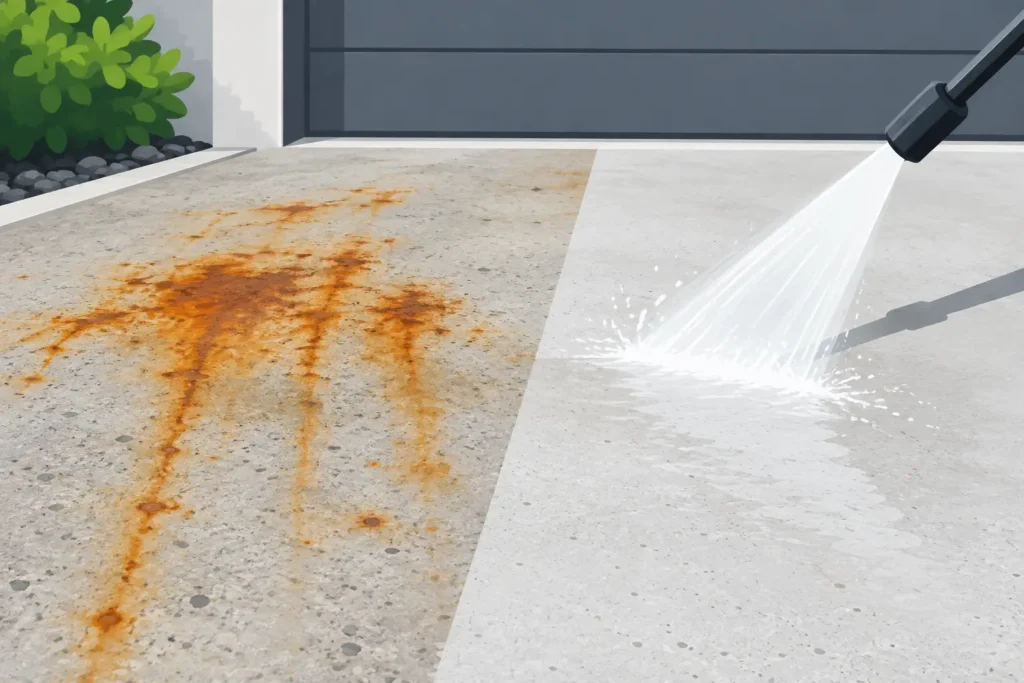
A rust-colored mark on a driveway can make an otherwise clean property look neglected fast. So, can washing remove rust stains? Sometimes, but not always with water pressure alone. Rust is more than surface dirt. It is a mineral stain that can bond to concrete, pavers, siding, and other exterior materials, which means the right approach matters.
For Long Island homeowners, landlords, and property managers, the goal is not simply to make the stain less noticeable for a few days. It is to remove it safely without scarring the surface around it. That often calls for a combination of the right rust treatment and careful exterior washing.
Can Washing Remove Rust Stains Successfully?
Pressure washing can help remove loose dirt, algae, grime, and some light surface discoloration around a rust stain. It may also improve the appearance of a fresh, shallow stain. However, a typical power washing service is not a guaranteed cure for deeply set rust by itself.
Rust stains form when iron reacts with water and oxygen. As water carries iron across a surface, it leaves behind orange, brown, or reddish marks. Those marks can settle into the pores of concrete and pavers, especially if they have been sitting through rain, snow, and changing temperatures.
High pressure alone can create a cleaner-looking area while leaving the actual stain behind. On the wrong setting, it can also etch concrete, strip paint, damage softer siding, or leave visible cleaning lines. That is why effective rust removal is usually a stain-treatment job first and a washing job second.
Where Exterior Rust Stains Come From
Finding the source is just as useful as removing the stain. If the cause remains, rust can return soon after cleaning. On many Nassau and Suffolk County properties, the source is easy to spot once you know where to look.
Common causes include a rusting metal railing, outdoor furniture, patio equipment, old nails, HVAC components, and decorative metal planters. A leaking irrigation system can also carry iron-rich water across siding, walkways, and foundations. Fertilizer is another frequent culprit. Some lawn products contain iron, and overspray or spilled granules can leave stubborn spots on concrete.
Battery acid from a vehicle, golf cart, or equipment can create similar-looking damage, but it needs a different response. What appears to be rust may also be mineral buildup or a stain caused by well water. Treating every orange mark the same way can lead to disappointing results, so a close assessment comes first.
The Surface Makes a Big Difference
Not every exterior surface can handle the same cleaner, pressure level, or dwell time. Concrete is durable, but it is porous and can absorb rust deeply. Older concrete often has uneven color already, which can make a cleaned area stand out if the work is too aggressive.
Pavers bring another consideration. Strong pressure can disturb joint sand, while the wrong chemical can affect color or leave blotchy spots. Natural stone, painted surfaces, vinyl siding, stucco, and composite materials each need their own careful approach. A treatment that works well on a plain concrete sidewalk may not be appropriate for a stone patio or a painted front step.
This is one reason do-it-yourself rust removal can become frustrating. The stain remover may be effective, but applying too much, leaving it on too long, or rinsing incorrectly can create a second problem. A professional assessment helps match the cleaning method to the surface rather than taking a one-size-fits-all approach.
Why More Pressure Is Not the Answer
When a rust stain will not budge, it is tempting to move the pressure washer nozzle closer or use the strongest setting available. That can turn a stain problem into permanent surface damage.
Concrete can develop etched marks that look lighter and rougher than the surrounding area. Vinyl siding can crack or allow water behind panels. Wood can splinter, and mortar can weaken. Even when no immediate damage is visible, overly aggressive washing can shorten the life of coatings and finishes.
A better method is controlled treatment. After identifying the stain and the surface, the area can be pre-treated with an appropriate rust-removal solution, allowed to work for the proper amount of time, and rinsed thoroughly at a safe pressure. The surrounding surface may then be cleaned so the finished result looks even rather than spot-treated.
What to Expect From Professional Rust Stain Removal
A good exterior cleaning plan starts with a look at the full area, not just the orange spot. The stain’s age, size, location, and source all affect what can be removed and how long the work will take.
Fresh stains generally respond better than stains that have been left in place for years. Some deeply embedded discoloration can be improved significantly but may not disappear completely, particularly on old or damaged concrete. Honest expectations matter. A dependable cleaning team should explain what is realistic before work begins rather than promising a perfect result without seeing the surface.
Professional rust stain removal also includes protecting nearby landscaping, doors, windows, metal fixtures, and painted surfaces. The job is not finished when the stain fades. The area needs to be rinsed correctly, and the source should be addressed whenever possible to help prevent new staining.
Father & Son Power Washing provides in-person assessments for exterior cleaning projects across Nassau and Suffolk counties. Seeing the stain in person makes it easier to recommend the right scope of work, provide a clear quote, and avoid unnecessary risk to your property.
Steps You Can Take Before Scheduling Service
You do not need to scrub aggressively or experiment with multiple household chemicals before requesting help. In fact, mixing cleaners can be dangerous and can make surface damage harder to correct.
Instead, take note of where the stain begins. Is it below a metal fixture? Near a sprinkler head? Under a planter, outdoor chair, or air-conditioning unit? If possible, move the item causing the stain and keep water from running through a rusting area.
Avoid using wire brushes on concrete or pavers. They can leave metal fragments behind, which may rust and create new marks. Avoid chlorine bleach for rust as well. Bleach is useful for certain organic growth issues, but it does not dissolve iron staining and may harm plants or nearby materials if used improperly.
If the stain is small and on a durable surface, a rust-specific cleaner may be an option, but always follow the product directions and test a discreet area first. For large stains, stained siding, delicate stone, or any surface you do not want to risk damaging, professional treatment is the safer choice.
Preventing Rust Stains From Coming Back
Once a rust stain has been removed, a few simple maintenance changes can protect the improvement. Replace rusting furniture feet or add protective caps. Keep metal planters and equipment off concrete when possible. Repair irrigation leaks and redirect sprinkler heads away from walls, walkways, and driveways.
If fertilizer is the cause, sweep up spills promptly and avoid applying it on hardscape surfaces. Property managers can also add rust checks to routine exterior maintenance, especially around railings, dumpster areas, HVAC equipment, and common walkways. Catching a fresh stain is easier and more affordable than dealing with years of buildup.
A clean driveway, patio, storefront, or entryway makes a stronger first impression, but it should not come at the cost of damaged surfaces. If you see orange streaks or brown spots around your property, get the cause checked before reaching for more pressure. The right treatment can restore the look of the surface and help keep it that way.