
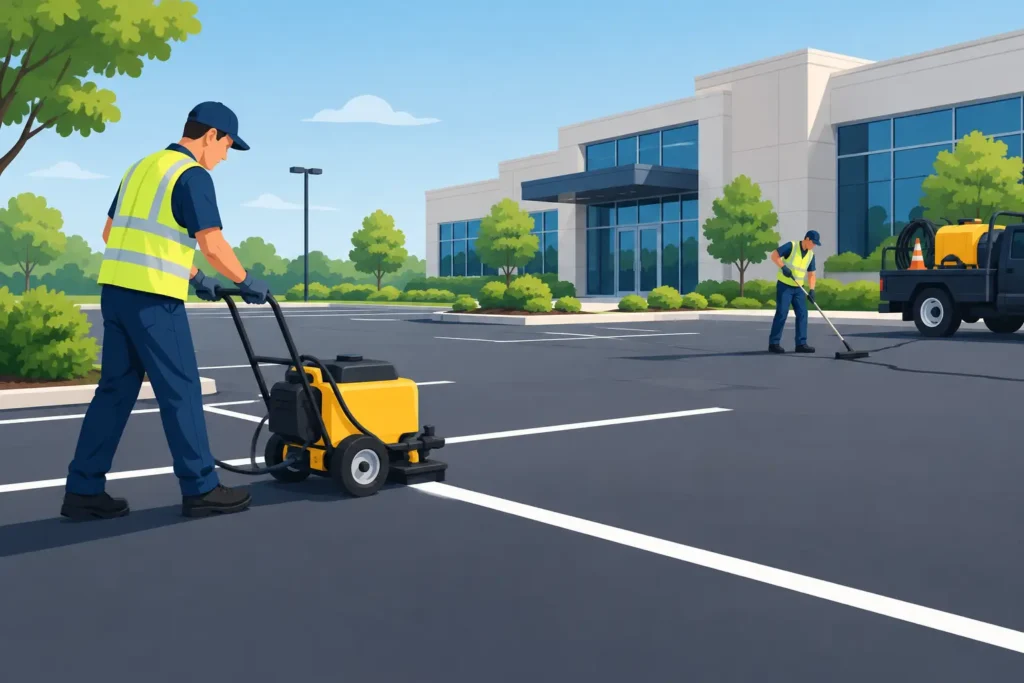
A parking lot often sets the tone before a customer enters the building, a tenant tours a space, or a guest reaches the front door. Regular parking lot maintenance helps Long Island property owners keep that first impression clean, safe, and professional while avoiding small surface issues that can become expensive repairs.
For businesses, apartment communities, shopping centers, offices, and commercial properties, the goal is not perfection every day. It is a lot that looks cared for, drains properly, gives people a clear place to walk and park, and does not leave visitors wondering whether the property is being neglected.
What Parking Lot Maintenance Should Cover
Parking lot care is more than occasional sweeping. Asphalt, concrete, curbs, drains, striping, and sidewalks all deal with traffic, weather, oil, salt, leaves, and standing water. On Long Island, freeze-thaw cycles and winter de-icing products can be especially hard on paved surfaces.
A practical maintenance plan starts with routine inspections. Walk the lot after a busy period and again after heavy rain. Look for potholes, loose aggregate, cracking, worn markings, clogged drains, damaged curbs, and areas where water pools. A problem that is easy to overlook on a dry afternoon may be obvious after a storm.
Cleanliness matters just as much as condition. Loose trash, leaves, sand, and dirt can make a property look uncared for, block drainage areas, and create slippery spots when wet. Oil stains and tire marks also build up over time, making an otherwise sound lot appear older than it is.
Start With Safety and Drainage
The most urgent parking lot problems are usually the ones that affect safety. A deep pothole can damage vehicles and create a trip hazard. A raised curb, crumbling walkway edge, or faded crosswalk can make pedestrian traffic harder to manage. Standing water can become slippery, damage pavement, and contribute to ice during cold weather.
Do not wait for a major complaint to inspect these areas. Pay close attention to entrances, accessible parking spaces, loading areas, dumpster pads, drive lanes, and the paths people take from their cars to the building. These are high-use locations where damage and grime tend to show up first.
Drainage deserves special attention. If water is consistently collecting in the same location, cleaning the nearby catch basin or drain may help if debris is the cause. If pooling continues, the issue may be related to the pavement grade, a failing drain, or damaged asphalt. That is a situation for a qualified paving or drainage professional, not something to cover up with a quick patch.
Keep Up With Routine Cleaning
Routine cleaning is one of the simplest ways to protect curb appeal. Sweeping removes loose debris before it is pushed into drains, tracked into buildings, or ground into the pavement. It also makes inspections easier because cracks, stains, and surface damage are not hidden under dirt and leaves.
Pressure washing can make a noticeable difference in areas with heavy buildup. Storefront approaches, sidewalks, curbs, dumpster areas, parking stops, and entry lanes often collect gum, spills, mildew, tire marks, and grime. Cleaning these surfaces helps the property look more welcoming and can reduce slick residue in high-traffic areas.
The right cleaning frequency depends on the property. A small professional office may only need seasonal service and spot cleaning. A restaurant, retail center, medical office, apartment complex, or busy commercial site may need attention more often because traffic and spills add up quickly.
There is also a trade-off to consider. Waiting until every surface looks heavily stained can mean a more involved cleaning project. Scheduling regular exterior cleaning usually keeps buildup more manageable and helps maintain a consistently professional appearance.
Address Cracks Before They Spread
Small pavement cracks are easy to dismiss, especially when the rest of the lot still looks good. But water works its way into those openings. When temperatures drop, that water can freeze, expand, and widen the crack. Repeated traffic then breaks down the surrounding pavement.
Crack sealing and asphalt repair are not the same thing as cleaning, but they belong in the same property maintenance conversation. When you notice cracks, potholes, or crumbling edges, document the area and have it evaluated promptly. Early repairs are usually less disruptive than waiting until a section of pavement fails.
Keep an eye on the perimeter of the lot as well. Pavement edges near landscaping, curbs, and drainage areas can weaken when water moves underneath the surface. If the asphalt is sinking, breaking apart, or separating from a curb, it may be a sign that the base below needs professional attention.
Do Not Let Faded Markings Create Confusion
Parking lines, arrows, fire lanes, accessible spaces, crosswalks, and loading zones direct traffic and help visitors understand where they should be. When markings fade, a parking lot can quickly feel disorganized, even if the pavement itself is in good condition.
Restriping is especially useful after pavement repairs, sealcoating, or when traffic patterns have changed. Before scheduling it, check that the layout still works for your property. A business with regular deliveries may need clearer loading areas. A property with tenant turnover may need updated reserved spaces or visitor parking. In some cases, accessibility requirements may also affect how spaces and routes should be marked.
Fresh lines are not just a cosmetic upgrade. They can improve traffic flow, support safer pedestrian movement, and give the entire property a more organized look.
Build a Seasonal Maintenance Schedule
A simple calendar makes parking lot maintenance easier to manage. You do not need a complicated system, but you do need a plan that accounts for Long Island weather and the amount of traffic your property receives.
In spring, inspect for winter damage, clear drains, remove salt residue, and schedule cleaning for sidewalks, curbs, and entrances. Summer is a good time to handle pavement repairs, repaint markings, and clean heavy-use areas before outdoor grime becomes more stubborn.
In fall, remove leaves before they clog drains or turn slick in rainy weather. Inspect the lot before winter so cracks, drainage concerns, and damaged curbs are not left to worsen under snow and ice. During winter, keep up with snow removal, de-icing, and post-storm checks. Once the weather improves, look for new damage caused by plowing, freezing temperatures, and moisture.
For many commercial properties, it helps to keep a short record of inspections, cleaning dates, repairs, and recurring trouble spots. This gives property managers a clearer picture of what needs attention and makes budgeting less of a guessing game.
Choose Service Based on the Condition of the Lot
Not every lot needs the same work. A clean, structurally sound lot may benefit most from sweeping, pressure washing, and updated striping. A lot with cracks and drainage problems may need repairs first, followed by cleaning once the surface work is complete.
It also makes sense to schedule cleaning around your business operations. A retail location may prefer early morning, evening, or lower-traffic service. Multi-tenant properties may need advance notice so visitors and residents know which areas will be temporarily unavailable. A good service provider should discuss access, timing, and the specific areas that need the most attention before work begins.
Father & Son Power Washing provides in-person assessments and clear, no-obligation quotes for exterior cleaning projects across Nassau and Suffolk counties. For parking lot surfaces, that means you can discuss the visible buildup, traffic patterns, and priority areas before scheduling service.
A Cleaner Lot Makes the Rest of the Property Look Better
Property owners often focus on the building exterior, landscaping, or signage first. Those details matter, but a dirty parking lot can undercut all of that work. Clean curbs, sidewalks, entrances, and drive lanes make the entire property feel more cared for.
Start with a walk through your lot this week. Notice where water sits, where marks have faded, and where grime is building up. A few timely maintenance decisions can keep a small issue from becoming a larger disruption and help every visitor arrive with a better impression of your property.