
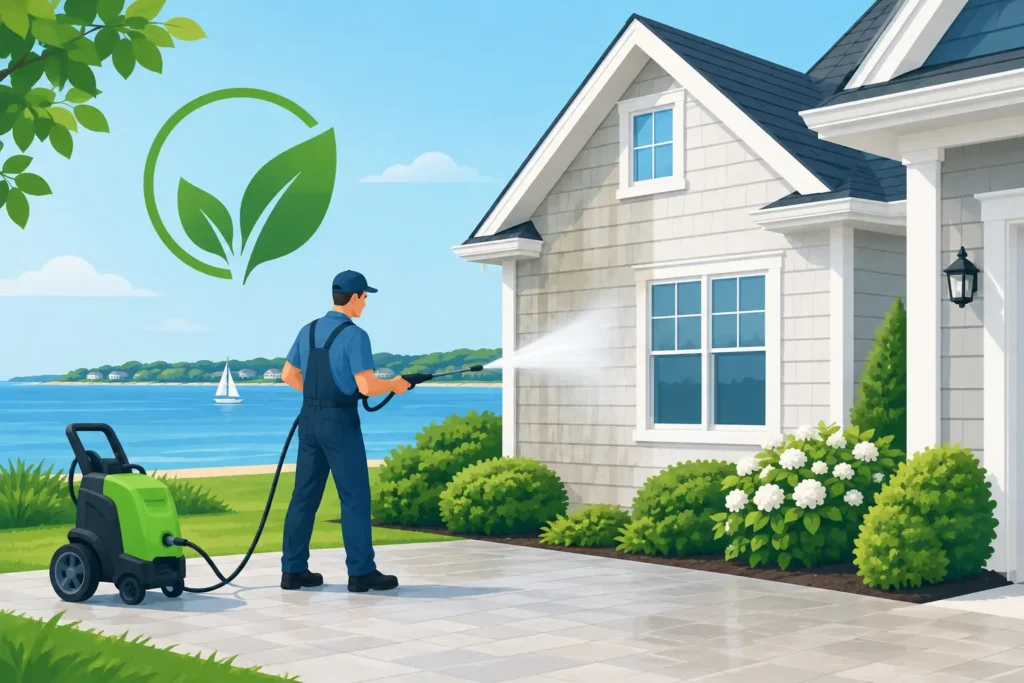
Salt air, tree pollen, humid summers, and heavy foot traffic can make a Long Island property look worn down faster than expected. Eco friendly power washing gives homeowners and property managers a practical way to remove that buildup without treating every surface, plant bed, or drainage area the same way. The goal is simple: a noticeably cleaner property with a careful approach that respects the materials and outdoor spaces around it.
For many properties in Nassau and Suffolk counties, exterior cleaning is not just about appearances. Mold, algae, mildew, dirt, and organic staining can hold moisture against surfaces, create slippery walkways, and make an otherwise well-kept home or business look neglected. A professional cleaning plan can improve curb appeal while helping you stay ahead of the grime that comes with Long Island weather.
What Eco Friendly Power Washing Really Means
Eco friendly power washing is not one single product or machine setting. It is a cleaning approach built around using the right amount of water pressure, the right cleaning solution when needed, and the right process for each surface. A concrete driveway, cedar fence, vinyl siding, composite deck, and paver patio should not all be cleaned the same way.
The most responsible approach starts before the equipment is turned on. A professional should look at the surface condition, the source of the staining, nearby plantings, drainage paths, and areas where water may collect. That assessment helps prevent unnecessary pressure, overuse of cleaning products, and damage that can be costly to correct.
It also means recognizing when high pressure is not the answer. Some exterior surfaces need a lower-pressure soft washing method that allows cleaning solutions and dwell time to do the work. This is especially useful for siding, painted trim, roofs, and other materials that can be damaged by an overly aggressive spray.
Cleaner Surfaces Without Unnecessary Damage
A strong stream of water can make a surface look clean quickly, but too much pressure can leave behind scars, etching, loose paint, splintered wood, or water forced behind siding. Eco-conscious cleaning is not about using less care. It is about using more judgment.
For example, algae on a shaded walkway may need targeted treatment and controlled rinsing rather than repeated high-pressure passes. A wood deck may require lower pressure to lift surface dirt without roughening the grain. On a commercial storefront, the cleaning plan may need to account for customer entrances, glass, landscaping, and pedestrian safety before work begins.
This surface-specific approach often produces better-looking results because it addresses the actual problem instead of just blasting at it. It also helps protect the materials that make up your property, which matters whether you are maintaining a family home, preparing a rental, or keeping a business location presentable.
Protecting Landscaping and Drainage Areas
Landscaping is one of the biggest concerns property owners have when scheduling exterior cleaning, and it should be. Shrubs, flowers, grass, mulch beds, and nearby trees can be affected by careless overspray or poorly managed runoff.
A careful crew takes steps to protect these areas before cleaning begins. That can include pre-wetting plants, covering sensitive landscaping when appropriate, controlling the direction of the spray, and thoroughly rinsing surrounding areas after treatment. The exact process depends on the property layout, the type of vegetation, and the cleaning products required for the job.
Runoff matters, too. Driveways, patios, sidewalks, and parking areas often lead toward storm drains or low spots on the property. The best cleaning method considers where water will travel and avoids sending concentrated dirt, debris, or cleaning solution toward areas where it does not belong. On some jobs, that means working in smaller sections and managing rinse water more carefully rather than rushing through the entire surface at once.
There is always a balance. Heavy organic staining may require a stronger treatment than light dust or seasonal pollen. When that is the case, the answer is not to skip cleaning altogether. It is to use the appropriate product in the proper amount, follow manufacturer directions, and take precautions around plants, pets, and water flow.
Why Soft Washing Is Part of the Conversation
Power washing is often used as a general term for exterior cleaning, but not every project calls for high-pressure washing. Soft washing uses lower pressure with carefully selected cleaning solutions to break down algae, mildew, mold, and other organic growth. The surface is then rinsed clean without the force that can harm more delicate materials.
This can be a smart option for vinyl siding, painted surfaces, stucco, certain fences, and roof-related cleaning needs. It is particularly helpful where discoloration is caused by living growth rather than just loose dirt. Simply rinsing the visible stain may make it look better for a short time, while treating the growth at its source can provide a more complete clean.
The trade-off is that soft washing is not a one-size-fits-all shortcut either. Cleaning solutions must be handled properly, nearby landscaping needs protection, and the surface must be evaluated first. A professional team should explain the method being used and why it fits your property.
The Best Times to Schedule Exterior Cleaning
Spring is a popular time for eco friendly power washing because it clears away winter grime, salt residue, and early-season pollen before outdoor entertaining begins. It is also a good time to refresh patios, walkways, decks, fences, and siding after months of wet weather.
Late summer and fall can be just as useful, especially on shaded properties where humidity has encouraged algae or mildew growth. Cleaning before leaves pile up can make seasonal maintenance easier and improve the appearance of your home before the colder months arrive.
For commercial properties, timing may depend more on customer traffic, tenant schedules, and the areas that need attention. A retail entrance, restaurant patio, office walkway, dumpster area, or parking lot may need cleaning at a time that minimizes disruption. That is why an in-person assessment is valuable. It helps create a realistic scope and timeline instead of applying a standard package to every property.
What Property Owners Can Do Before Service
You do not need to prepare for an exterior cleaning project like a major renovation, but a few simple steps make the process smoother. Move outdoor furniture, planters, grills, and decorative items away from the area if possible. Keep windows closed, secure pets indoors, and point out any areas of concern, such as loose siding, damaged concrete, old paint, or a sensitive garden bed.
It also helps to be clear about your priorities. Are you getting ready to sell? Trying to improve a rental between tenants? Cleaning a storefront before a busy season? Looking to remove slippery algae from a walkway? Those details help shape the cleaning plan and ensure the work focuses on the areas that will make the biggest difference.
A Better Result Starts With the Right Assessment
The cleanest-looking property is not always the one that received the most pressure or the strongest chemical treatment. It is the one where the method matched the material, the buildup was treated properly, and the surrounding property was respected throughout the job.
At Father & Son Power Washing, that begins with an in-person look at the work, a clear conversation about your needs, and a free no-obligation quote. Homeowners, landlords, and business owners deserve straightforward pricing, a realistic timeline, and results they can see when the job is complete.
If your siding, driveway, patio, deck, or commercial exterior is starting to look tired, a careful cleaning can make the entire property feel more cared for. Choose a team that treats your landscaping, surfaces, and time with the same attention as the visible results.