
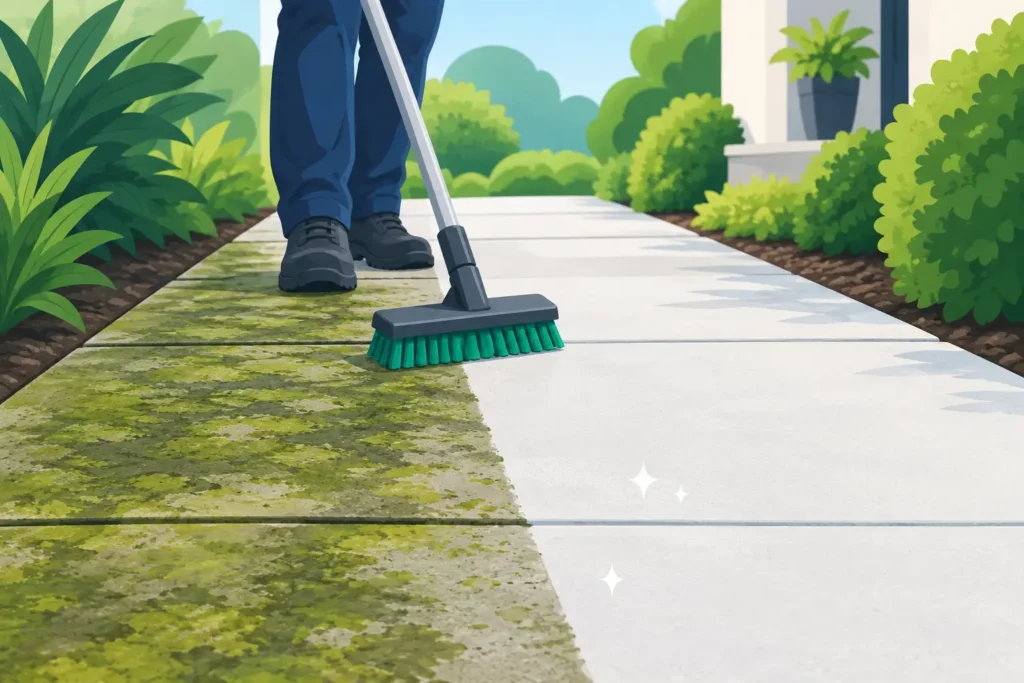
A walkway can look fine from the curb and still become a slipping hazard after rain. Green or black growth often blends into concrete, pavers, and stone until it gets wet. That is why algae removal from walkways is more than a curb appeal project. It helps create a cleaner, safer path for family, guests, tenants, customers, and delivery drivers.
On Long Island, shaded areas, humid summer weather, falling leaves, and moisture from sprinklers can all create the conditions algae needs to spread. The good news is that a professional exterior cleaning can make a noticeable difference quickly without turning a property project into a weekend chore.
Why Algae Removal From Walkways Matters
Algae holds moisture against the surface and creates a thin, slick film. On a dry day, it may feel like a cosmetic issue. After morning dew, rain, or a sprinkler cycle, it can make the walk from the driveway to the front door much less secure.
For homeowners, that means greater concern around entryways, pool areas, patios, and paths used by children or older relatives. For landlords and commercial property managers, neglected walkways can also affect the appearance of the property and leave visitors with the wrong first impression before they ever step inside.
The growth can also make a surface look permanently stained when it is not. Concrete, pavers, brick, bluestone, and other hardscape materials collect dirt in small pores and joints. When algae grows over that buildup, the walkway can lose its original color and look older than it really is. Proper cleaning removes the organic growth and the grime feeding it, helping restore a brighter, more cared-for appearance.
How to Tell When a Walkway Needs Cleaning
Some algae is easy to spot as a green film, especially along the edges of concrete or between pavers. Other growth appears darker, with black or deep gray patches that can be mistaken for ordinary dirt. Check walkways after a rainfall or early in the morning, when wet surfaces make the problem more visible.
A cleaning should move up the priority list when you notice several warning signs:
- The surface feels slick, especially near steps, gates, or entry doors.
- Green, black, or dark brown patches are spreading in shaded areas.
- The walkway stays damp longer than nearby surfaces.
- Dirt and leaf debris collect in joints, cracks, or low spots.
- Guests, tenants, or customers regularly use the path.
You do not have to wait until the whole walkway is covered. Treating growth early is usually easier than dealing with months of buildup, and it keeps the property looking maintained between larger exterior cleaning projects.
Why Walkway Algae Keeps Coming Back
Cleaning removes what is on the surface, but the conditions around a walkway determine how soon algae may return. Shade is one of the most common causes. A north-facing path, a walkway beneath mature trees, or an area next to a fence may receive little direct sunlight and stay wet longer.
Poor drainage can make the issue worse. Water that runs from gutters, downspouts, air-conditioning equipment, sprinklers, or sloped landscaping may repeatedly soak the same section of pavement. Leaves, mulch, and soil also introduce organic material that gives algae a place to grow.
That does not mean a shaded walkway cannot stay clean. It simply means it may need more regular attention than a sunny front path. During an in-person assessment, a cleaning professional can often identify these problem areas and recommend a practical maintenance schedule based on the surface, location, and level of traffic.
The Right Way to Clean Different Walkway Surfaces
There is no single setting or cleaning method that is right for every walkway. Concrete can generally handle a different approach than older brick, natural stone, or pavers with loose joint sand. The goal is not just to blast away visible green growth. It is to clean the surface evenly without causing damage, streaks, or unnecessary wear.
Concrete and poured walkways
Concrete is durable, but it is also porous. Dirt and algae settle into its surface, especially where water pools. Professional power washing can remove buildup efficiently and improve the color of the concrete. Even coverage matters because inconsistent pressure can leave visible lines or circular marks that stand out after the walkway dries.
Pavers, brick, and stone
Pavers and brick require more care around joints and edges. Excessive pressure can disturb joint material, while some natural stones need a gentler process to avoid surface damage. A trained team evaluates the condition of the material before selecting the appropriate cleaning approach.
For older walkways, cracked surfaces, loose pavers, or worn mortar joints, the safest choice may be a lower-pressure treatment combined with the right cleaning solution. The best result depends on the condition of the path, not just how dirty it looks in a photo.
Steps and high-traffic entrances
Steps deserve special attention because the risk of slipping is higher. Algae often gathers along risers, corners, and areas where shoes track in soil. A professional cleaning should address the full walking surface, including edges and transitions, so the entry looks consistent and feels safer underfoot.
What to Avoid When Removing Algae
It is tempting to rent a pressure washer or use a strong household cleaner when algae appears. For a small, lightly affected area, regular sweeping and rinsing can help reduce debris. But aggressive do-it-yourself cleaning can create bigger problems than the original stain.
High pressure held too close to the surface can etch concrete, chip stone, strip paint from nearby trim, and push sand out of paver joints. The damage may not always be obvious until the surface dries. Once concrete is etched, it can become rougher and more likely to collect dirt again.
Harsh chemical use also deserves caution. Products can harm nearby grass and landscaping, discolor surfaces, or leave runoff concerns if they are used incorrectly. Never mix cleaning chemicals, and keep people and pets away from treated areas until the surface is fully rinsed and dry.
A professional service brings the right equipment, surface-specific technique, and controlled application to the job. That saves property owners from buying equipment, guessing at pressure settings, and spending hours trying to correct uneven results.
Keeping Walkways Cleaner Between Services
A few simple habits can slow the return of algae. Sweep leaves, grass clippings, and soil from the walkway before they break down. Trim back vegetation that blocks airflow or keeps the path in constant shade when possible. If a sprinkler repeatedly hits the walkway, adjusting the spray pattern can reduce standing moisture.
It also helps to watch where water drains after a storm. A downspout extension or a small landscaping adjustment may keep runoff from feeding the same algae-prone corner week after week. These changes will not eliminate every cleaning need, particularly in heavily shaded areas, but they can make a real difference.
For commercial properties and rental homes, routine exterior cleaning is often easier to manage than reacting after a tenant, visitor, or customer points out a slippery entrance. Setting a regular service plan supports a more professional appearance and helps keep common walking areas ready for daily use.
When to Call a Professional for Walkway Cleaning
Professional help makes sense when algae covers a large area, the walkway is slippery, the material is delicate, or you want the entire exterior to look consistent. It is also a practical choice when time is limited. A clean walkway often looks best alongside refreshed siding, patios, driveways, fencing, or entry areas.
Father & Son Power Washing serves homeowners and commercial properties throughout Nassau and Suffolk counties with straightforward project assessments, competitive pricing, and free no-obligation quotes. After reviewing the condition of your walkways and surrounding surfaces, the team can recommend a cleaning plan that fits the property instead of applying a one-size-fits-all approach.
A walkway is one of the first parts of a property people use and notice. Keeping it clean, dry-looking, and free of slippery growth is a simple way to make every arrival feel more welcoming and a little more secure.