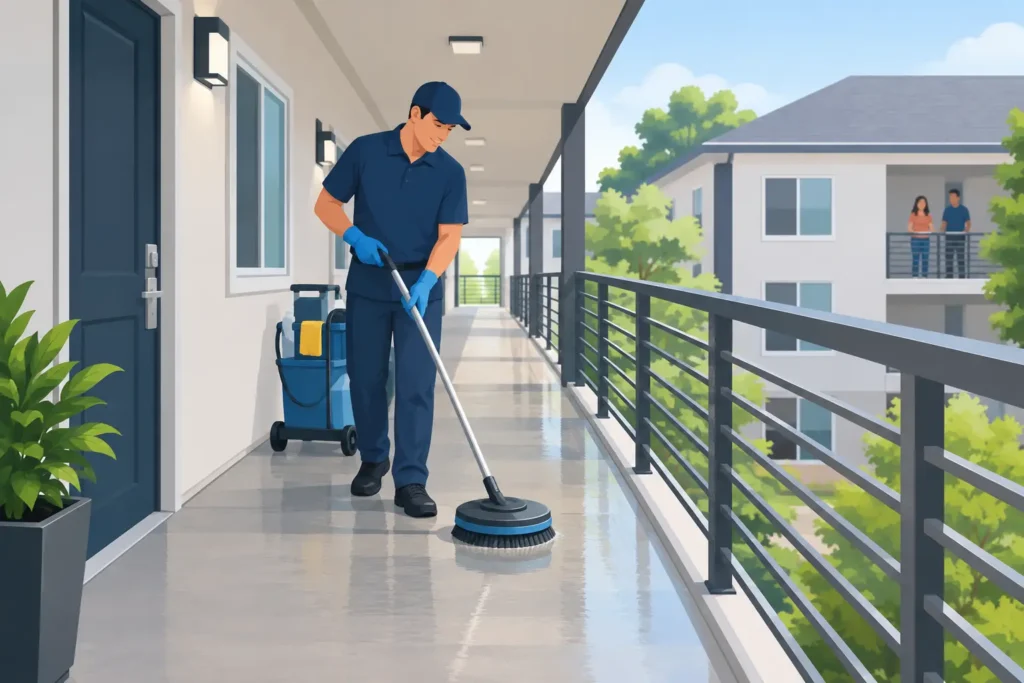
A stained, slippery walkway can change how tenants and visitors feel about a property before they ever reach the front door. Multifamily walkway cleaning is one of the simplest ways to improve the look, safety, and day-to-day presentation of an apartment complex, condo community, or rental property.
For Long Island property managers and landlords, the issue is rarely one dirty spot. It is the gradual buildup across entry paths, breezeways, sidewalks, steps, and shared outdoor areas. Algae, mildew, mud, leaf stains, gum, and traffic grime can make an otherwise well-kept property look neglected. Professional cleaning helps bring those surfaces back to a cleaner, more welcoming condition without adding another hands-on task to your maintenance team.
Why Clean Walkways Matter at Multifamily Properties
Walkways do more than connect buildings and parking areas. They are part of the everyday tenant experience. Residents use them on the way to work, while carrying groceries, walking pets, and welcoming guests. Prospective renters notice them during a showing. Delivery drivers, contractors, and visitors form an impression of the property from the same surfaces.
When concrete or pavers are darkened by organic growth and outdoor grime, the entire community can appear less cared for than it really is. That can work against the effort put into landscaping, exterior repairs, and common-area upkeep. A freshly cleaned walkway gives the property a more maintained appearance and supports the curb appeal that residents and future tenants expect.
There is also a practical concern. Algae and mildew can become slick, especially after rain or morning dew. Cleaning does not eliminate every slip-and-fall risk, and damaged surfaces still need repair, but removing built-up growth helps improve traction and gives staff a clearer view of cracks, uneven sections, and other conditions that may need attention.
What Builds Up on Apartment and Condo Walkways
Long Island weather gives outdoor surfaces plenty to deal with. Moisture, shade, falling leaves, pollen, snow residue, and foot traffic all leave their mark over time. Walkways near trees, irrigation systems, dumpsters, pool areas, and building entrances often need the most frequent attention.
Green or black staining is commonly caused by algae, mildew, or other organic growth. It tends to return faster in shaded areas where surfaces stay damp. Rust-colored marks may come from metal furniture, irrigation, or outdoor fixtures. Grease stains and gum are common near parking areas, mailboxes, benches, and entrances. A single cleaning approach is not always right for every stain or surface.
That is why an in-person assessment is useful. The cleaning plan should consider the walkway material, its current condition, nearby landscaping, drainage, access points, and the amount of resident foot traffic. Concrete, pavers, brick, and coated surfaces can each require a different level of care.
Multifamily Walkway Cleaning Without Disrupting Residents
At a multifamily property, timing matters almost as much as the results. A walkway may be the only direct route to an entrance, mailbox area, amenity space, or parking lot. The goal is to get the work done efficiently while keeping residents informed and allowing them to move around the property safely.
A professional crew can help coordinate the project around the property’s busiest times. For some communities, early daytime service works best. Others may need cleaning scheduled in sections so that access is maintained throughout the job. Clear temporary notices and a defined work area make the process easier for tenants, staff, and visitors.
The right scope depends on the property. A smaller condominium may need a focused cleaning of front walks, steps, and a clubhouse entrance. A larger apartment community may benefit from a phased plan that covers multiple buildings, sidewalks, breezeways, curbs, and common gathering areas. There is no reason to pay for a one-size-fits-all package when the property has specific needs.
Choosing the Right Cleaning Method for the Surface
Power washing can produce a dramatic improvement on durable exterior surfaces, but more pressure is not always better. The cleaning method should match the material and the condition of the walkway. Older concrete, loose pavers, crumbling mortar, painted surfaces, and areas near delicate landscaping may need a more controlled approach.
In many cases, the best result comes from treating organic buildup first and then washing the surface at an appropriate pressure. This helps lift stains while avoiding unnecessary wear. Heavily stained areas may require extra attention, while light seasonal grime may come off quickly.
Property managers should also remember that cleaning reveals the true condition of a surface. Once dirt and growth are removed, existing cracks, chips, settling, or faded sealant may be more visible. That is not a drawback. It gives you a clearer picture of what should be added to the maintenance list before a small issue becomes more noticeable.
When Should a Property Schedule Walkway Cleaning?
For many multifamily properties, spring is an ideal time to remove winter residue and prepare the grounds for leasing season, outdoor amenities, and increased visitor traffic. Fall cleaning is also valuable after leaves, moisture, and seasonal debris have collected on pathways.
Still, the best schedule depends on the site. Heavily shaded communities, properties close to mature trees, and locations with frequent foot traffic may need cleaning more often. A property with light exposure and limited staining may only need a thorough service once or twice a year. The visible condition of the surface should guide the decision, not a calendar alone.
It is smart to address problem areas early rather than waiting for every walkway to look heavily soiled. Entrance paths, stairs, pool decks, dumpster approaches, and sidewalks near irrigation often benefit from more frequent touch-ups. Staying ahead of buildup can make each cleaning more manageable and help the property maintain a consistent appearance.
A Simple Process for Property Managers
Exterior cleaning should not create a long chain of emails, unclear costs, or surprise work. Start by identifying the areas that need attention and sharing any access or scheduling requirements. An on-site review makes it easier to discuss surface conditions, project timing, and the sections that matter most to your residents.
From there, you should receive a clear, no-obligation quote and a realistic timeline. This gives you the information needed to approve the work, notify tenants if necessary, and coordinate with your maintenance staff. Competitive pricing matters, but so does knowing the crew understands how to work around an occupied property.
Father & Son Power Washing serves Nassau and Suffolk County property owners with straightforward project scoping, free estimates, and results-focused exterior cleaning. Whether the job is a few stained entry paths or a larger community-wide project, the focus should stay on making the process easy and delivering a visible difference.
Keep the Property Looking Cared For
Clean walkways will not replace good landscaping, exterior repairs, or regular grounds maintenance. They do, however, support all of that work by removing the layer of grime that can make a property look tired. A brighter path to every building creates a better first impression and helps residents see that the details are being handled.
If the sidewalks, entryways, or common paths at your multifamily property are starting to look dark, slick, or overlooked, a professional assessment is a practical next step. A clear quote and a well-planned cleaning schedule can help you restore the appearance of those shared spaces without making maintenance more complicated.