
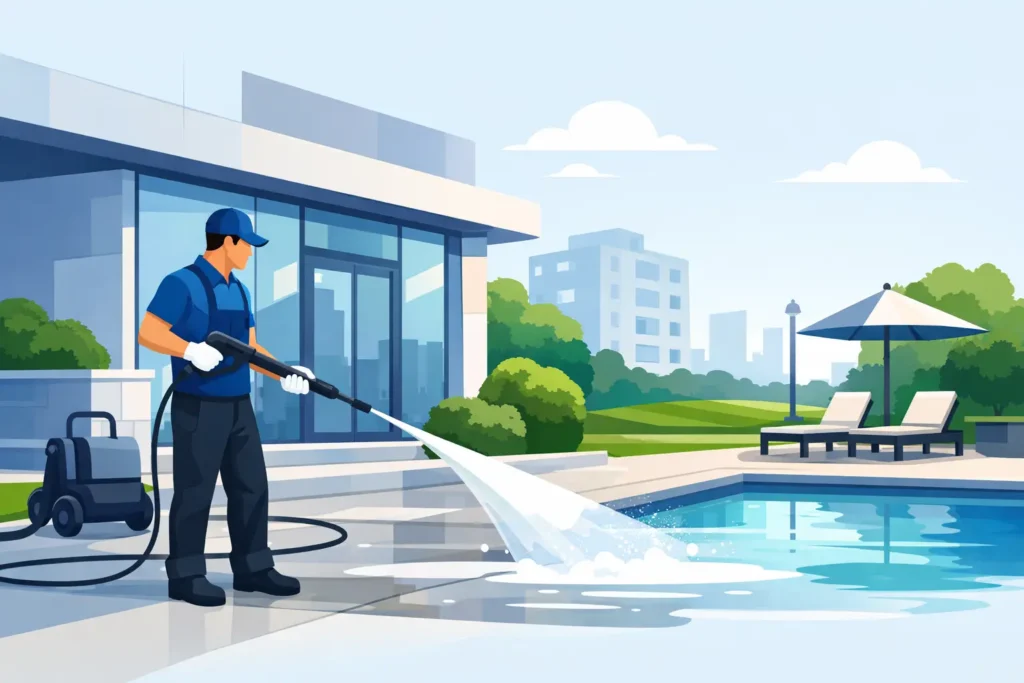
A stained sidewalk outside a rental building, algae along a storefront entry, or gum spots in a shared parking area can change how people view a property before they ever step inside. Property manager pressure washing is a practical way to keep those visible areas under control without adding another time-consuming task to your maintenance team.
For Long Island property managers, exterior cleaning is not just about making a building look better for a few days. It helps support cleaner common areas, stronger curb appeal, and a more cared-for impression for tenants, visitors, prospective renters, and owners. The right schedule depends on the property, its traffic, and the surfaces involved, but waiting until grime becomes impossible to ignore usually costs more in time and disruption.
Why exterior appearance matters to property managers
A clean property sends a simple message: this place is maintained. That matters at an apartment complex, office building, retail center, HOA community, medical office, restaurant, or mixed-use property. Tenants want to feel good coming home or arriving at work. Customers notice entryways, sidewalks, and building exteriors. Owners want a property that shows well when it is inspected, leased, or listed.
Outdoor surfaces take a beating in Nassau and Suffolk counties. Rain, shade, tree cover, road dust, pollen, salt air, foot traffic, leaking trash bags, and vehicle residue all leave their mark. On concrete, mildew and algae can create dark, slippery-looking areas. On siding and masonry, buildup can make an otherwise well-kept property appear neglected.
Pressure washing removes accumulated surface grime and restores a cleaner presentation. It is one of the fastest ways to make a noticeable difference across high-visibility areas without starting a larger repair project.
Where property manager pressure washing delivers the most value
The best place to start is usually where people enter, walk, park, or gather. These are the areas that receive the most daily wear and create the strongest first impression.
Entrances, walkways, and common areas
Front entrances, breezeways, stair landings, sidewalks, pool decks, patios, and courtyards need regular attention because they are constantly in view. A clean entry can make a building feel more welcoming right away. It also helps prevent the gradual buildup that makes concrete and pavers look permanently discolored.
For multifamily communities, common areas are especially important before tenant events, property tours, seasonal openings, or inspections. A planned cleaning keeps the work from becoming an emergency request the day before an important visit.
Parking lots, curbs, and dumpster areas
Parking areas collect tire marks, dirt, leaves, oil residue, and litter stains. Dumpster pads and service areas can be even harder on a property’s appearance, particularly when they are near tenant parking or visible from the street.
These areas may need a more targeted approach than a simple building wash. Heavy staining, grease, drainage concerns, and nearby landscaping should be discussed during the initial assessment. A professional team can scope the work around the actual conditions rather than quoting a one-size-fits-all service that misses the problem areas.
Building exteriors and storefronts
Vinyl siding, brick, stucco, painted surfaces, awnings, and exterior trim can all accumulate dirt, mildew, and spider webs over time. The right cleaning method depends on the material and its condition. Not every surface should be cleaned with the same pressure level, which is why an in-person review is worth the time.
Storefronts and professional offices often benefit from cleaning before a new tenant opens, after winter, or ahead of a busy season. A fresh exterior supports the businesses operating inside and gives visitors more confidence before they walk through the door.
Build cleaning into the maintenance calendar
The most effective exterior cleaning plan is usually preventive, not reactive. Instead of waiting for a complaint or a property walk-through to reveal the issue, schedule cleaning around the times your site needs to look its best.
Spring is a popular time for washing away winter residue, salt, dirt, and organic buildup. Late summer or early fall can also make sense after heavy outdoor use, landscaping work, and seasonal storms. For high-traffic commercial properties, restaurant pads, busy retail areas, or communities with many shared amenities, more frequent spot cleaning may be the better fit.
There is no single schedule for every site. A shaded building surrounded by trees may need more attention than a sunny property with open pavement. A small office building may need an annual exterior wash, while a larger apartment community may benefit from cleaning different areas on a rotating schedule. The goal is to match the service to the property rather than pay for work that is not needed.
Plan around tenants, customers, and operations
Property managers have more to consider than cleaning results. The work needs to fit around move-ins, deliveries, customer traffic, business hours, maintenance projects, and resident access. Clear communication makes the job easier for everyone.
Before scheduling, identify the areas that need to remain open and any locations where vehicles, outdoor furniture, signage, or deliveries may be affected. If the property has a busy entrance or limited parking, timing the work during quieter hours can reduce inconvenience. For a retail or office property, early morning, off-hours, or a scheduled low-traffic window may be best. For residential communities, notices to tenants can help avoid surprises.
A good contractor should ask these questions before work begins. They should also provide a realistic project timeline, explain what areas will be cleaned, and set clear expectations about access. Fast service is valuable, but careful planning is what keeps a cleaning project from interrupting your day.
What to look for in a pressure washing company
Property managers need dependable service, not vague promises. Look for a local provider that can assess the property in person, identify the surfaces and problem areas, and give you a clear quote before work starts.
Experience with both residential and commercial properties matters because each site has different needs. A contractor should understand that a delicate exterior surface, a heavily stained dumpster area, and a busy sidewalk cannot all be treated the same way. Ask how the work will be staged, what access is required, and whether the quote includes the areas you discussed.
It also helps to choose a company that communicates promptly and makes scheduling straightforward. When you manage multiple vendors, a delayed callback or unclear scope can create unnecessary work for your team. A same-day quote after an in-person assessment can help you make decisions faster, especially when preparing for inspections, tenant turnover, or an upcoming property event.
Father & Son Power Washing works with property owners and managers throughout Nassau and Suffolk counties, providing free estimates, competitive pricing, and a satisfaction-backed approach to exterior cleaning. The focus is simple: assess the property, understand what needs attention, and deliver visible results without making the process complicated.
Get the scope right before approving the job
The lowest quote is not always the best value if it leaves out the areas that affect the property most. Before approving pressure washing, walk the site or share a clear list of priorities. Note the entryways, sidewalks, rear service areas, exterior walls, curbs, patios, and any recurring stains that should be addressed.
It is also useful to separate must-have work from nice-to-have work. For example, cleaning a main entrance and front walkway may be the priority before a leasing event, while a back patio can be added later. This gives you more control over the budget without losing the impact of a cleaner first impression.
Ask for the scope in plain language. You should know what will be cleaned, whether the work includes preparation or moving light items, and how long the project is expected to take. A clear quote helps avoid assumptions on both sides.
A cleaner property is easier to manage
Exterior cleaning will not replace repairs, landscaping, painting, or routine maintenance. But it can make each of those efforts show better. Clean sidewalks make maintained landscaping stand out. A washed building exterior can help reveal areas that truly need paint or repair instead of hiding them under grime.
For property managers, that visibility is useful. It supports better site walks, better photos for marketing, and a stronger experience for the people using the property every day. It can also reduce the pressure to scramble before an owner visit, a new tenant tour, or a seasonal opening.
If your sidewalks, exterior walls, parking areas, or shared spaces are starting to look tired, an on-site assessment is a simple next step. A clear scope, a fair quote, and a schedule that respects your property can turn a long-delayed task into one less thing on your maintenance list.