
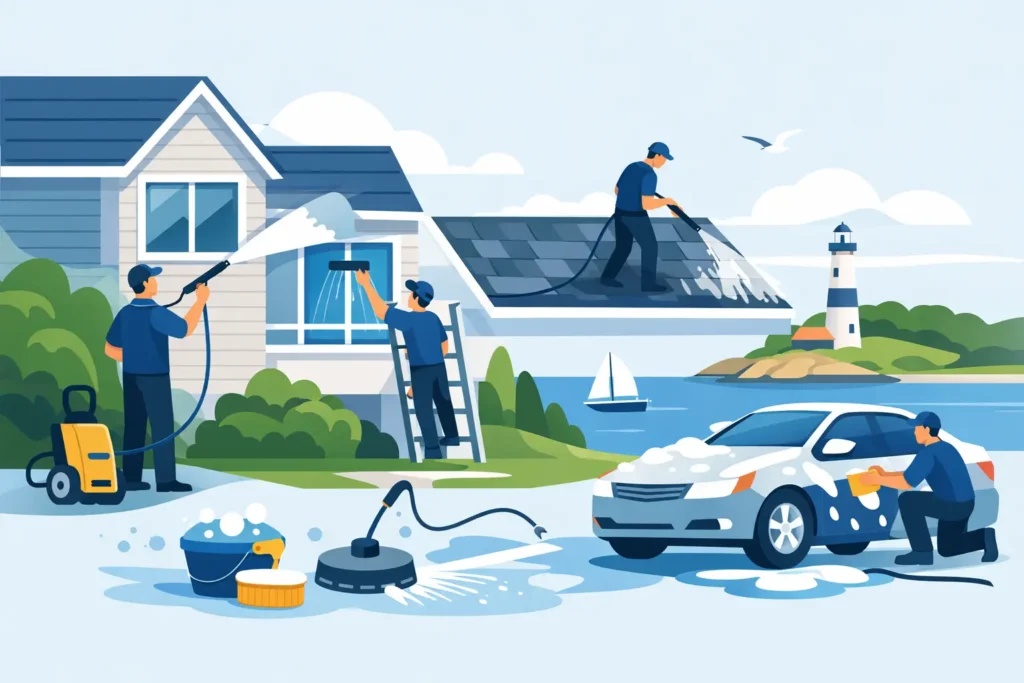
A driveway can look darker than it did a year ago without anyone noticing. Green growth creeps across siding, black streaks settle on gutters, and a once-bright patio starts to feel worn down. If you have asked, “what is exterior cleaning?” the simple answer is this: it is professional cleaning for the outdoor surfaces that shape your property’s appearance.
For Long Island homeowners and business owners, exterior cleaning is more than a quick cosmetic fix. It is a practical way to remove built-up dirt, algae, mold, mildew, salt residue, and other outdoor grime before it takes over the look of the property. The result is a cleaner, more welcoming space without spending your weekend wrestling with a rental machine.
What Is Exterior Cleaning?
Exterior cleaning covers the cleaning of a property’s outside surfaces using the right combination of water pressure, cleaning solutions, and application methods. Depending on the surface and its condition, a professional may use power washing, pressure washing, or a lower-pressure cleaning method designed for more delicate materials.
The goal is not to blast every surface with maximum pressure. Good exterior cleaning starts with looking at what needs to be cleaned, what the surface is made of, and what is actually causing the staining. Concrete needs a different approach than vinyl siding. A wood deck needs different care than a brick walkway. That assessment is what helps produce a clean result without unnecessary risk to the property.
Exterior cleaning often includes driveways, walkways, patios, decks, fences, siding, gutters, roofs, pool areas, storefronts, parking areas, and building entrances. Some jobs focus on one surface, while others refresh the full exterior of a home or commercial property.
Why Outdoor Surfaces Get Dirty So Fast on Long Island
Nassau and Suffolk County properties deal with a lot throughout the year. Rain, humidity, wind, pollen, falling leaves, coastal air, traffic residue, and changing temperatures all leave their mark. Shaded areas tend to hold moisture longer, which creates the right conditions for algae, mildew, and organic growth.
Concrete and pavers are especially good at showing dark stains and green buildup. Siding can collect pollen, dust, and mildew. Fences and decks may look faded or grimy after a wet season. Near the coast, salt in the air can add another layer of residue to windows, siding, railings, and other exposed surfaces.
Not every stain means something is damaged, but ignoring buildup can make a property look neglected faster than most owners expect. A professional cleaning can restore the original color and contrast that dirt has been hiding.
What Professional Exterior Cleaning Can Remove
The right cleaning service can make a visible difference because it addresses the material sitting on the surface, not just the loose dirt you can sweep away. Common targets include:
- Algae, mildew, and mold growth
- Dirt, mud, pollen, and leaf stains
- Black streaks and grime on gutters or siding
- Tire marks, oil spots, and traffic residue on concrete
- Cobwebs, insect debris, and general seasonal buildup
- Salt residue and weather-related staining
Some stains are more stubborn than others. Oil stains that have sat in a driveway for years, rust marks, paint, and certain organic stains may improve significantly but may not disappear completely. A reliable contractor should be honest about those expectations before work begins.
The Difference Between Power Washing and Pressure Washing
People often use power washing and pressure washing to mean the same thing. Both use pressurized water to clean exterior surfaces, and both can be effective when used correctly. In everyday conversation, the terms are usually interchangeable.
The more important question is whether the method fits the surface. Hard materials such as concrete, certain pavers, and durable masonry can often handle stronger pressure. Softer surfaces, including many types of siding, painted wood, composite decking, and roofing materials, may need a lower-pressure method with specialized cleaning solutions.
Using too much pressure in the wrong place can damage wood fibers, force water behind siding, strip paint, or disturb joint material between pavers. That is why professional exterior cleaning should never be treated as a one-setting job. The safest and best-looking results come from matching the process to the surface.
When Should You Schedule Exterior Cleaning?
There is no single perfect month for every property, but spring and fall are popular times to schedule service on Long Island. Spring cleaning removes the residue left behind by winter and gets the property ready for outdoor use. Fall cleaning clears away summer grime before colder, wetter weather settles in.
That said, timing depends on what you see. If your siding has visible green growth, your front walk is dark and slippery, or your storefront entrance is looking tired, there is no need to wait for a seasonal checklist. Cleaning when buildup becomes noticeable is often the easiest way to keep the job manageable.
Commercial properties may benefit from more regular service, especially high-traffic locations. Customer-facing walkways, entrances, loading areas, and parking surfaces affect first impressions every day. For landlords and property managers, cleaning before listing, leasing, inspections, or tenant turnover can help the building show better without a major renovation.
Benefits That Go Beyond Curb Appeal
Curb appeal is a major reason people schedule exterior cleaning, and the change can be immediate. A brighter driveway, cleaner siding, and refreshed patio can make the entire property feel better maintained. For a business, a clean entrance sends a simple message: this place is cared for.
There are practical benefits, too. Algae and mildew can make walkways, steps, and pool areas slippery. Removing that buildup can improve traction and help make commonly used surfaces safer. Regular cleaning also makes it easier to spot issues that grime may hide, such as cracked concrete, loose pavers, peeling paint, or damaged trim.
Exterior cleaning is not a substitute for repairs or sealing, but it can be a smart part of a regular maintenance plan. It protects the visual condition of the property and may help you avoid the cost and effort of letting surfaces become heavily stained before taking action.
What to Expect From a Professional Cleaning Visit
A straightforward process should make exterior cleaning easy to arrange. First, the contractor reviews the areas you want cleaned and discusses your goals. An in-person assessment is useful because surface type, staining, access, water availability, and the size of the project all affect the scope of work.
From there, you should receive a clear quote and a rough timeline. Before cleaning begins, the crew may ask you to move vehicles, outdoor furniture, planters, or other items away from the work area. They should also take care around landscaping, doors, outlets, and sensitive surfaces.
During the job, the team chooses the right cleaning method for each area rather than treating the property as one large concrete slab. When the work is complete, you should be able to see the difference without having to guess where the cleaning happened.
Is DIY Exterior Cleaning Worth It?
A homeowner can handle light cleanup with a garden hose, brush, and regular maintenance. For small areas with mild dirt, that may be enough. The trade-off comes when stains are widespread, surfaces are delicate, or you are dealing with slippery algae, high siding, large driveways, or commercial spaces.
Rental equipment can be useful, but it takes time to pick up, learn, operate, and return. It also leaves room for mistakes if the pressure, nozzle, or cleaner is wrong for the surface. Professional service is often the better fit when you want efficient results, clear accountability, and less disruption to your day.
Father & Son Power Washing provides customized exterior cleaning for residential and commercial properties throughout Nassau and Suffolk counties, with free estimates, competitive pricing, and a satisfaction-focused approach.
A clean exterior does not need to be complicated. When your property starts looking dull, stained, or overdue for attention, a quick assessment can show exactly what can be refreshed and what it will take to get there.