
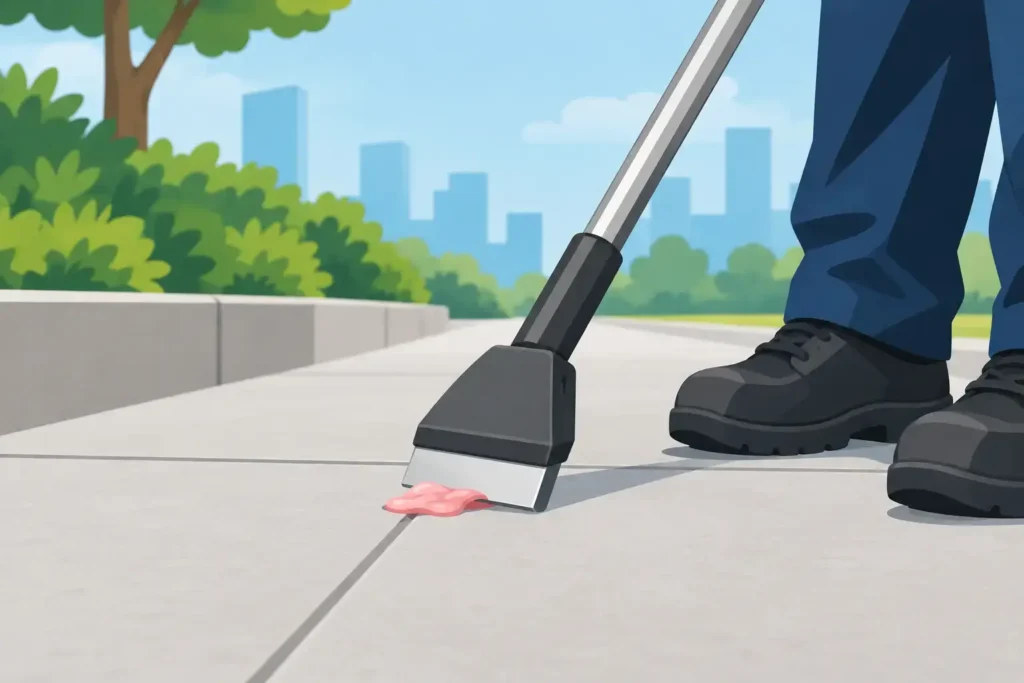
A clean sidewalk can still look neglected when it is dotted with dark, flattened gum spots. Sidewalk gum removal is one of those details that makes a bigger difference than many property owners expect. At a storefront, apartment building, office, or home, clean concrete helps visitors see a property that is cared for from the ground up.
Gum is not ordinary dirt. Once it has been stepped on, warmed by the sun, and worked into concrete texture, it becomes stubborn. It also collects dust, oil, and foot traffic grime, which is why old gum often turns black and blends into the pavement. Removing it properly takes the right combination of heat, pressure, cleaning solution, and surface awareness.
Why Gum on Sidewalks Is More Than an Eyesore
For commercial properties, gum-stained walkways can quickly affect a customer’s first impression. A restaurant entrance, retail plaza, medical office, or professional building may have clean windows and fresh landscaping, but a sidewalk covered with black spots still sends the wrong message. The issue is especially noticeable around entrances, benches, outdoor seating, bus stops, and parking areas.
For homeowners and landlords, gum can make otherwise clean concrete look permanently stained. It often appears near driveways, front walks, patios, and mailbox areas where children, guests, or delivery drivers pass through. Left in place, it may not cause structural damage to concrete, but it can make routine cleaning less effective and reduce the finished look of the property.
There is also a practical reason to stay on top of it. Fresh gum is easier to remove than gum that has been baked into the surface for months or years. Regular exterior cleaning prevents buildup from becoming a larger, more time-consuming job later.
What Makes Sidewalk Gum Removal Difficult?
Concrete is durable, but it is not perfectly smooth. Its pores and textured finish give gum plenty of places to grip. A quick blast with cold water may remove the surface of the gum while leaving a dark, sticky residue behind. Scraping alone can be slow and may leave visible marks if it is done aggressively.
The right method depends on the age of the gum, the type of surface, and the amount of buildup. Smooth concrete, pavers, decorative finishes, and older sidewalks do not always respond the same way. The goal is not simply to get the gum off. It is to remove it without creating noticeable striping, etched areas, or a patchy-looking walkway.
That is why professional cleaning typically combines controlled hot water, commercial-grade equipment, and targeted treatment. Heat helps soften the gum so it can release from the surface. Pressure then rinses it away, while an appropriate cleaner helps lift the dark residue that can remain behind.
The Right Way to Remove Gum From Concrete
A good gum removal job starts with a close look at the walkway. High-traffic areas usually have more than one type of buildup. Grease, mildew, leaf stains, tire marks, and general grime can surround gum spots and make the whole area look uneven after spot cleaning.
For that reason, it often makes sense to clean the surrounding concrete as part of the project. Removing only a few gum spots from a heavily soiled sidewalk can leave bright circles that stand out against the rest of the pavement. A full, even cleaning creates the consistent finish most property owners want.
Professional crews generally work in sections, addressing gum buildup first and then cleaning the larger surface area. Water temperature and pressure are adjusted based on the material and condition of the concrete. This matters on older walkways, near expansion joints, and around delicate landscaping or building entrances.
The final rinse is just as important as the removal itself. Loose gum, residue, and dirty runoff should be cleared away so the surface is left clean rather than streaked. When the work is done well, visitors do not notice the cleaning process. They simply notice that the walkway looks brighter, cleaner, and more inviting.
Why High Pressure Alone Is Not Always the Answer
It may be tempting to rent a pressure washer and attack each spot with maximum pressure. That approach can work in limited situations, but it can also create problems. Too much pressure held too close to concrete can leave lines, expose aggregate, or make one part of the sidewalk look newer than the rest.
Hot-water equipment is often more effective on gum because it loosens the material instead of forcing it off through brute pressure. The difference is especially clear on large commercial sidewalks where dozens of gum spots have built up over time. Proper tools make the work faster, cleaner, and more consistent.
When Should You Schedule Gum Removal?
For businesses and managed properties, sidewalk gum removal works best as part of a regular exterior maintenance plan. The right frequency depends on pedestrian traffic. A busy retail entrance or food-service location may need attention more often than a small office building or residential property.
Spring is a popular time to clean winter grime and prepare for increased foot traffic. Late summer and early fall are also smart times to refresh sidewalks before seasonal events, tenant turnover, or holiday shopping. Still, there is no need to wait for a particular month if gum spots are becoming visible. The best time to clean is before they become the first thing people see at the entrance.
Property managers may also want to schedule service before inspections, open houses, lease renewals, or major tenant visits. Clean sidewalks help the entire property feel maintained, even when no major renovation is taking place.
Sidewalk Gum Removal for Long Island Properties
Nassau and Suffolk County properties deal with changing weather, heavy seasonal foot traffic, and plenty of outdoor debris. Rain, road dust, pollen, leaves, and snow-season residue can all make sidewalk gum stains look darker and more noticeable. A clean walkway is a simple way to improve curb appeal without taking on a major project.
Father & Son Power Washing provides customized exterior cleaning for residential and commercial properties throughout Long Island. Every property is different, so an in-person assessment helps determine whether gum removal should be handled as a targeted service or as part of a larger sidewalk, patio, entryway, or storefront cleaning project.
A clear quote and realistic timeline also make it easier for property owners and managers to plan around customers, tenants, or family schedules. For commercial locations, work can often be planned to limit disruption at the entrance and keep the property looking professional.
Simple Ways to Keep Walkways Looking Better Between Cleanings
Routine attention can slow the return of gum and surface grime. Trash receptacles near entrances, seating areas, and outdoor gathering spots should be emptied regularly, since overflowing bins often lead to litter on the pavement. If fresh gum is noticed early, removing it promptly is usually much easier than waiting for it to harden and darken.
It also helps to avoid treating sidewalk cleaning as an afterthought. Walkways connect the street, parking lot, and front door. When they are clean, the rest of the property feels more put together. When they are stained, even a well-kept building can look less inviting.
If gum spots are starting to take over your concrete, a professional assessment can give you a straightforward answer on what the area needs. Clean sidewalks are a small detail with a visible payoff – and they help every guest, customer, tenant, or neighbor arrive to a better first impression.