
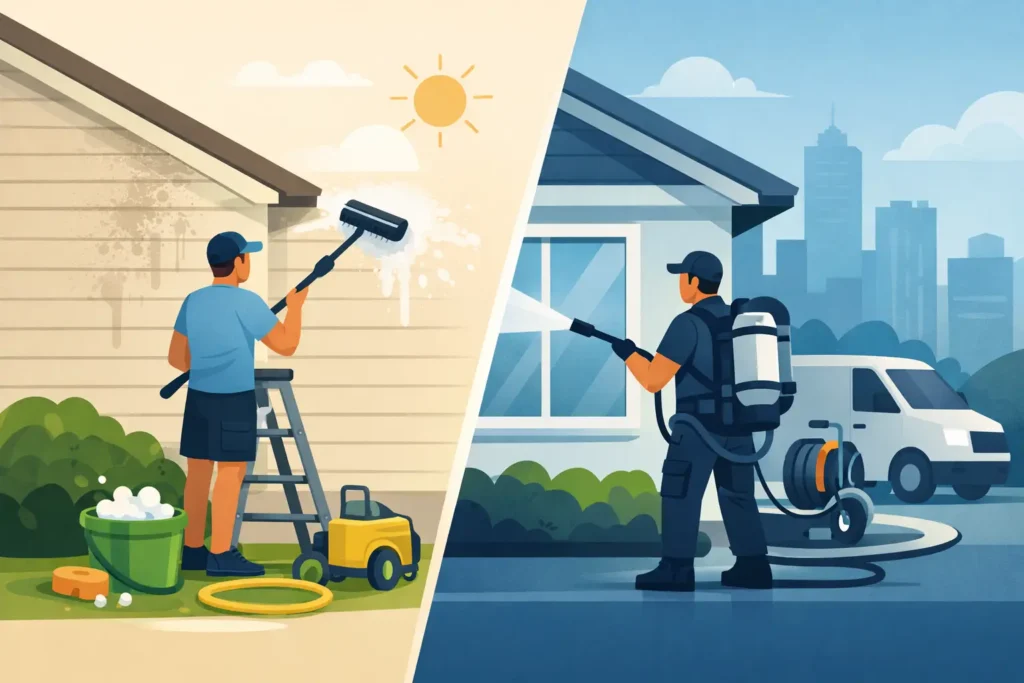
A driveway can look like a simple Saturday project until the cleaner runs out, the stains remain, or a high-pressure stream leaves marks where they should not be. When weighing DIY exterior cleaning versus professionals, the right choice comes down to more than convenience. It depends on the surface, the condition of your property, the time you have, and how confident you feel using cleaning equipment around your home or business.
For Long Island property owners, exterior cleaning is often about getting ahead of the buildup that makes a place look neglected: green growth on siding, black streaks on walkways, grime on fences, or a dull-looking patio before guests, tenants, or customers arrive. Both approaches can have a place. The key is knowing where do-it-yourself cleaning makes sense and where professional service offers better value.
DIY Exterior Cleaning Versus Professionals: The Real Difference
DIY cleaning usually starts with a rented or purchased pressure washer, a hose, basic cleaning solution, and a free afternoon. For small, durable surfaces with light dirt, that may be enough. A homeowner may get satisfying results on a compact concrete walkway, a few patio chairs, or a lightly soiled bin area.
Professional exterior cleaning is different because the work begins with an assessment. The cleaner looks at the surface, the type of buildup, nearby landscaping, drainage, access, and areas that need a gentler approach. The goal is not simply to spray everything with maximum pressure. It is to remove visible grime while protecting the materials underneath.
That difference matters on Long Island properties, where damp weather, shade, salt air near the coast, tree cover, and seasonal debris can create recurring buildup. What looks like ordinary dirt may be algae, mildew, mold, rust staining, oil residue, or years of embedded grime. Each calls for a different approach.
When DIY Cleaning Can Be a Good Choice
Doing the work yourself can be reasonable when the job is small, the surface is sturdy, and you understand the limits of your equipment. If you are cleaning a short section of concrete with light surface dirt, for example, a homeowner-grade pressure washer may improve the appearance without much risk.
DIY can also work for people who already own the equipment, have time to prepare and clean up, and are comfortable handling it safely. There is a certain satisfaction in seeing a small area brighten up after an afternoon of work.
Still, the cost is not always limited to the rental fee or cleaner. You may need hoses, nozzles, safety gear, extension cords, fuel, cleaning products, and extra time to make a second pass over areas that did not come clean the first time. If you are renting equipment, there is also a clock running from the moment you bring it home.
A DIY project is most likely to be worthwhile when the result does not have to be perfect and a missed spot or uneven finish will not create a larger problem.
Where DIY Cleaning Can Go Wrong
Pressure is useful, but it is not harmless. Too much force, the wrong nozzle, or holding the spray too close can scar concrete, strip paint, splinter wood, damage window seals, loosen siding, and force water behind exterior materials. A surface may look cleaner at first while the underlying damage becomes visible later.
Delicate surfaces are especially easy to damage. Wood decks, older pavers, painted trim, vinyl siding, roofing materials, and certain types of stone all need careful treatment. Cleaning solutions can also affect plants, lawns, and nearby surfaces when they are mixed or applied incorrectly.
Safety is another major consideration. Exterior cleaning often involves wet ground, ladders, electrical connections, chemicals, and powerful equipment. Cleaning a second-story area or trying to reach high siding from a ladder is not a job most property owners should treat casually. The risk is not worth saving a few dollars.
There is also the issue of inconsistent results. Many DIY jobs leave visible striping on concrete, missed patches of algae, or streaks where detergent dried before it was rinsed. These are not always easy to correct with another pass. In some cases, additional pressure only makes the finish more uneven.
What Professional Exterior Cleaning Brings to the Job
A professional team brings equipment, experience, and a process built around the property rather than a one-size-fits-all setting. That means choosing the proper pressure, cleaning solution, and technique for the surface being cleaned. It also means planning for runoff, protecting surrounding areas, and reaching difficult spots without turning the job into a weekend-long project.
For homeowners, the biggest benefit is often time. Instead of researching equipment, picking up a rental, moving furniture, testing chemicals, cleaning the surface, returning the machine, and hoping the results hold up, you can have the work scoped and completed with a clear plan.
For landlords, property managers, and business owners, professional cleaning also helps protect the presentation of the property. A clean entrance, storefront, walkway, siding, parking area, or common space creates a stronger first impression for tenants, visitors, and customers. It is a visible maintenance task that can make an entire property feel more cared for.
Professional service is particularly valuable for larger driveways, heavily stained concrete, decks, fences, multi-story homes, commercial exteriors, and properties with several different surface types. These jobs require more than a strong stream of water. They require judgment.
Compare the Cost Beyond the Initial Price
DIY often appears less expensive because the upfront number is smaller. But a fair comparison includes the full cost: equipment rental or purchase, cleaning products, travel, fuel, protective gear, your time, and the possibility of repairs if something goes wrong.
Professional cleaning can be a better value when the project is large, the surface needs special care, or you want the work done properly the first time. It is also easier to budget when you receive a clear quote before scheduling. You know what is being cleaned, what the project involves, and what result to expect.
That does not mean every small job requires a professional. It means the cheapest option is not always the lowest-cost outcome. Renting a machine for a small patio may be sensible. Renting one for a weathered deck, stained driveway, and two-story siding project can quickly become more trouble than it is worth.
Questions to Ask Before You Decide
Before choosing DIY or professional cleaning, look at the condition of the area rather than just its size. Ask yourself whether the surface is delicate, whether staining has been there for months or years, and whether you can safely reach every area from the ground. Consider whether you have enough time to prepare properly and whether an uneven result would bother you.
It also helps to think about the purpose of the cleaning. Are you freshening a small area for your own use, preparing a home for sale, getting a rental ready for new tenants, or improving the appearance of a customer-facing business? The more the property’s appearance matters, the more valuable a dependable, consistent finish becomes.
If you choose professional help, keep the process simple. Ask for an in-person assessment, a clear explanation of what will be cleaned, a realistic timeline, and a no-obligation quote. A local team should be easy to reach and willing to answer straightforward questions before work begins.
A Practical Choice for Long Island Properties
For a quick cleanup on a hard, low-risk surface, DIY may be all you need. For larger projects, stubborn buildup, valuable exterior materials, or any area where safety is a concern, professional cleaning is usually the smarter route.
Father & Son Power Washing serves Nassau and Suffolk County property owners with in-person assessments, same-day quotes, competitive pricing, and service focused on visible results. Whether the job is residential or commercial, the best next step is to look at the surface honestly, choose the level of help it needs, and give your property the clean, cared-for appearance it deserves.